
First Week With a Puppy: What to Expect
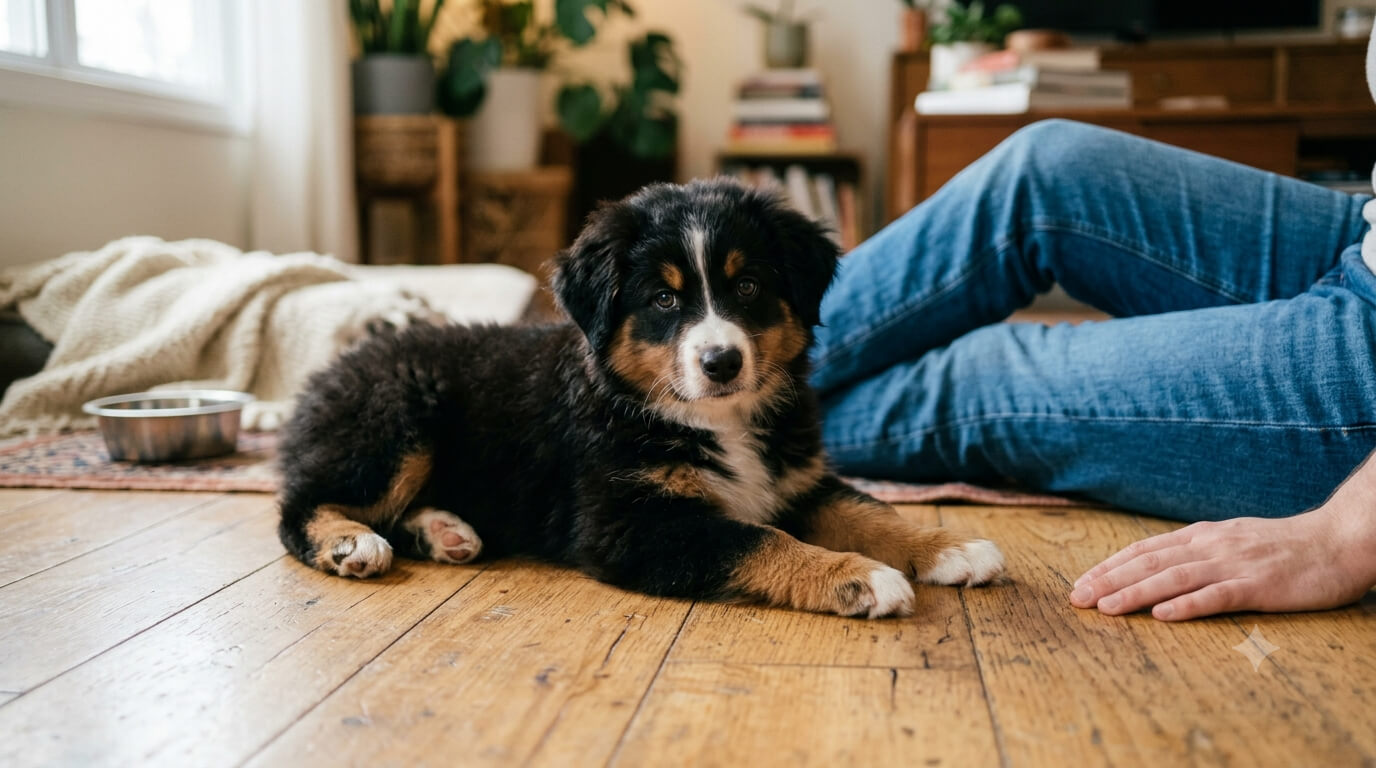
The first week with a puppy is about safety, basic needs, gentle routine, and helping them adjust. Learn what to expect, what to prioritize, and how to navigate the first seven days realistically.
First Week With a Puppy: What to Expect
Bringing a puppy home changes the rhythm of your household the moment you walk through the front door. It is a major transition, not just for you, but for a young animal adjusting to completely unfamiliar surroundings.
Online advice often presents the first week as a picture-perfect milestone full of quiet cuddles and seamless bonding. The lived reality is often more demanding.
During the first seven days, owners can encounter some combination of broken sleep, bathroom accidents, crying or whining, inconsistent appetite, sharp puppy biting, energetic bursts, and moments of uncertainty. These experiences vary substantially between puppies, and a puppy's behavior can also shift day by day as they become more familiar with their new home.
None of this means your puppy is stubborn or that you have failed. It simply reflects the realities of a young animal adjusting to a new environment.
The central principle for your first week is simple:
The first week is primarily about safety, basic needs, gentle routine, observation, and helping the puppy adjust. You do not need to solve every training problem in seven days.
Approaching the first week as an adjustment period rather than a test of your training ability helps reduce anxiety and gives your puppy the calm stability they need most.
1. Before Arriving Home: The Minimum Essentials
If you have already prepared your home, you are ahead of the game. If you are picking up your puppy today, focus strictly on the physical essentials that protect safety and comfort.
You do not need a house full of specialized gear on day one. You only need the core setup ready so you are not scrambling while managing an energetic or nervous puppy:
- A secure, limited puppy area: A playpen, a baby-gated kitchen, or an appropriately sized crate where the puppy cannot access hazards.
- Familiar food: The exact brand and formula the puppy has been eating with their breeder, rescue, or shelter.
- Water access: Clean, stable bowls that cannot be easily tipped over.
- A dedicated toilet plan: An agreed outdoor bathroom spot or indoor setup, along with a pet-safe cleaner for accidents.
- A comfortable rest space: Simple, washable bedding placed in a quiet area close to household activity.
- Walking equipment: A lightweight standard leash and an appropriately fitted flat collar or harness.
- Veterinary contact information: The phone number and address of your regular clinic and the nearest emergency hospital.
- Basic puppy-proofing: Electrical cords tucked away, toxic houseplants relocated, trash cans secured, and small items picked up from the floor.
If you want a detailed breakdown of items worth purchasing before pickup day versus items you can safely skip, review our guide on the New Puppy Checklist: What You Actually Need. Once the puppy steps inside your home, the preparation phase ends and the adjustment phase begins.
2. The First Few Hours: Keeping Arrival Calm
Leaving a familiar environment and arriving in a new home can be a major transition. The puppy has left their previous caregivers, littermates, familiar scents, and established routines, traveling in a vehicle to an unfamiliar environment filled with strange smells and sounds.
Puppies can respond very differently to the transition. Some appear curious and explore immediately, while others may seem hesitant, watchful, or quiet. If quietness, shivering, or reluctance to move seems prolonged, severe, or accompanied by physical symptoms, consider whether the puppy is unwell or in significant distress rather than assuming it is merely shyness.
Your main goal during the first few hours is to keep environmental stimulation low. Resisting the urge to throw a welcome party protects your puppy from becoming overwhelmed.
A Sensible Arrival Sequence
Rather than letting the puppy wander freely through every room of your house, follow a calm, predictable sequence:
- Start with the toilet area: Before bringing the puppy inside, take them directly to your designated outdoor bathroom spot on leash. Give them several quiet minutes to sniff and potentially eliminate. If they go, praise them gently. If they do not, proceed calmly indoors.
- Limit exploration to a safe zone: Confine the puppy to one puppy-proofed room, such as the kitchen or living room. Let them explore floors, sniff furniture, and take in the surroundings at their own pace.
- Offer fresh water: Keep a water dish accessible and show them where it sits.
- Offer familiar food if appropriate: If your puppy arrives near a normal feeding time, offer a portion of their familiar food. If they are too distracted or nervous to eat right away, do not panic or force it.
- Offer access to a quiet rest area: After exploration, provide access to a quiet rest space. Some puppies will sleep quickly, while others may need time to settle.
What to Avoid on Day One
During the initial hours, avoid:
- Inviting neighbors, extended family, or friends over to meet the puppy.
- Introducing multiple unfamiliar neighborhood dogs.
- Taking the puppy to crowded public spaces or pet stores.
- Giving the puppy free, unsupervised run of the entire house.
- Launching into formal obedience sessions or command drilling.
The puppy needs to absorb their new reality before handling complex social demands. For a broader perspective on how your puppy's daily structure will evolve over the coming months, explore our guide on Puppy Schedule by Age: 8 Weeks to 12 Months.
3. The First Night: Managing Nighttime Waking and Distress
The first night is often a challenging hurdle for new owners. It is also one of the most common reasons owners begin second-guessing their readiness for a puppy.
Understand what the puppy is experiencing: they are settling into an unfamiliar environment without the physical contact, warmth, and scent of their mother and littermates. Darkness and quiet in a strange room can feel isolating to a young animal.
Where Should the Puppy Sleep?
Keeping the puppy's sleeping area reasonably close can make it easier to hear when they wake, need a toilet opportunity, or appear distressed. Some puppies may also settle more comfortably with their owner nearby.
Setting up a crate, playpen, or secure sleeping area in or near your bedroom is often practical during the initial transition, though the exact setup will depend on your household. Keeping them within earshot helps you respond before an accident happens in their bed and provides reassurance in a novel setting.
Nighttime Waking and Crying
Young puppies may need one or more nighttime toilet opportunities, and individual needs vary. Bladder capacity is limited at this age, and waking during the night to eliminate is very common.
When your puppy wakes and vocalizes:
- Keep the interaction quiet and businesslike: Do not turn on bright overhead lights, talk in excited tones, or engage in play.
- Take them directly to the toilet area: Carry them or walk them on a short leash to their bathroom spot.
- Give them a few minutes to eliminate: Keep quiet and still. If they eliminate, offer soft, gentle praise.
- Return them straight to bed: Place them back in their sleeping spot, offer a gentle pat, and return to sleep yourself.
Addressing Prolonged Distress
Do not assume nighttime vocalization is deliberate misbehavior or an attempt to manipulate you. Young puppies communicate distress through whining, barking, and crying because they have no other way to signal discomfort or fear.
If crying persists or escalates, check practical needs:
- Do they need another toilet opportunity? Puppies sometimes need to eliminate a second time shortly after returning to bed.
- Are temperature and bedding comfortable? Check for cold drafts, excess heat, or soiled bedding.
- Does the puppy appear physically unwell? Note whether crying is accompanied by restlessness, vomiting, diarrhea, or signs of pain.
- Is the confinement setup causing escalating distress? If a closed door causes panic, sitting quietly nearby or using a secure playpen can help while you work on gradual positive associations.
A crate can be a useful management tool when introduced gradually with positive associations, but it is not mandatory. If confinement is creating severe distress, prioritize the puppy's safety and emotional comfort while working on positive crate games during daylight hours.
To understand normal sleep architecture and how nighttime patterns stabilize over time, read our guide on Puppy Sleep Schedule by Age and learn how to manage overtired restlessness in Puppy Won't Nap: What to Do.
4. Potty Accidents Are Expected: Building Habits Without Pressure
One of the quickest ways to become frustrated during week one is to expect an 8 to 10-week-old puppy to understand housetraining.
Your puppy does not know that carpets, rugs, and hardwood floors are different from grass or soil. In their previous environment, they likely eliminated whenever and wherever the physical urge occurred. Very young puppies have limited bladder control, are still learning where to eliminate, and need frequent appropriate opportunities throughout the day.
Prioritize Frequent Opportunities Over Clock Formulas
Rather than relying on arbitrary formulas like "age in months plus one hour," focus on behavioral transitions. Puppies have predictable moments when an elimination opportunity is helpful.
Take your puppy to their designated toilet spot:
- Immediately upon waking from any sleep or nap.
- Soon after eating.
- Shortly after substantial water drinking.
- Right after active play, wrestling, or sudden bursts of energy.
- Right before settling into a crate or playpen for rest.
- Whenever they display possible signals, such as sniffing the floor intensely, sudden circling, wandering toward room corners, or abrupt restlessness.
How to Handle an Indoor Accident
Accidents will happen during the first week. How you respond matters far more than the accident itself.
- Never punish, yell, or rub their nose in it: Physical punishment, scolding, or harsh corrections can create fear or confusion around toileting and do not teach the puppy where you want them to eliminate.
- Interrupt gently without scaring them: If you catch the puppy in the act, use a neutral sound to interrupt, scoop them up gently or guide them, and walk directly to the outdoor toilet spot to let them finish.
- Clean thoroughly with an appropriate cleaner: Use a pet-safe cleaner specifically designed for urine and organic pet messes to clean the area thoroughly.
- Adjust your supervision: Accidents can provide useful context. Consider what happened beforehand and whether supervision, access, or the timing of toilet opportunities could be adjusted.
Treat every accident as useful feedback about your daily management rather than evidence of a stubborn puppy. For practical frameworks on building dependable toilet habits, see our in-depth guides on Puppy Potty Training Schedule and How Often Should a Puppy Pee.
5. Feeding During the First Week: Protecting Digestion and Managing Appetite
Digestive upset is one of the most common issues new owners face in the first seven days. Moving stress combined with dietary shifts can rapidly cause loose stool, vomiting, and loss of appetite.
Keep the Current Food Unchanged
When practical, avoid unnecessary abrupt food changes during the first week. Feed the exact brand, formula, kibble size, and texture the puppy was consuming prior to coming home.
Before arrival, confirm these four details:
- The exact brand and recipe name.
- The total daily feeding amount or current cup measurement.
- The number of meals per day and their approximate timing.
- Any known allergies, dietary sensitivities, or medications.
If you plan to change diets, transition according to the individual puppy, the foods involved, manufacturer guidance, and veterinary advice where appropriate. If the current food is medically inappropriate or unavailable, consult your veterinarian for an appropriate transition plan rather than feeling forced to wait.
Navigating First-Week Appetite Changes
Some puppies eat less enthusiastically after travel or during the transition to a new environment, but reduced appetite should always be interpreted alongside age, size, energy level, hydration, and other symptoms. Do not assume travel or stress is the sole explanation, and avoid universal assumptions that skipping a meal is harmless.
If your puppy shows mild hesitation but is otherwise bright and active:
- Offer food in a quiet, low-traffic corner away from household bustle.
- Try moistening dry kibble with warm water to release natural aromas.
- Use a portion of their kibble as gentle rewards for following you or sitting calmly.
When to Seek Veterinary Advice
Certain symptoms require urgent veterinary care, including repeated vomiting or an inability to keep water down, severe or bloody diarrhea, significant abdominal swelling or pain, marked weakness, or sudden collapse.
If your puppy has a mildly reduced appetite but remains bright, playful, hydrated, and free of other symptoms, monitor them closely and consult your veterinary clinic if normal eating does not resume promptly.
To understand meal frequencies and caloric planning as your puppy grows, see our comprehensive resources on Puppy Feeding Schedule by Age and How Often Should You Feed a Puppy.
6. Water: Access and Observations
Fresh water should normally remain available. Normal access to fresh water should not routinely be restricted for housetraining purposes unless a veterinarian has given different instructions for an individual puppy.
Notice your puppy's general drinking habits. If drinking changes substantially from the puppy's usual pattern, especially if accompanied by vomiting, diarrhea, or shifts in urination, discuss it with a veterinarian.
7. Sleep and Rest: Helping an Overstimulated Puppy Settle
Young puppies spend substantial portions of the day sleeping and resting, but individual needs vary. Sleep requirements differ by age, breed size, daily activity, and individual disposition. Avoid relying on rigid numerical quotas or wake-window formulas.
Understanding Active and Restless Behaviors
Puppy behavior can be easy to misinterpret. A puppy being mouthy, active, distracted, or having zoomies does not by itself tell you whether they are tired, under-stimulated, overstimulated, teething, or in need of the toilet.
Rather than assuming every active burst is an overtired tantrum, look at the overall context of their day, recent activity, and physical needs. Puppies can act out when they need to eliminate, when they are seeking social engagement, when novel surroundings feel overwhelming, or simply during normal playful energy peaks.
Creating Restful Conditions
Puppies often struggle to switch off when surrounded by activity.
- Set up a designated rest zone: A quieter area can make it easier for some puppies to settle without frequent interruptions.
- Maintain normal household sounds: You do not need to whisper or keep the house dead silent. Normal ambient sounds, like gentle conversation, distant television, or soft household movement, help the puppy learn to settle amid ordinary living.
- Protect their space: When the puppy retreats to their bed or crate, ensure children and other family members leave them alone. Rest should always be respected.
For a deeper look into sleep dynamics and practical settling strategies, explore How Much Should a Puppy Sleep and Puppy Sleep Schedule by Age.
8. Mouthing, Biting, and Chewing: Managing Normal Puppy Explorations
Many new owners quickly encounter the reality of needle-sharp puppy teeth.
Puppies explore their environment with their mouths. Chewing, biting hands, tugging pant legs, and gnawing furniture legs are normal, species-typical behaviors. They are not signs of aggression, dominance, or malice.
Practical Management for Week One
Your goal during the first week is management and redirection, not complete eradication of mouthing:
- Keep safe chews within reach: Have appropriate chew toys, rubber puppy toys, or textured teething rings scattered in your safe areas. When teeth touch skin or clothing, calmly place an acceptable chew toy directly in front of their mouth.
- Pause over-aroused interactions: If play becomes too mouthy or aroused, briefly pause or end the interaction, then resume when appropriate. Removing your attention helps the puppy understand that sharp biting stops the fun.
- Protect hands and clothing: Avoid waving hands near the puppy's face, roughhousing with bare fingers, or wearing loose, flowing clothing that invites chasing.
- Protect your environment: Keep electrical wires, shoes, rugs, and prized furniture out of reach. Management prevents unwanted chewing habits from becoming established.
Biting will not disappear in seven days. By responding calmly and consistently, you help teach the puppy which interactions are appropriate as they mature.
9. Early Training: Simple Foundations Integrated into Daily Life
You do not need formal training sessions or a long list of obedience commands during your first week at home. Demanding precision sits, downs, and stays from an 8-week-old puppy who just arrived creates unnecessary pressure for both of you.
Early training should be simple, positive, and woven directly into daily interactions.
Practical Priorities for Week One
Focus on simple foundational skills that build connection and cooperation:
- Name recognition: Say your puppy's name in a cheerful voice. When they turn their head to look at you, mark the moment with a soft word like "yes" and hand them a piece of kibble.
- Following your movement: Encourage your puppy to follow you around the safe area, rewarding them when they choose to walk near your legs.
- Rewarding voluntary attention: Whenever your puppy chooses to check in with you instead of staring at a distraction, offer calm praise or a small food reward.
- Gentle handling: While the puppy is calm, gently touch their ears, paws, tail, and muzzle for a few seconds, immediately pairing the touch with a tiny treat. This can help the puppy become more comfortable with handling used during grooming and veterinary care.
- Positive confinement association: Scatter treats or feed meals inside the crate or exercise pen with the door open, showing them that the space is safe and rewarding.
- Toilet routine associations: Consistently pairing your chosen outdoor spot with gentle praise and rewards whenever elimination occurs.
Keep early training interactions brief and stop before the puppy becomes disengaged or frustrated.
If you are eager to learn how reward-based marker training works as your puppy matures, check out our guide on Essential Puppy Training Tips.
10. Early Socialization: Quality Over Quantity
The concept of puppy socialization is frequently misunderstood. Owners often think socialization means exposing their puppy to as many people, dogs, sounds, and places as possible within a few days.
A frantic rush to check boxes can easily overwhelm a young animal. True socialization is about fostering calm, positive, or neutral associations with the human world. Quality of experience matters far more than volume.
Safe First-Week Socialization
Keeping the first week calm does not require total isolation. You can begin safe, controlled exposure immediately inside and around your home:
- Domestic household sounds: Gentle, low-intensity exposure to normal household sounds, like running the dishwasher, playing music softly, or operating a vacuum cleaner in another room at a distance and volume the puppy can comfortably tolerate.
- Different walking surfaces: Let your puppy walk on tile, hardwood, thick carpet, grass, gravel, and door mats.
- Novel objects: Place everyday items in the living room for curious investigation, such as an open umbrella resting upside down, a cardboard box, or a bicycle helmet.
- Calm observation: Sit with your puppy on your front porch or in your driveway, letting them watch cars drive by, bicycles pass, or leaves blow in the wind from a comfortable distance.
Socialization and Vaccination Realities
The American Veterinary Society of Animal Behavior notes that the first three months of life are an especially important period for appropriate social exposure and learning, while social development continues beyond that period.
At the same time, infectious disease risks are real. Disease risk varies substantially by location, vaccination status, local parvovirus prevalence, and environment. Dog parks and heavily dog-trafficked areas are generally more concerning for incompletely vaccinated puppies, but do not classify every public sidewalk as universally unsafe.
The solution is balanced, thoughtful socialization guided by your veterinary team:
- Depending on local disease risk, possible lower-exposure options may include carrying your puppy in your arms or a carrier, observing the world from a vehicle or clean blanket, or spending time in low-traffic private spaces.
- Controlled interactions with healthy, appropriately vaccinated dogs known to the owner can be considered, but vaccination status alone does not guarantee an interaction is completely free of infection risk.
- Discuss local disease prevalence and appropriate socialization approaches directly with your veterinarian to balance behavioral development with health protection.
For a comprehensive roadmap on safe, stage-by-stage exposure, review our guide on Puppy Socialization.
11. Developing Independence: Gentle Solitary Moments
A common mistake during the first week is spending every waking second directly touching or entertaining the puppy, only to abruptly leave them home alone for several hours in week two.
Puppies benefit from learning that being slightly separated from you is safe and temporary. Independence begins with micro-steps during daily life:
- Nearby resting: Allow the puppy to rest or chew a safe toy in their playpen while you sit nearby working or reading, without directly interacting.
- Brief departures: While the puppy is settled or engaged with a chew, briefly step out of sight and return before the puppy becomes highly distressed, keeping greetings neutral.
- Using physical barriers: Baby gates and exercise pens allow the puppy to see, hear, and smell you while learning that physical barriers are normal parts of domestic life.
- Gradual progression: Increase difficulty gradually based on the puppy's response.
Brief vocalization can occur during early separation practice, but your focus should be on whether the puppy can settle rather than assigning a diagnosis. Do not assume brief whining means clinical separation anxiety. At the same time, do not deliberately allow a puppy to experience escalating panic to teach independence.
12. Managing Household Visitors
When a new puppy arrives, family, friends, and neighbors will naturally want to visit. While well-meaning, an influx of enthusiastic guests passing a puppy from arm to arm can easily push a young animal into sensory overload.
Keep early visits small, calm, and manageable for the individual puppy. There is no requirement for everyone to meet the puppy during week one.
If you choose to host visitors:
- Keep gatherings small: Limit visits to a few calm people at a time and avoid noisy parties.
- Let the puppy initiate contact: Instruct visitors to sit calmly on the floor or couch. Allow the puppy to walk over and sniff on their own terms. Never force a timid puppy into someone's arms.
- Provide an escape route: Ensure the puppy has an open path back to their bed or crate if they choose to retreat.
- Supervise children carefully: Children should sit quietly on the floor. Hands-on interactions should be gentle, avoiding picking up, hugging, or chasing the puppy.
Prioritizing your puppy's comfort over human enthusiasm can help make early visitor experiences easier to manage.
13. Introducing Other Household Pets
If you have a resident dog, cat, or other pet, management and safety should be the priority. The right approach depends on the resident animal, puppy, environment, species, and available management.
Key principles for safe early management:
- Separate physical spaces: Give both your resident pet and your new puppy their own secure zones with separate food, water, and rest spaces.
- Scent swapping as an option: Rubbing a towel over each pet and placing it near the other's resting area can allow them to investigate scent information without direct contact.
- Use controlled barriers: Allowing initial visual meetings across a sturdy baby gate or exercise pen keeps interactions safe and controllable.
- Supervise every interaction: Never leave a new puppy unsupervised with an adult dog or cat, regardless of how friendly your resident pet has been in the past.
Never simply "let them work it out." Adult animals can injure a young puppy, and poor introductions can create stress or increase conflict risk.
14. First-Week Veterinary Care and Health Preparation
Arrange an initial veterinary examination soon after bringing the puppy home, taking into account the puppy's existing health records, breeder or rescue requirements, health status, and your veterinarian's advice. If the puppy appears unwell, veterinary assessment may be needed sooner.
Completing an initial checkup establishes a baseline health record and allows you to confirm future vaccination and parasite-control schedules.
What to Bring to Your First Vet Visit
To make the appointment efficient and thorough, bring:
- Breeder or rescue paperwork: Documentation showing previous vaccinations, deworming treatments, and microchip registration.
- Current food information: The exact brand and daily feeding amount.
- Stool sample: A fresh stool sample in a clean plastic bag if requested by your clinic to screen for intestinal parasites.
- Written observations: Any notes on appetite, stool consistency, water intake, coughing, or energy levels.
Before you ever face an urgent situation, find the address and emergency contact details for the nearest 24-hour emergency animal hospital. Knowing where to go in an emergency gives you invaluable peace of mind.
15. Normal Adjustment vs. When to Seek Veterinary Care
New puppy owners frequently wonder whether an observation is part of settling in or a sign of illness. The following table distinguishes possible adjustment observations from signs that warrant veterinary advice or urgent care.
| Observation Area | Possible Adjustment Observation | Signs That Deserve Veterinary Advice or Urgent Care |
|---|---|---|
| Appetite | Hesitant eating during early transitions; eating slowly in unfamiliar surroundings. | Sustained lack of appetite evaluated in the context of age, size, and duration; refusal to eat in a very young or small puppy; appetite loss accompanied by weakness, vomiting, diarrhea, or other signs of illness. |
| Digestion | Mild variation in stool firmness while adjusting to new environments. | Repeated vomiting or inability to keep water down (urgent); profuse watery or bloody diarrhea (urgent); significant abdominal pain or distension (urgent). |
| Hydration | Normal variation in drinking after active play or between meals. | Markedly reduced drinking accompanied by weakness, unusual lethargy, vomiting, diarrhea, or other signs of illness; sudden extreme thirst; inability to retain fluids. |
| Energy Level | Alternating between active exploration and deep sleep; initial hesitation in new rooms. | Collapse, profound weakness, or inability to stand (urgent); extreme lethargy where the puppy cannot be easily roused. |
| Urination | Frequent urination during waking periods; occasional indoor puddles. | Straining to urinate with little or no urine produced (urgent); crying in pain while attempting to pee; discolored or bloody urine. |
| Vocalization | Whining when settling for bed; brief vocalization during toilet trips. | Inconsolable vocalization with physical distress; tremors, involuntary shaking, or seizures (urgent). |
| Breathing | Slightly faster breathing after vigorous play or during dreaming. | Difficulty breathing, open-mouth gasping, or persistent wheezing (urgent); pale or blue gums (urgent); severe coughing. |
| Safety Concerns | Chewing on toys or bedding under supervision. | Suspected ingestion of medications, rodent bait, toxic plants, batteries, or foreign objects (urgent). |
If you ever feel uncertain about your puppy's physical condition, err on the side of safety and contact your veterinary team.
16. The First Week Does Not Need to Be Perfect
The first week does not need to produce a fully trained puppy.
You will not finish the first seven days with an animal that sleeps through every night without stirring, walks politely on a leash, obeys every verbal cue, and never mouths your hands. Progress with puppies is rarely linear, and early routines take time to stabilize.
Your primary priorities for week one are to:
- Keep the puppy safe from household hazards.
- Provide consistent nutrition, fresh water, and comfortable rest.
- Offer regular opportunities to eliminate in an appropriate spot.
- Build a calm, predictable daily rhythm.
- Learn who your individual puppy is through mindful observation.
Focusing on those priorities provides a strong foundation for the weeks ahead.
Once your puppy has started settling in, a simple routine can give the day some structure without treating the clock as a rule.
17. What to Track During the First Week
The first seven days with a puppy pass in a blur of broken sleep, bathroom trips, and constant supervision. By the end of the week, it is easy to forget when your puppy last eliminated or how their appetite has trended.
A lightweight log can help you remember when events occurred, notice patterns over time, and give your veterinarian a clearer timeline if concerns arise.
Practical Observations Worth Recording
You do not need to record every detail of the day. Focus on the core events that shape routine and health:
- Meals and appetite: When meals were served, how much was eaten, and general enthusiasm.
- Water intake: Any noticeable shifts in drinking habits.
- Urination and bowel movements: Approximate times and whether they occurred outdoors or indoors.
- Accidents: Locations and preceding context, such as right after play or before a nap.
- Rest and activity: General observations on when the puppy rested comfortably.
- Health symptoms: Any loose stools, vomiting, coughing, or unusual fatigue.
- Medications and vaccinations: Dates, doses, and dewormer treatments.
To learn more about structuring daily logs without getting bogged down in busywork, read our guide on Puppy Daily Routine: What to Track in the First Year.
Tracking With Dogtales
This is where Dogtales can be a helpful tool.
Dogtales gives you one place to record routine and health-related events, including bathroom events, meals, activities, medications, and health notes, so you can look back at what happened instead of relying entirely on memory.
Dogtales does not diagnose medical illness, determine causes, predict exact potty timing, replace veterinary care, create a rigid daily schedule, or make raising a puppy effortless. What it does is keep your notes organized in one place whenever you or your veterinarian need to review them.
A Note for New Puppy Owners
Got a new puppy? Reach out to us. We are happy to provide you with a discount code for your first year of Dogtales.
Frequently Asked Questions
What should I do with my puppy during the first week?
Focus on basic needs, safety, and calm acclimation. Keep their environment relatively quiet, maintain their familiar food, provide frequent bathroom breaks, offer opportunities for rest, and introduce simple foundational routines like name recognition and gentle handling. Avoid crowded places, big gatherings, or rigorous training drills.
Where should a puppy sleep during the first week?
Keeping the puppy's sleeping area reasonably close can be useful during the initial transition, while the exact setup depends on your household and puppy. Setting up a crate, playpen, or safe bed in or near your bedroom allows you to hear when they wake or need a nighttime toilet break.
Is it normal for a new puppy to cry at night?
Vocalization can occur during adjustment as a puppy adapts to a new setting without familiar companions. Check practical needs such as toilet opportunities, temperature, and bedding comfort, and watch for signs of physical distress or illness. Avoid leaving a puppy in escalating panic.
Is it normal for a new puppy not to eat much?
Some puppies eat less enthusiastically during the initial transition to a new environment. However, reduced appetite should always be evaluated alongside age, size, hydration, and energy level. Very young or small puppies deserve greater caution due to hypoglycemia risk. If appetite loss persists or is accompanied by vomiting, diarrhea, or lethargy, consult your veterinarian promptly.
Should I stay home with my puppy for the first week?
Being available for additional supervision during the initial transition can make housetraining, observation, and gradual routine-building easier, though households will have different circumstances. Even when staying home, practice short, gentle moments of physical separation from the beginning so your puppy learns that being alone briefly is safe.
Can I start training my puppy immediately?
Yes, but keep it gentle, informal, and integrated into daily life. Teach your puppy their name, reward them for looking at you, practice gentle handling of paws and ears, and reward outdoor potty trips. Formal obedience drills can wait until your puppy feels settled and secure.
Can visitors meet my puppy during the first week?
Keep early visits small, calm, and manageable for the individual puppy. If guests visit, keep interactions low-key, let the puppy approach voluntarily, and supervise closely. Avoid passing the puppy from person to person or hosting large, noisy gatherings.
When should I take my new puppy to the vet?
Arrange an initial veterinary examination soon after bringing the puppy home, taking into account the puppy's health records, breeder or rescue requirements, health status, and your veterinarian's advice. If your puppy exhibits concerning signs such as repeated vomiting, watery diarrhea, extreme weakness, or refusal to eat, seek veterinary care immediately.
Share this article
Keep your dog healthy and happy with Dogtales
Track meals, medication, potty breaks, weight, vaccinations, and daily reminders in one intuitive app.
Related Articles
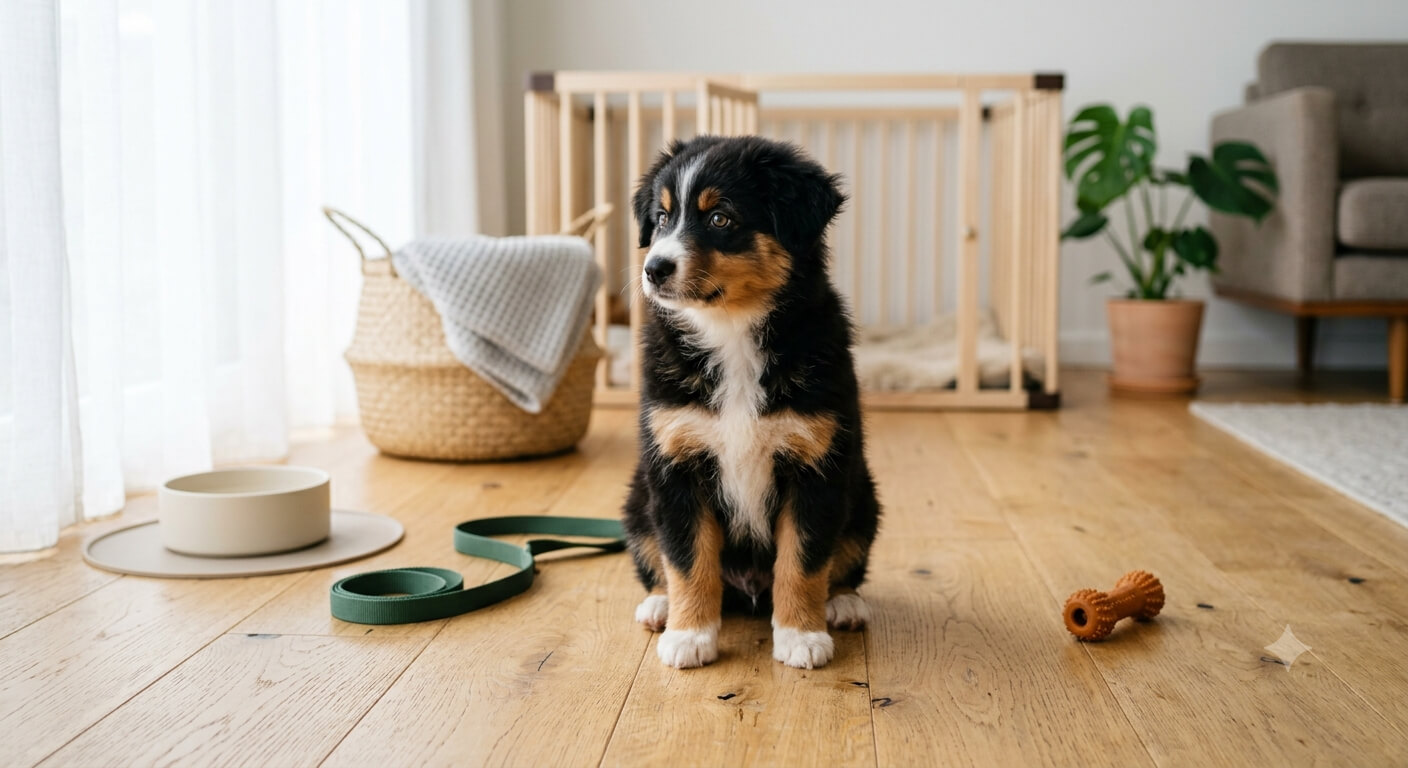
New Puppy Checklist: What You Actually Need
Bringing home a puppy does not require an endless shopping cart. Here is a practical, realistic checklist of what you actually need before day one, what can wait, and the non-product preparation that matters most.
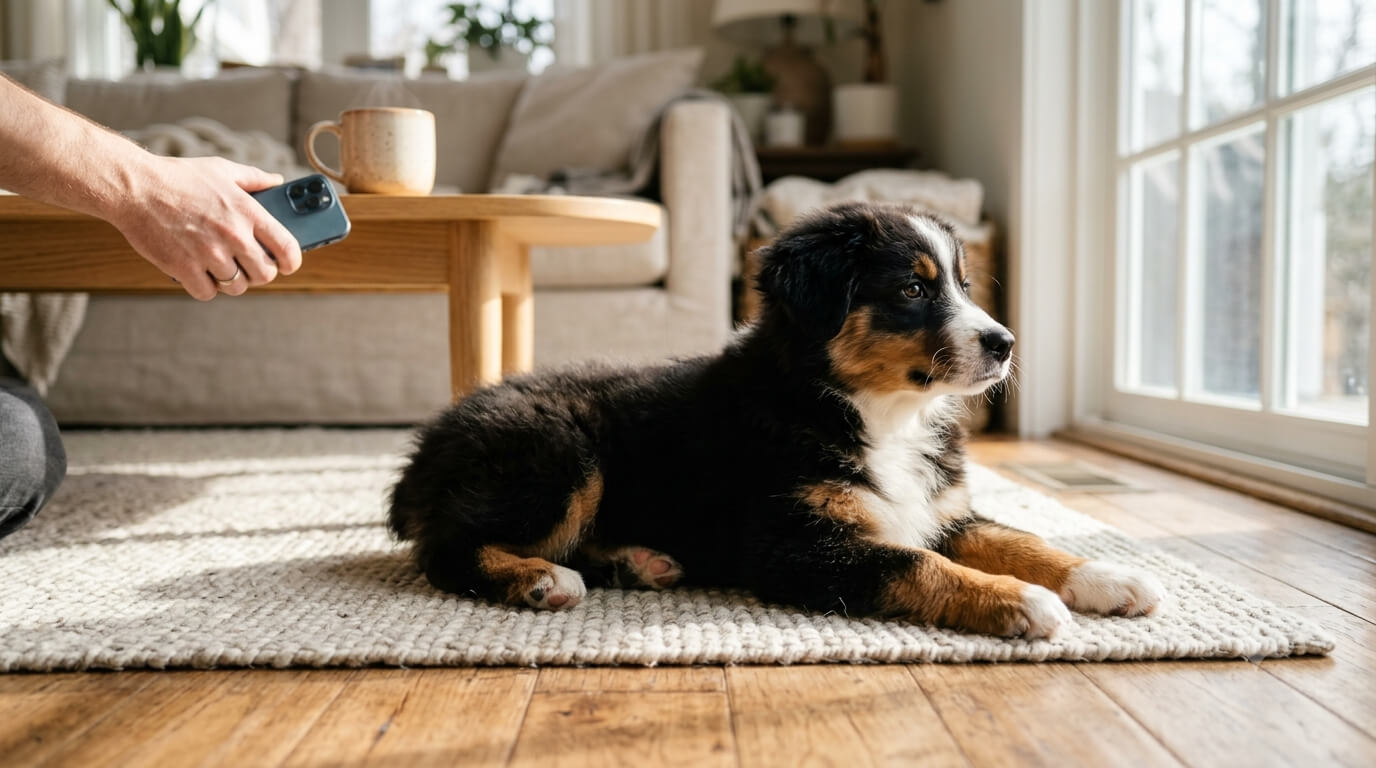
Puppy Daily Routine: What to Track in the First Year
A useful puppy routine is not about making every day identical. Learn which daily events are actually worth tracking, how to identify meaningful patterns, and how to avoid tracking overload.
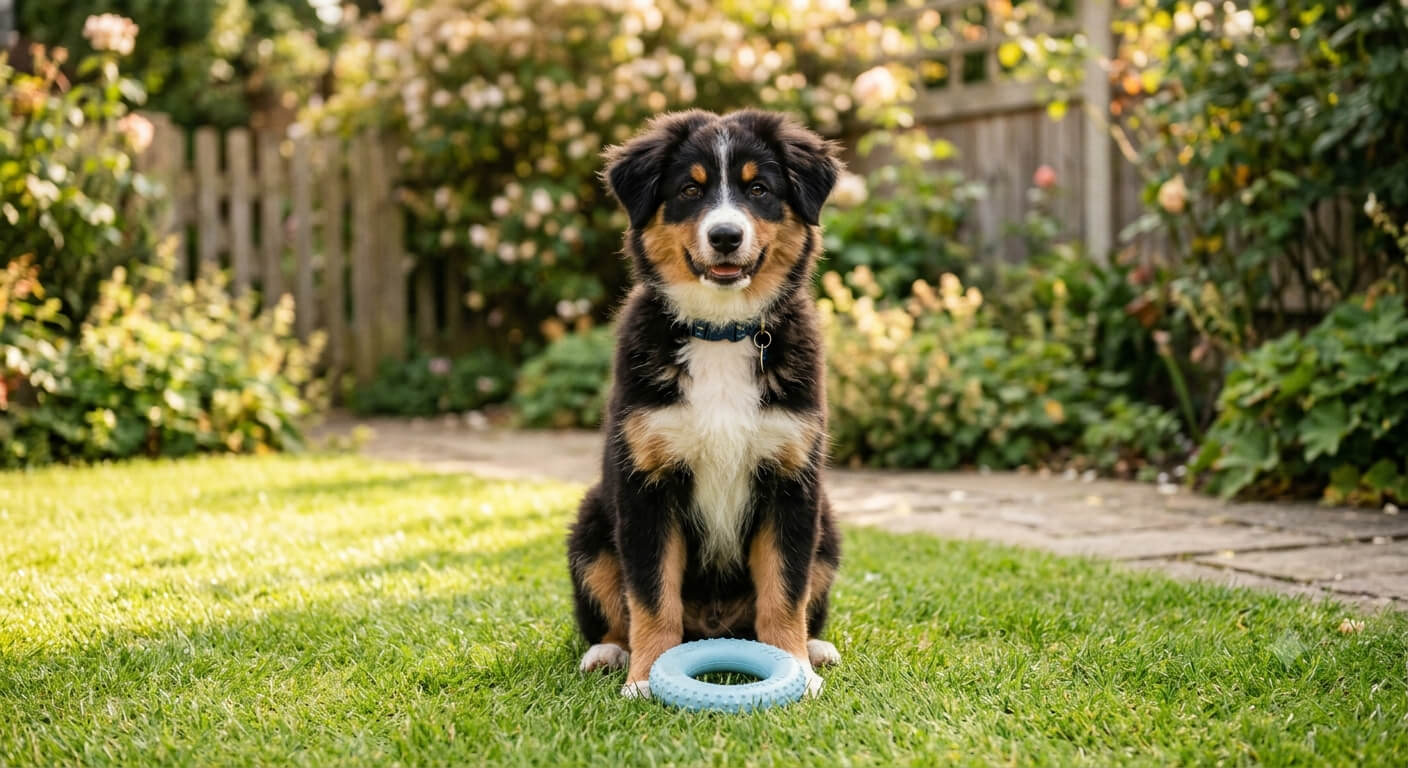
How Much Should a Puppy Sleep? A Guide by Age
How much should a puppy sleep? Learn how puppy sleep changes with age, why young puppies rest so much, what’s normal, and when changes in sleep may need veterinary attention.