
Puppy Daily Routine: What to Track in the First Year
A useful puppy routine is not about making every day identical. Learn which daily events are actually worth tracking, how to identify meaningful patterns, and how to avoid tracking overload.
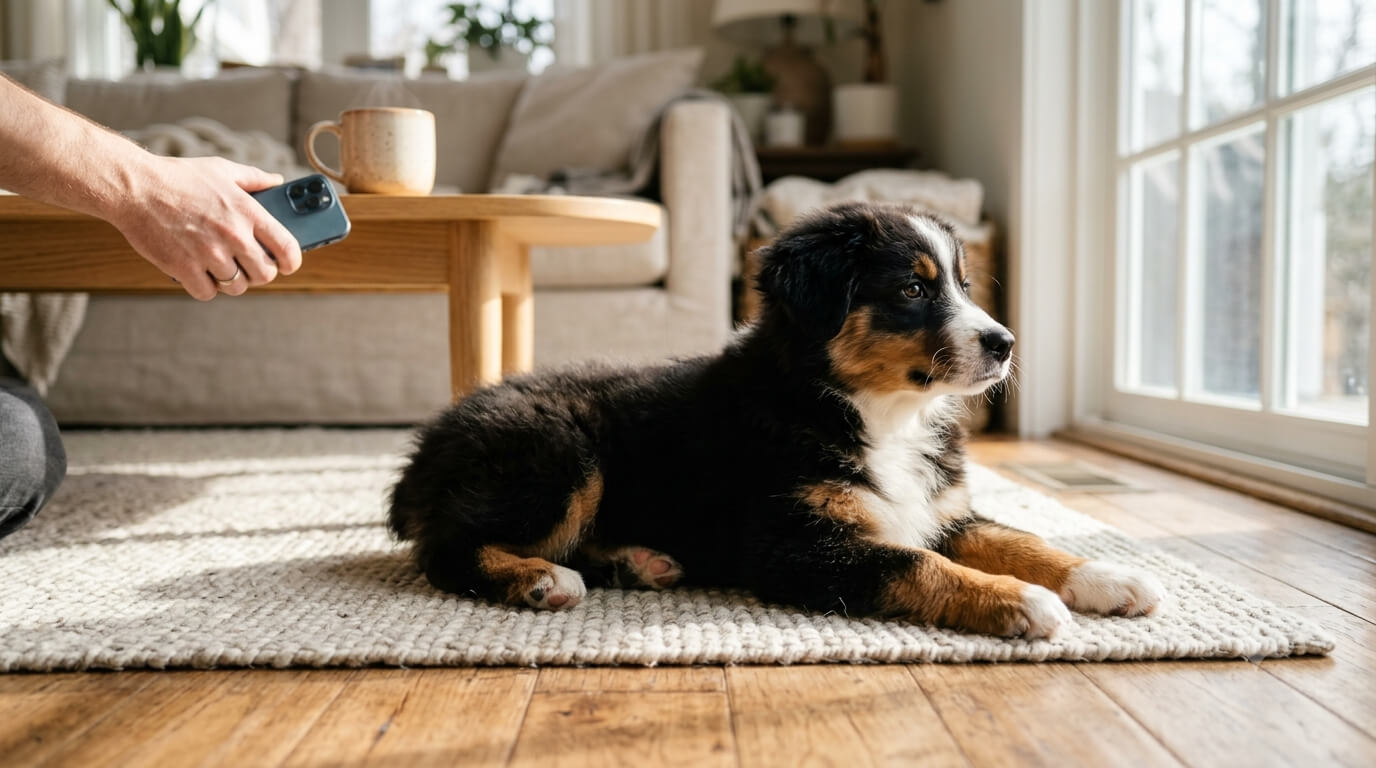
Puppy Daily Routine: What to Track in the First Year
Bringing a young puppy home changes the rhythm of your household overnight. Between potty breaks, feedings, sudden bouts of high energy, and unpredictable naps, new owners often feel as though they need to record every second of the day just to stay afloat. Notebooks fill up with messy scribbles, phone notes become disorganized walls of text, and the fear of missing an important detail can quickly turn puppy care into a stressful administrative chore.
Tracking should reduce uncertainty, not amplify it.
The central truth of puppyhood is simple: a useful puppy routine is not about making every day identical. It is about understanding your puppy's normal patterns well enough to notice what is changing.
Every puppy develops at their own pace. Bladder capacity, stamina, appetite, and emotional resilience vary across breeds, sizes, and individual temperaments. When you track the right events with a light touch, you build a clear picture of your puppy's baseline. That baseline helps you time potty trips, adjust meal routines, celebrate gradual training wins, and share precise, helpful context with your veterinarian if something feels off.
Ditch the Rigid Clock: Focus on Event Sequences
One of the most common pitfalls for new puppy owners is trying to force an 8-week-old or 12-week-old puppy into a strict hour-by-hour timetable. You might see sample schedules online prescribing wake-up at 6:30, breakfast at 7:00, a walk at 7:45, and a nap at 8:15.
In the real world, strict timetables rarely survive contact with a living puppy. A puppy might sleep longer one morning, take an extra potty trip after drinking eagerly, or need quiet rest earlier than anticipated. Trying to adhere to a rigid clock often leads to frustration and missed cues.
Instead of a clock-based schedule, think in terms of predictable event sequences. In daily life, potty needs commonly occur around transitions such as waking, meals, drinking, and active play, while periods of activity are often followed by opportunities for quiet rest.
An Illustrative Event Sequence
The following sequence is purely an example to illustrate how daily events connect naturally. It is not a mandatory schedule:
Notice that this sequence focuses on transitions rather than the clock. Puppies frequently need an opportunity to eliminate shortly after waking or eating. Similarly, after periods of play, exploration, or short training, puppies often settle naturally into rest.
If you are looking for an overview of how these daily structures mature from early puppyhood into young adulthood, see our comprehensive guide on Puppy Schedule by Age: 8 Weeks to 12 Months.
Establishing a Baseline: The Power of Knowing What Is Normal
Before you can spot a meaningful change, you need to know what normal looks like for your individual puppy.
A puppy's personal baseline is far more relevant than generic averages found online. Elimination frequency and timing vary noticeably from one puppy to the next. Some drink moderate amounts steadily throughout the day, while others drink larger amounts after vigorous play. Some settle effortlessly in a quiet corner, while others need help settling in a designated rest area.
When you record daily events for a few days, you begin to see these personal rhythms emerge. This baseline answers practical questions:
- When does my puppy typically need to pee?
- Does my puppy commonly poop within a specific window after eating?
- How does my puppy usually behave before settling down for rest?
- What does my puppy's normal appetite look like?
- What does my puppy's normal stool look like?
Deviating from a baseline does not automatically mean your puppy is sick or that your training has failed. Development is rarely a straight line. However, having a clear baseline tells you when to pay closer attention and consider the surrounding context.
Looking for Patterns Without Assuming Causes
When keeping a puppy diary, it is essential to distinguish between observing a pattern and proving a cause.
Patterns provide useful clues and context. They do not establish scientific causation or deliver a medical diagnosis.
Consider this common scenario: you review your notes and notice that several indoor pee accidents occurred shortly after energetic play in the living room.
- The pattern: Indoor accidents frequently happen shortly after active physical play.
- The practical adjustment: Take the puppy outside for a potty break immediately following vigorous play sessions.
- What it does not prove: It does not prove that play caused the accident, nor does it mean play is bad for the puppy. It simply highlights a recurring sequence where an extra potty opportunity could help.
Similarly, if your puppy has a restless night and struggles with attention during a training session the next morning, the poor sleep may provide useful context. But it does not prove sleep deprivation caused the training difficulty. The puppy could have been distracted by a novel scent, feeling teething discomfort, or simply encountering a task that was slightly too advanced.
Track what happened, look for trends, and use those trends to test sensible routine adjustments without jumping to rigid conclusions.
1. Potty Tracking: Learning Individual Rhythms
Urination and bowel movements are among the most valuable events to track during the first weeks and months. Potty training relies heavily on timing, and timing improves when you understand your puppy's physical triggers.
What Is Useful to Record
- Time or approximate time: When did the event happen?
- Pee or poop: Keeping these separate is important because bladder and bowel patterns follow different timelines.
- Outcome: Was it a successful outdoor elimination or an indoor accident?
- Preceding context: Did the puppy just wake up, finish a meal, take a big drink, or finish a play session?
- Stool observations: Note any unusual softness, mucus, or diarrhea if present.
Avoiding Rigid Rules and False Precision
A puppy's ability to wait between potty opportunities generally increases as they mature, but individual needs vary. You may encounter popular formulas such as the idea that a puppy can hold their bladder for their age in months plus one hour. While this is sometimes shared as a general theoretical ceiling during quiet rest, it is not a recommended daily schedule. An active, playing 3-month-old puppy will often need to eliminate far more frequently than once every four hours.
Tracking does not give you psychic prediction powers, and accidents are a normal part of learning. What tracking does provide is visibility. When accidents happen, a quick look at your log reveals whether a transition was missed, helping you refine your routine without frustration.
For deeper insights into elimination frequency and timing, explore:
- How Often Should a Puppy Pee? Puppy Potty Schedule by Age
- How to Track Your Puppy's Potty Schedule
- Puppy Potty Training Schedule
2. Food, Meals, and Appetite
Meals are one of the most useful anchors in a puppy's daily routine. They help structure the day, and owners often notice repeatable potty patterns around feeding times without needing to treat those patterns as exact clockwork.
What to Note
- Meal timing: When meals are offered.
- Portion consumed: Did the puppy finish the portion, leave some behind, or show reluctance?
- Diet changes: Any introduction of a new kibble, wet food, or topper.
- Training treats and chews: High volumes of training treats or rich chews can impact appetite at mealtimes and affect stool consistency.
Avoid universal portion sizes or internet calorie calculators. Portions depend on the caloric density of your puppy's specific food, their current weight, breed size, and veterinary advice. Always reference the feeding guidelines on your puppy's complete and balanced food package and adjust in consultation with your veterinarian.
Appetite Versus Hunger
It is worth noting that intense enthusiasm for food does not prove a puppy is underfed. Many puppies will eagerly consume far more food than their digestive systems can handle. Conversely, a sudden drop in appetite, a skipped meal, or hesitation around the food bowl is a noticeable change from the baseline that warrants closer observation.
To learn more about structuring daily meals across different developmental stages, read:
3. Water Intake: Watching for Shifts, Not Measuring Drops
Healthy puppies do not require owners to measure water by the milliliter. Trying to track every sip creates unnecessary friction and anxiety.
Instead of measuring exact volume, pay attention to noticeable changes from your puppy's normal drinking behavior.
Meaningful Observations to Note
- Substantial increases: The puppy visits the water bowl far more frequently than usual or drinks persistently without stopping.
- Substantial decreases: The puppy is drinking noticeably less than usual.
- Contextual symptoms: Changes in water intake that occur alongside increased urination frequency, loose stools, vomiting, or lethargy.
4. Sleep and Rest: Tracking Rhythms Without Rigid Formulas
Young puppies spend a substantial portion of the day sleeping and resting, although individual sleep patterns vary.
Tracking sleep does not mean setting a stopwatch for every nap. It means observing your puppy's general resting rhythm and identifying patterns of overstimulation or difficulty settling.
Useful Observations
- Settling windows: When does the puppy naturally get sleepy during the day?
- Settling difficulty: Does the puppy repeatedly struggle to settle down despite being physically tired?
- Nighttime waking: Is the puppy sleeping soundly through the night, or has there been a sudden change in nighttime restlessness?
- Rest environments: Does the puppy rest more deeply in a crate, a playpen, or a quiet room away from household traffic?
Avoid Diagnostic Labels and Wake-Window Formulas
In popular puppy advice, behaviors like mouthiness, frantic running, barking, or poor listening are frequently labeled as overtiredness. A puppy that is tired or overstimulated may sometimes have more difficulty settling or engaging, but behaviors such as mouthiness, frantic running, barking, or poor listening do not by themselves prove that the puppy is overtired. These behaviors can also arise from teething discomfort, lack of enrichment, normal playfulness, or simply being an untrained young dog.
Avoid diagnosing overtiredness based solely on isolated puppy behaviors. Similarly, do not feel obligated to follow strict wake-window formulas imported from infant sleep advice. Observe your puppy's natural cues and ensure they have a quiet, comfortable space where uninterrupted rest is always accessible.
For practical strategies around puppy sleep and rest routines, see:
5. Walks, Play, and Daily Activity
Puppies benefit from appropriate opportunities for movement, play, exploration, and enrichment. Tracking daily activity helps you observe how your puppy responds to different environments and exercise levels over time.
What to Note
- Activity type: Sniffing walks, off-leash exploration in a secure area, gentle play with toys, or structured training.
- Environmental reactions: How did the puppy react to new surfaces, traffic sounds, or unfamiliar environments?
- Stamina and movement: Did the puppy move comfortably and freely, or was there an unusual reluctance to move, limping, or meaningful changes in stamina?
Moving Past Universal Exercise Rules
Appropriate activity varies significantly depending on your puppy's age, physical development, health, structural build, environment, and individual temperament. Strenuous repetitive exercise, forced running, high-impact jumping, and similar activities may be inappropriate for growing puppies.
You may hear the popular guideline suggesting five minutes of structured exercise per month of puppy age. While intended as a cautionary reminder against overworking a young dog, it is an arbitrary rule of thumb rather than a scientific prescription. A self-directed, meandering sniff walk across grass places very different physical demands on a puppy compared to structured walking on pavement.
Additionally, more exercise does not automatically create a calmer puppy. Pushing a puppy beyond their comfort level can lead to exhaustion, frustration, or difficulty settling. Balance gentle physical exploration with calm mental enrichment, and speak with your veterinarian if you have questions about appropriate exercise levels for your puppy.
6. Training Progress: Recognizing Non-Linear Growth
When you work with a puppy daily, it is easy to feel as though training is stalling. A quick log helps you recognize subtle, steady progress that might otherwise be forgotten.
Useful Training Notes
- Skill or foundation practiced: For example, name response, recall in the yard, cooperative handling, or loose-leash focus.
- Setting and distractions: Living room with no distractions versus a front yard with passing neighbors.
- Relative success: Did the puppy respond promptly, need extra support, or find the environment overwhelming?
- Emerging reliability: Skills that are becoming consistent across multiple settings.
Training progress is never completely linear. Training performance can vary with development, distractions, environment, comfort, motivation, and previous practice. A training log reminds you of how far your puppy has come and helps you adjust criteria rather than feeling frustrated.
7. Behavior Observations: Recording Facts Instead of Labels
One of the most important habits when keeping a puppy diary is describing observable actions rather than assigning diagnostic labels.
A label such as "aggressive" summarizes an interpretation but leaves out much of the observable behavior and context that may be useful. For example, writing that a puppy "showed aggression" tells an observer very little. Writing that the puppy "barked twice, backed away behind my legs, and had stiff posture when a barking dog approached the fence" captures clear, actionable information.
Facts Versus Diagnostic Interpretations
| Objective Observation (Helpful) | Diagnostic Label (Unhelpful) |
|---|---|
| Pulled away and hid behind my legs when a delivery truck rumbled past | My puppy has severe noise anxiety |
| Whined and paced near the baby gate for three minutes after I stepped into the hallway | My puppy has separation anxiety |
| Growled softly when I reached for a high-value chew while sitting beside her | My puppy is dominant and aggressive |
| Mouthed my sleeve and darted around the room after twenty minutes in the garden | My puppy is hyperactive and overtired |
Recording context, body language, specific triggers, and how long the behavior lasted gives you reliable information to assess. If you need professional support, these factual descriptions can also be useful to a qualified reward-based trainer, appropriately credentialed behavior professional, or veterinarian.
To better understand what your puppy's physical signals are communicating, refer to our guide on How to Read Dog Body Language.
8. Health, Medications, and Veterinary Care
Keeping a concise health log eliminates guesswork when medical questions arise. Having a clear chronological record makes it easier to recall when symptoms began and how they developed over time.
Daily and Periodic Health Events to Log
- Gastrointestinal changes: Vomiting, loose stool, diarrhea, or visible foreign material in stool.
- Respiratory signs: Coughing, sneezing, gagging, or reverse sneezing.
- Skin and coat: Persistent scratching, head shaking, ear redness, or hair loss.
- Mobility: Stiffness after naps, reluctance to climb steps, or intermittent limping.
- Preventatives and medications: Date and details of any preventive treatments or medications your puppy actually receives according to veterinary guidance and local risk, such as parasite preventatives, deworming, or prescribed medications.
- Veterinary visits: Vaccination dates, microchip registration, and weight checks.
Tracking health details does not replace veterinary care. If your puppy displays signs of illness or discomfort, consult your veterinarian promptly rather than waiting to collect more data.
9. Weight and Growth Trends
Monitoring your puppy's growth provides useful context regarding their overall health, development, and nutritional adequacy.
Sensible Weight Tracking
- Periodic weight checks can be useful during growth, including weights recorded during veterinary visits or at home when there is a practical reason to monitor growth.
- Daily weighing is usually unnecessary for a healthy puppy unless a veterinarian has recommended closer monitoring.
- Avoid comparing your puppy to universal weekly weight gain charts. Growth rates vary dramatically between a Chihuahua, a Golden Retriever, and a Great Dane, as well as between individuals of the same breed.
Body weight is only one part of growth assessment. Veterinarians can also assess body condition and overall development, which provides context that the number on the scale alone cannot.
10. What Not to Track: Guarding Against Overtracking
More data is not always better data. When tracking becomes a burden, owners burn out and stop recording altogether, or they become hyper-focused on normal puppy fluctuations.
Things You Do Not Need to Log
- Every single sip from the water bowl
- The exact minute your puppy falls asleep and wakes up
- Step counts or distance calculations
- Every minor change in posture or mood
- Normal, expected puppy behaviors like brief exploration, sniffing, or ordinary play
Use this simple decision filter whenever you wonder whether to record something:
If the answer to these questions is no, let it go and enjoy spending time with your puppy.
11. What Information Is Actually Useful at a Vet Visit?
Veterinarians frequently hear vague descriptions from well-meaning owners who are worried about their puppies. A clear log transforms these conversations by replacing fuzzy recollections with specific, chronological context.
Transforming Vague Concerns into Specific Facts
Case 1: Thirst and Urination
- Vague: "My puppy has been drinking constantly and peeing all over the house."
- Specific log detail: "Over the last few days, she has been visiting the water bowl noticeably more often than usual and has started having indoor pee accidents again. I also noticed that she sometimes strains at the end of urinating."
Case 2: Digestive Upset
- Vague: "His stomach has been acting weird this week."
- Specific log detail: "He had normal stool Wednesday morning, but had watery diarrhea that evening after dinner and again during the night. He ate only part of his breakfast Thursday morning, drank water normally, and vomited later that morning. He has had no access to trash or human food, but I saw him chewing on a dry pinecone in the yard earlier in the week."
This kind of timeline can give your veterinary team useful context when deciding what questions to ask, what examinations or tests may be appropriate, and what information matters next. A log does not replace a physical examination, but it gives your veterinarian a reliable clinical history.
12. When Not to Wait and Track: Critical Safety Signs
A puppy log is a tool for monitoring normal patterns and subtle changes. It is never a substitute for emergency veterinary care.
If your puppy exhibits any of the following urgent warning signs, do not sit back and record data. Contact your veterinarian or local emergency animal hospital immediately.
When in doubt about whether a symptom is an emergency, call your veterinary clinic or emergency line for professional guidance.
13. Tracking With Dogtales: Keeping Observations in One Place
If you choose to track parts of your puppy's daily routine, Dogtales gives you one place to keep routine and health-related observations so you can look back at what happened instead of relying entirely on memory.
With Dogtales, you can log:
- Meals and food notes
- Meaningful drinking events
- Urination and bowel movements
- Rest periods and sleep
- Walks and outdoor activities
- Health observations, medications, and vet notes
Dogtales does not diagnose medical conditions, predict pee breaks to the exact second, replace your veterinarian, or claim to make puppy raising completely effortless. Instead of trying to reconstruct what happened last Thursday when your vet asks about your puppy's appetite or stool, you have an organized chronological timeline in your pocket.
Whether you use an app, a notes file, or a paper notebook on the kitchen counter, the best tracking system is one that fits naturally into your day and gives you information you actually find useful.
Frequently Asked Questions
What should I track for my puppy?
Focus on the daily events that directly shape your puppy's routine and health: urination, bowel movements, meals, noticeable shifts in water intake, general rest patterns, training foundations, and any health symptoms like vomiting or diarrhea. You do not need to track every event in exhaustive detail; record what provides practical context.
Do I need to track everything my puppy does?
No. Tracking every minute of sleep, every sip of water, or every play session creates unnecessary stress and often leads to tracking burnout. Focus on establishing a clear baseline and recording meaningful changes from that baseline.
How long should I track my puppy's potty habits?
Most owners benefit from tracking elimination closely during the initial weeks of housetraining or whenever accidents suddenly increase. Once the puppy's toilet routine is well established and accidents have become uncommon, many owners can scale back detailed potty tracking.
Should I track my puppy's sleep?
You do not need to time every nap with a stopwatch. However, taking note of when your puppy naturally settles, whether they struggle repeatedly to rest, or whether they experience sudden nighttime waking can help you design a calm environment and spot changes in physical comfort.
Is a puppy diary useful for vet visits?
Yes. Having specific dates, symptom frequencies, and contextual notes (such as diet changes or energy levels) is far more useful to your veterinarian than vague recollections. A concise timeline can give your veterinarian useful context when evaluating the puppy and deciding whether further examination or testing is appropriate.
What changes in my puppy's routine should I pay attention to?
Pay close attention to substantial shifts from your puppy's personal baseline. Examples include sudden drops in appetite, sustained increases or decreases in water intake, abrupt changes in urination frequency, unexplained lethargy, repeated difficulty settling, or new physical symptoms like limping or coughing.
When should I stop tracking my puppy's daily routine?
There is no fixed calendar age when tracking must end. Many owners transition from detailed daily logs to occasional notes as their puppy matures, routines stabilize, and housetraining becomes dependable. You can always restart lightweight tracking temporarily during major transitions, diet changes, or when monitoring a health concern.
Share this article
Keep your dog healthy and happy with Dogtales
Track meals, medication, potty breaks, weight, vaccinations, and daily reminders in one intuitive app.
Related Articles
First Week With a Puppy: What to Expect
The first week with a puppy is about safety, basic needs, gentle routine, and helping them adjust. Learn what to expect, what to prioritize, and how to navigate the first seven days realistically.
New Puppy Checklist: What You Actually Need
Bringing home a puppy does not require an endless shopping cart. Here is a practical, realistic checklist of what you actually need before day one, what can wait, and the non-product preparation that matters most.
How Much Should a Puppy Sleep? A Guide by Age
How much should a puppy sleep? Learn how puppy sleep changes with age, why young puppies rest so much, what’s normal, and when changes in sleep may need veterinary attention.