
How Often Should You Feed a Puppy? A Guide by Age
Learn how often to feed a puppy by age, how many meals puppies need from 8 weeks to adulthood, when to transition from three meals to two, and how to spot when appetite changes require veterinary care.
How Often Should You Feed a Puppy? A Guide by Age
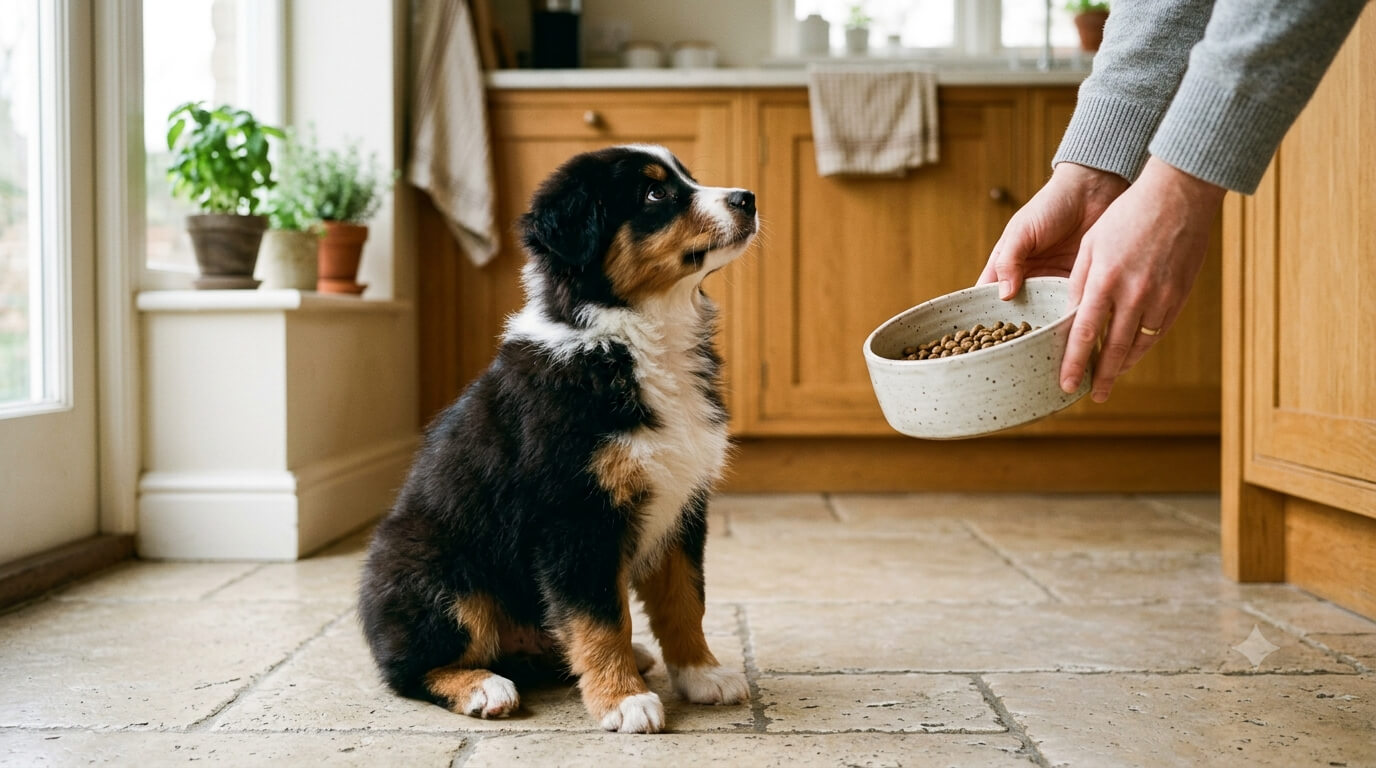
Bringing a new puppy home fills your days with playful romps, gentle cuddles, and an endless list of practical questions. Watching your puppy dash toward the food bowl, clean it out in seconds, and look up expectantly leaves almost every new owner wondering: how often should you feed a puppy, and how many times a day does a puppy really need to eat?
Young puppies grow rapidly, yet their digestive systems and physical bodies are still developing. Navigating meal frequency can feel confusing when different sources offer conflicting advice, with some prescribing rigid timetables and others suggesting meal reductions before a puppy is ready.
Here is the quick, direct answer for how often to feed a puppy across development:
- Young puppies (around 8 to 12 weeks): Commonly fed 3 to 4 meals per day.
- Growing puppies (around 3 to 6 months): Commonly fed 3 meals per day.
- Adolescent puppies (around 6 months and beyond): Commonly transition from 3 meals toward 2 meals per day.
- Approaching adulthood: Most dogs settle comfortably into 2 meals per day (morning and evening).
1. Why Meal Frequency Changes as Puppies Grow
Young puppies have high energy and nutrient requirements for growth and relatively small stomach capacity, so dividing their appropriate total daily food into several smaller meals can make it easier to meet their needs. Offering smaller, regular meals helps ensure puppies receive adequate nourishment throughout the day without having to eat overly large individual portions.
As puppies grow and mature, meal frequency can generally decrease. Their physical capacity increases, their overall growth rate gradually levels off, and they can comfortably take in their required daily nutrition in fewer, slightly larger meals.
2. Why Meal Frequency Is Not a One-Size-Fits-All Rule
It is tempting to look for a rigid calendar that tells you the exact day to change your puppy's feeding routine. However, veterinary nutritionists emphasize that meal frequency is not governed by universal calendar deadlines.
A puppy does not need to drop a meal simply because they reach a specific birthday. Instead, meal frequency depends on a combination of individual factors:
- Age and developmental stage: Younger puppies have smaller stomachs and higher metabolic needs relative to body weight.
- Breed size and expected adult weight: A 2-pound Maltese puppy has different metabolic considerations and stomach volume than a 20-pound Great Dane puppy of the exact same age.
- The individual puppy: Appetite, digestion speed, daily activity levels, and individual growth rates vary from dog to dog.
- The diet being fed: Calorie density, moisture content, and manufacturer feeding recommendations differ between dry kibble, wet food, and specialized veterinary diets.
- Total daily food allowance: The total measured amount of food your puppy requires each day must be divided into portion sizes they can comfortably handle.
- Overall health: Puppies with digestive sensitivities or specific health needs may benefit from tailored feeding rhythms.
- Veterinary and breeder guidance: Recommendations from your veterinarian or knowledgeable breeder should always guide your routine.
General age benchmarks offer a helpful starting point, but they are flexible guidelines, not strict rules.
3. Puppy Feeding Frequency by Age
The table below summarizes common meal frequency patterns across major puppy developmental stages. Use these benchmarks to understand typical progression, while adjusting for your puppy's individual growth and comfort.
| Puppy Age Stage | Typical Meal Frequency | Key Developmental Context | What to Watch For |
|---|---|---|---|
| Around 8 Weeks | Commonly 3 to 4 meals daily | High nutritional needs; smaller stomach capacity; settling into a new home | Consistent appetite; feeding familiar initial food; steady energy |
| 2 to 3 Months (8 to 12 Weeks) | Commonly 3 to 4 meals daily | Rapid early growth phase; high energy expenditure between naps | Comfortable digestion after meals; regular and formed stools |
| 3 to 6 Months | Commonly 3 meals daily | Expanding stomach capacity; active teething phase; steady daytime routine | Chewing comfort during teething; enthusiastic response to meals |
| Around 6 Months and Beyond | Commonly 2 to 3 meals daily | Growth rate begins leveling off; potential changes in midday interest | Natural appetite patterns; veterinary confirmation of steady growth |
| Approaching Adulthood | Commonly 2 meals daily | Skeletal growth nearing completion; adult maintenance routine | Maintaining a lean body condition score; stable adult habits |
Feeding an 8-Week-Old Puppy
At eight weeks of age, your puppy has just transitioned away from their mother and littermates. Everything in their world is brand new, and settling into a new environment is a major adjustment.
Most puppies at eight weeks thrive on three to four meals per day. Spreading their food into three or four evenly spaced feedings helps provide steady nourishment across the day without overloading their digestive system.
During this arrival stage, keep these points in mind:
- Maintain familiar food initially: Keeping your puppy on the food they were eating before coming home helps avoid introducing an unnecessary dietary change during an already significant life transition. Any future diet change should be introduced gradually and handled appropriately based on the specific food and veterinary guidance.
- Preserve steady spacing: Avoid packing meals too closely together or leaving unusually long gaps during waking hours.
- Watch appetite closely: An eight-week-old puppy should show healthy interest in eating. If your puppy picks at food or walks away, monitor them carefully.
Puppies at 2 to 3 Months (8 to 12 Weeks)
Between 8 and 12 weeks of age, puppies go through active growth periods. They are curious and playful between their frequent naps.
Most puppies in this age bracket continue to do best on three to four meals per day. Splitting their measured daily allowance into multiple smaller portions keeps digestion comfortable and provides steady energy without overwhelming their stomach.
If your puppy is thriving on four meals and your household routine accommodates it, there is no need to rush. If your schedule makes four feedings difficult, many puppies in this stage do very well on three evenly spaced meals, provided their total daily food allowance is divided appropriately and they tolerate the portion sizes comfortably.
Puppies at 3 to 6 Months
By 12 to 16 weeks (around 3 to 4 months of age), the majority of puppies settle into a dependable three-meal-a-day rhythm: morning, midday, and evening.
During this window, two important developments occur:
- Expanding stomach capacity: Your puppy can comfortably eat slightly larger individual servings without digestive strain.
- Teething: Teething during puppyhood can sometimes temporarily affect chewing comfort. If a puppy chews cautiously or seems hesitant with dry kibble, adding a splash of warm water to soften the food can make mealtimes easier without altering the feeding schedule.
Around 6 Months and Beyond
Around six months of age is a common general benchmark when many puppies begin transitioning from three meals per day toward two meals per day (morning and evening).
As puppies mature, their growth rate gradually moderates, and they are generally better equipped to consume their daily allowance across two meals. Some owners notice their puppy showing less interest in a midday feeding, which can be one practical observation to consider alongside age, the specific diet's feeding instructions, overall growth, body condition, and veterinary guidance.
However, moving to two meals is not mandatory at six months. If your puppy continues to do well on three meals and that pattern suits your household, you can maintain it. Discussing your puppy's feeding routine during routine veterinary visits helps ensure any change matches their individual progress.
Approaching Adulthood
As puppies approach adulthood, many dogs are fed two measured meals per day (typically morning and evening). This provides a dependable, balanced feeding rhythm that fits comfortably into most households.
4. Moving From More Meals to Fewer Meals: Practical Considerations
One of the most frequent questions new puppy owners ask is when to reduce the number of daily feedings. Rather than searching for a rigid calendar date or assuming there is a checklist of physical readiness signs, deciding whether to adjust meal frequency involves looking at practical everyday factors.
Factors to Consider When Adjusting Meal Frequency
Key practical considerations include:
- Age and developmental stage: As puppies mature, their nutritional needs and daily habits naturally shift toward adult patterns.
- How the puppy handles the current routine: An owner might observe that their puppy consistently shows less interest in one particular meal, such as lunch, while eating other meals normally. This can be a useful observation to discuss, though it is not by itself proof that a meal must be dropped.
- Total daily food and portion sizes: When meals are reduced, each remaining meal becomes larger. Consider whether the resulting portion size is comfortable and easily tolerated by the puppy.
- Body condition and growth: Ongoing assessments of appropriate body condition and steady weight gain help confirm that the puppy's nutritional needs are being met.
- Instructions for the specific diet: The manufacturer guidelines for your puppy's food often provide suggested meal frequencies for different stages of growth.
- Health considerations: Puppies with digestive sensitivities or specific metabolic needs may benefit from maintaining smaller, more frequent meals.
- Veterinary guidance: Consulting your veterinarian provides personalized reassurance before altering your puppy's feeding routine.
What Does Not Indicate Readiness for Fewer Meals
Do not rely on unrelated behaviors to decide when to drop a meal:
- Potty training success: A puppy who has stopped having indoor accidents is demonstrating behavioral learning and improving bladder control, not increased stomach capacity.
- Sleeping through the night: Sleeping soundly through the night is a sleep consolidation milestone, not a digestive signal that meals should be reduced.
- Stool firmness or timing: Regular bowel movements simply reflect healthy digestion of the current routine.
How to Adjust the Routine
When an adjustment in meal frequency is appropriate, keep the following in mind:
- Redistribute the total daily food: Never simply eliminate a meal without reallocating that food. The puppy's total appropriate daily allowance should be redistributed among the remaining meals so overall nutritional intake is maintained.
- Monitor tolerance: Pay attention to how comfortably your puppy handles the change. If slightly larger individual portions appear to cause digestive hesitation or discomfort, you can pause and discuss the routine with your veterinarian.
Once you know the meal count that suits your puppy, the Puppy Feeding Schedule Generator can help place those meal times within your day. It does not calculate how much food to serve.
5. Portion Size vs. Meal Frequency: Understanding the Difference
A critical distinction that every new dog owner must grasp is that how often a puppy eats is not the same as how much a puppy should eat.
- Meal frequency refers to the number of sittings in which food is offered throughout the day (for example, 3 times a day).
- Portion size refers to the total volume and caloric content of food required to meet your puppy's daily metabolic and growth requirements.
When feeding multiple meals, you take the puppy's total daily food allowance and divide it across those meals:
For example, purely as an illustration: if a puppy's appropriate total daily allowance is divided across four meals, each serving represents one quarter of that total daily amount. If that puppy later transitions to two meals per day, each serving represents half of the daily allowance. The total daily intake remains guided by the food and the puppy's individual needs; only the distribution across the day changes.
6. Special Considerations: Breed Size and Health
Different types of puppies have distinct physiological characteristics that influence feeding frequency and nutritional care.
Small and Toy Breed Puppies
Miniature and toy breed puppies require thoughtful management during their first few months:
- Hypoglycemia awareness: Susceptible young toy-breed puppies can be at increased risk of hypoglycemia (low blood sugar) if meals are spaced too far apart or during periods of stress. For these puppies, dividing daily food into three to four reliable, evenly spaced feedings can be an important supportive measure.
- Balanced perspective: Not every toy breed puppy develops hypoglycemia. However, awareness is important, and regular meal timing helps maintain steady daily nourishment during early development.
- No DIY medical protocols: Do not rely on home feeding experiments if a young puppy appears unwell.
Large and Giant Breed Puppies
Large and giant breed puppies face an entirely different set of developmental demands:
- Controlled, steady growth: Overfeeding and excessively rapid growth are undesirable in large and giant breed puppies and are associated with an increased risk of developmental orthopedic problems. Promoting a steady, controlled growth rate and maintaining a lean body condition are essential goals throughout development.
- Formulated growth diets: Large and giant breed puppies should receive a complete and balanced growth diet formulated specifically for puppies expected to be large adults. These diets provide appropriate nutrient profiles and mineral balances to support steady skeletal development.
- Avoid calcium and mineral supplements: Never add calcium supplements, bone meal, or mineral powders to an otherwise complete and balanced growth diet unless specifically directed by your veterinarian. Excess dietary calcium is inappropriate for growing large breed puppies and can disrupt proper skeletal development.
- Meal frequency timing: Large and giant breed puppies do not automatically require fewer or more meals at a given age compared to other dogs. Meal frequency should be based on individual appetite, digestive tolerance, and veterinary guidance.
7. Treats, Training Food, and Daily Intake
Training begins the moment your puppy steps through your front door. Teaching basic cues, crate comfort, and gentle manners requires regular rewards, but high-calorie treats can quickly disrupt a puppy's nutritional balance.
To keep your puppy healthy and prevent unwanted weight gain, follow these practical strategies:
- Training food counts toward total daily calories: Every treat, training reward, and chew contributes to your puppy's total daily caloric intake.
- Use daily kibble for training: Measure your puppy's total recommended food allowance in the morning. Take a portion of that measured kibble and set it aside in a treat pouch to use for daytime training sessions, recall practice, and puzzle toys. The remaining food is then divided across your scheduled meals.
- Do not displace complete nutrition: Treats and training rewards should remain a modest portion of your puppy's daily intake. They should never displace the nutritionally complete and balanced growth diet that provides the essential nutrients your puppy needs.
- Keep training rewards small: Use appropriately small rewards so training treats do not unnecessarily increase total daily intake.
8. Fresh Water: A Constant Necessity
Alongside food, hydration is essential for a puppy's health, digestion, and temperature regulation.
Puppies should normally have continuous, unrestricted access to clean, fresh water throughout the day:
- Do not routinely restrict water for potty training: It can be tempting to withhold water in the hope of preventing house training accidents. Routinely restricting normal water access simply to make house training easier is unsafe, can risk dehydration, and concentrates urine, which may irritate the bladder.
- Medical guidance: If water intake ever needs to be monitored or restricted for a specific medical reason, that plan should be directed by a veterinarian.
9. What If Your Puppy Seems Hungry All the Time?
Almost every puppy parent experiences a moment of worry when their puppy inhales a meal in twenty seconds and immediately begs for more. It is natural to wonder whether your puppy is receiving enough food.
Before increasing portion sizes, consider these practical factors:
- Enthusiasm does not equal underfeeding: Enthusiasm for food, eating quickly, or begging around the kitchen does not by itself prove that a puppy is underfed. Many puppies eagerly seek food even when their nutritional and caloric requirements are fully met.
- Check the feeding guidelines: Re-check the feeding chart on your puppy's specific food bag. Ensure you are feeding for their current weight and expected adult size, and use an accurate scale or measuring tool.
- Evaluate body condition score: Learn to evaluate your puppy's body condition. You should easily feel their ribs beneath a thin layer of fat without pressing hard. When looking down from above, you should see an identifiable waist behind the ribs. From the side, an upward abdominal tuck should be visible.
- Consider slow-feeding options: If your puppy eats very quickly, using an appropriate commercial slow-feeder bowl or food-dispensing puzzle can help pace their meals.
10. What If Your Puppy Skips a Meal?
Discovering that your puppy has turned their nose up at their food bowl can be unsettling. When evaluating a skipped meal, context is everything.
Avoid arbitrary rules like "skipping one meal is always completely fine" or "call the emergency vet after exactly two missed meals." Instead, assess the complete clinical picture:
- Age and size: A skipped meal in a very small toy breed puppy requires much faster veterinary attention than a skipped meal in an older, robust puppy.
- Normal appetite history: Does your puppy normally devour every bite, or are they an occasional grazer who eats at a relaxed pace?
- General demeanor and energy: Is your puppy playing, wagging their tail, and exploring, or are they unusually quiet, curled up, and lethargic?
- Hydration: Is your puppy willing to drink fresh water normally?
- Accompanying symptoms: Are there any warning signs such as repeated vomiting, diarrhea, trembling, coughing, or signs of abdominal discomfort?
If an otherwise healthy, older puppy occasionally declines a single meal while remaining playful, energetic, well-hydrated, and alert, continuing your normal feeding routine while keeping a close eye on them is often reasonable. Context matters, and observing their behavior over the following hours helps you gauge whether it was a momentary fluctuation or the start of something that requires care.
However, if the puppy is very young or small, shows lethargy, refuses water, or exhibits vomiting or diarrhea, seek veterinary advice promptly.
11. Connecting Meal Times to the Potty Routine
Meal times serve as one of the most useful anchors in a puppy's daily routine, particularly for house training.
Eating and drinking naturally stimulate gastrointestinal activity, and young puppies commonly need an opportunity to eliminate after meals. Rather than relying on a fixed clock or assuming every dog follows the same schedule, learn your puppy's individual pattern. Some puppies need to go outside relatively soon after eating, while others take longer to show signs that they need a bathroom break.
Observing your puppy's unique timing after meals provides a reliable framework for preventing indoor accidents. For comprehensive guidance on building your daily bathroom routine and understanding timing, explore our guides on:
- Puppy Potty Training Schedule: A Complete Guide
- How Often Should a Puppy Pee? Puppy Potty Schedule by Age
- Puppy Schedule by Age: 8 Weeks to 12 Months
12. Tracking Feeding Habits with Dogtales
Every puppy develops at their own unique pace. Monitoring daily habits can help you spot subtle health patterns and understand your puppy's individual rhythm.
Using an app like Dogtales allows you to keep an organized, clear log of your puppy's daily life:
- Meal times and portions: Record when meals are offered and note whether your puppy ate eagerly or hesitated.
- Appetite changes: Document days when your puppy seems unusually hungry or leaves part of a meal.
- Water intake: Keep track of hydration habits across the day.
- Elimination patterns: Record pee and poop times to see how closely your puppy's bathroom needs follow their meals.
- Weight and growth: Log regular weight checks and vet visit notes in one place.
A reliable daily record provides clear, objective facts to share with your veterinarian during routine checkups or when discussing appetite questions. Dogtales is designed to support mindful observation of your puppy's real-world habits. It does not diagnose medical conditions, replace veterinary advice, or automatically calculate food portions.
13. When Appetite and Feeding Changes Require Veterinary Care
Because puppies are still growing and developing, noticeable changes in appetite or eating behavior warrant careful observation. How urgently an appetite change needs veterinary evaluation depends on several contextual factors:
- Age and size: Very young and very small puppies deserve particular caution because they may have fewer metabolic reserves.
- Usual appetite: A sudden complete refusal from an eager eater is more concerning than mild hesitation in a dog with a variable appetite.
- Duration and degree of change: How long the appetite change has lasted and whether the puppy is eating less or refusing completely.
- Ability to eat and drink: Whether the puppy can keep water down and shows interest in fluids.
- General behavior and energy: Alertness, playfulness, and willingness to interact.
- Accompanying symptoms: Presence of vomiting, loose stools, or signs of physical pain.
Seek prompt veterinary attention if you observe urgent signs such as:
- Marked weakness, unresponsiveness, collapse, or seizures.
- Inability to keep food or water down, or repeated vomiting.
- Severe or persistent diarrhea, or blood in the stool or vomit.
- Significant abdominal distension, hardness, or signs of pain when touched.
- Poor growth, failure to gain weight appropriately, or unexplained weight loss assessed in context with your veterinarian.
- Severe lethargy or a sudden, drastic change from the puppy's normal behavior.
Trust your instincts. If something about your puppy's eating habits, energy, or comfort seems abnormal, reaching out to your veterinary clinic is always the safest and most responsible choice.
Frequently Asked Questions
How many times a day should I feed my puppy?
Young puppies generally benefit from having their daily food divided into multiple small meals. Feeding three to four meals per day is common for younger puppies, often moving toward three meals and eventually two meals as they mature. The most appropriate frequency depends on your puppy's age, breed size, individual health, and veterinary advice.
How often should an 8-week-old puppy eat?
Three to four meals per day is common general guidance for an eight-week-old puppy. Dividing their appropriate total daily food into smaller, frequent portions can make it easier to meet their high nutritional needs with a relatively small stomach capacity.
When can a puppy go from three meals to two?
Around six months of age is a common general benchmark when many puppies transition toward two meals daily, but there is no universal date. Practical considerations include developmental stage, how comfortably the puppy handles the current routine and portion sizes, steady growth, and veterinary advice. Showing less interest in a midday meal can be one observation to discuss, rather than automatic proof of readiness.
Should puppies eat at the same times every day?
Consistency helps establish a predictable daily rhythm and makes bathroom habits easier to anticipate. While mealtimes do not need to follow a rigid clock to the minute, offering food around familiar morning, afternoon, and evening anchors supports a steady household routine.
Should I leave food out all day for my puppy?
While some owners free-feed, offering measured meals at set times has practical benefits for puppies. Scheduled feedings allow you to observe how much your puppy actually eats, notice any appetite changes quickly, and better anticipate when they may need a potty opportunity.
What if my puppy is always hungry?
Enthusiasm for food, eating rapidly, or begging is very common in puppies and does not by itself mean they are underfed. Verify portion guidelines for your specific food, have your veterinarian check your puppy's body condition and growth, and consider an appropriate slow feeder if they eat very fast. If persistent extreme hunger is accompanied by poor growth, weight loss, or digestive upset, consult your veterinarian.
What if my puppy skips a meal?
Context determines urgency. If an older, otherwise active puppy occasionally skips a single meal while remaining bright, hydrated, and playful, monitoring them through their next scheduled meal is often reasonable. If the puppy is very young or small, appears lethargic, refuses water, or shows symptoms like vomiting or diarrhea, contact your veterinarian promptly.
Share this article
Keep your dog healthy and happy with Dogtales
Track meals, medication, potty breaks, weight, vaccinations, and daily reminders in one intuitive app.
Related Articles

First Week With a Puppy: What to Expect
The first week with a puppy is about safety, basic needs, gentle routine, and helping them adjust. Learn what to expect, what to prioritize, and how to navigate the first seven days realistically.
New Puppy Checklist: What You Actually Need
Bringing home a puppy does not require an endless shopping cart. Here is a practical, realistic checklist of what you actually need before day one, what can wait, and the non-product preparation that matters most.
Puppy Daily Routine: What to Track in the First Year
A useful puppy routine is not about making every day identical. Learn which daily events are actually worth tracking, how to identify meaningful patterns, and how to avoid tracking overload.