
Puppy Sleep Schedule by Age: 8 Weeks to 12 Months
Learn how a puppy's sleep schedule changes from 8 weeks to 12 months, including naps, nighttime sleep, potty breaks, settling, and how rest fits into your puppy's daily routine.
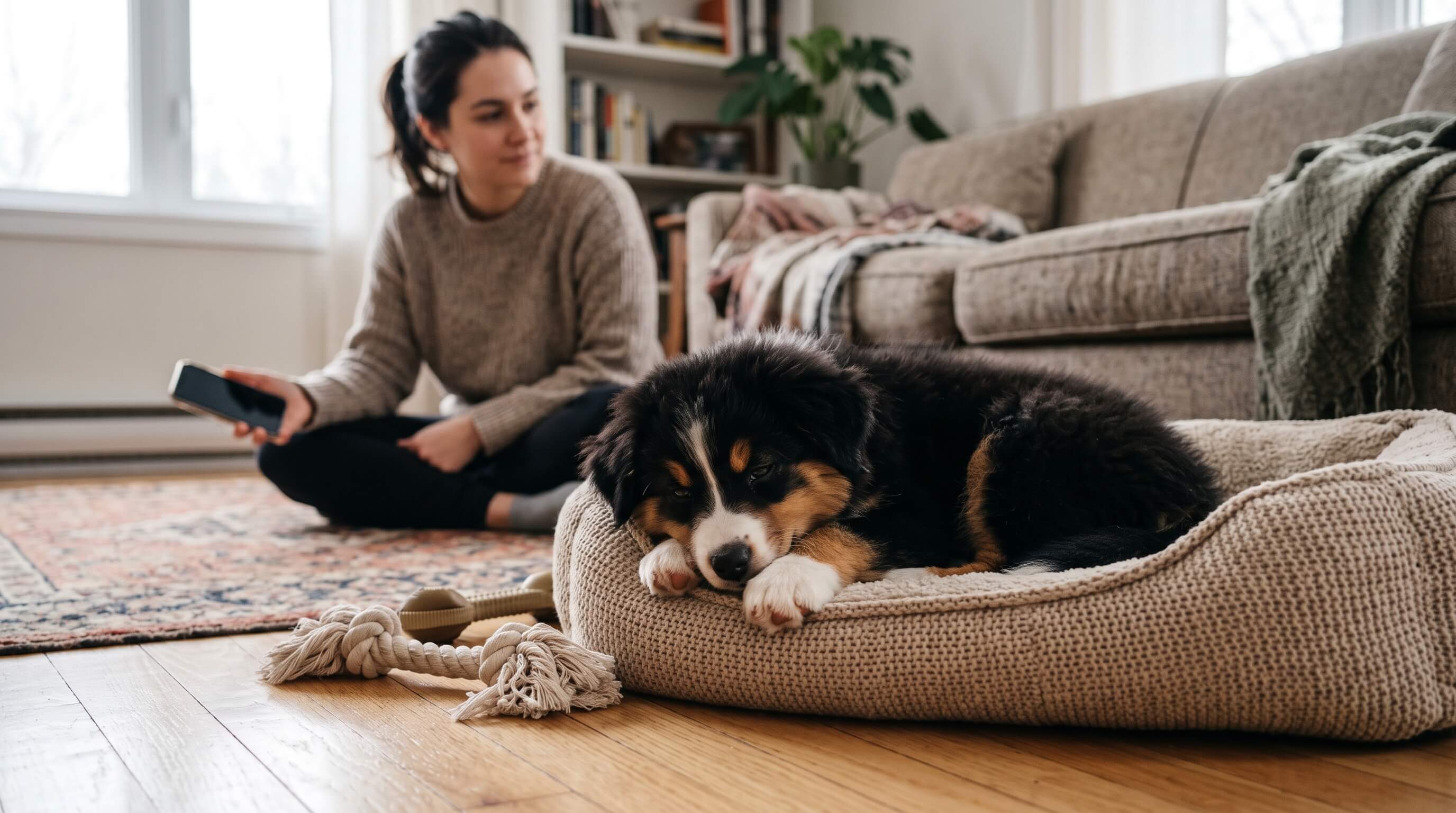
Puppy Sleep Schedule by Age: 8 Weeks to 12 Months
Welcoming a puppy into your home brings immediate joy, but the early weeks often feel like a disorienting cycle of bathroom trips, brief bursts of play, and unpredictable naps. New owners frequently look at their sleeping puppy and wonder: Is this normal? Are they sleeping too much? Why do they suddenly turn into a whirlwind of nipping and zooming right when they seem exhausted?
Much of the advice online suggests setting a rigid timetable, prescribing the exact minute a puppy should wake, play, and sleep. Popular formulas claim puppies must follow strict patterns like "one hour awake, two hours asleep," or assert that every puppy requires precisely 18 to 20 hours of daily rest. In reality, puppies are developing animals, not machines. Sleep needs vary naturally based on age, breed, physical development, health, emotional state, and daily environment.
The most effective puppy sleep schedule is not a rigid clock-based timetable. Instead, it is a predictable rhythm of daily events that provides regular opportunities for rest around meals, potty trips, play, and training.
This guide explains how puppy sleep patterns develop from 8 weeks through the first year, how to support daytime naps and nighttime sleep, and how to fit healthy rest into a calm, sustainable household routine.
How Puppy Sleep Changes During the First Year
During early puppyhood, growth and learning happen quickly. Sleep and rest are normal and important parts of a puppy's physical development, neurological development, learning, and recovery from activity.
Over the first twelve months, your puppy sleeping schedule undergoes several gradual shifts as the puppy matures:
- Gradual consolidation of nighttime sleep: Nighttime sleep may gradually become more consolidated as physical maturity and bladder control develop.
- Lengthening waking periods: Waking periods may gradually lengthen as physical stamina and engagement with the environment increase.
- Ongoing importance of daytime rest: Daytime rest remains important throughout puppyhood to balance activity and learning.
- Temporary settling variations: Developmental and environmental changes, including teething, new experiences, or household transitions, can temporarily affect how easily a puppy settles.
- Maturation toward adult sleep patterns: Sleep may become increasingly adult-like as the puppy matures, with longer stretches of overnight rest and calm downtime during the day.
Puppy Sleep Schedule by Age
Development happens gradually, and individual puppies mature at different speeds. The following puppy sleeping schedule overview outlines typical daily rhythms, daytime rest patterns, and nighttime considerations across key developmental stages.
If you need their exact age in weeks, the Puppy Age Calculator can help you place your puppy within these broad age ranges.
| Age | Typical Daily Pattern | Daytime Rest | Nighttime Considerations | Main Routine Focus |
|---|---|---|---|---|
| 8 to 10 weeks | Short activity bursts alternating with frequent naps | Multiple resting periods spread through the day; easily falls asleep near caregivers | May need one or more overnight potty opportunities | Safe settling, gentle comfort, and early housetraining foundations |
| 10 to 12 weeks | Slightly longer waking curiosity between naps | Rest follows predictable cycles after meals, potty, and gentle play | Overnight intervals may gradually lengthen, while some puppies still need overnight potty trips | Reinforcing consistent resting spots and calm post-potty routines |
| Around 3 months | Developing steady daytime rhythms; clearer play and rest cues | Resting patterns may become more recognizable | Bladder control develops gradually; nighttime wakeups often become less frequent | Balancing mental enrichment with undisturbed daytime rest |
| Around 4 months | Active exploration paired with solid resting blocks | Teething may cause mild restlessness; needs comfortable resting surfaces | Nighttime stretches often continue to lengthen, though individual variation remains | Providing soothing chews before naps to ease teething discomfort |
| 5 to 6 months | Closer to adult rhythms; sustained waking periods | Daytime rest remains important even as waking periods lengthen | Nighttime sleep often continues to stabilize in familiar surroundings | Establishing predictable daytime downtime around household schedules |
| 6 to 9 months | Adolescence begins; energy and physical stamina increase | May resist settling due to environmental curiosity; benefits from quiet spaces | Many puppies sleep for longer nighttime stretches, but individual needs vary | Maintaining consistent resting boundaries despite adolescent restlessness |
| 9 to 12 months | Adult-like rhythm; calm relaxation between household activities | Relaxed resting periods during quiet household hours | Sleep may become increasingly adult-like, with substantial individual variation | Transitioning seamlessly into an adult household routine |
8 to 10 Week Old Puppy Sleep Schedule
The first two weeks in a new home represent a monumental transition. Your puppy has just left their mother, littermates, and familiar environment. Their top developmental need is a sense of security.
At this stage, an 8 week old puppy sleep schedule is characterized by short bursts of exploration followed by sudden collapses into deep sleep. A young puppy may interact briefly with a toy, investigate a corner of the room, and suddenly drift off to sleep where they lie.
Key considerations for 8 to 10 weeks:
- Frequent opportunities for rest: Avoid pushing a young puppy to stay awake. When they disengage or look drowsy, guide them gently to their sleeping area.
- Overnight potty breaks: Very young puppies commonly need one or more calm, brief bathroom outings during the night because bladder control is still developing.
- Sleeping proximity: Keeping the puppy's sleeping area close to your bed can make it easier for some newly homed puppies to settle and allows you to notice when they wake or become restless.
- Gentle transitions: If you are building a broader daily routine, our Puppy Schedule by Age: 8 Weeks to 12 Months outlines how to balance rest with early socialization.
10 to 12 Week Old Puppy Sleep Schedule
By 10 to 12 weeks, puppies become noticeably more engaged with their surroundings. They explore with greater confidence, focus slightly longer on gentle training, and show clearer signals when they need to rest.
Key considerations for 10 to 12 weeks:
- Predictable rest triggers: A familiar sequence can make transitions into rest more predictable: waking up, going outside to eliminate, eating, playing or learning briefly, and returning to a quiet resting zone.
- Establishing dedicated rest spots: Whether using a crate, a puppy-safe exercise pen, or a cozy bed in a quiet corner, helping the puppy associate that spot with calm rest pays dividends.
- Improving nighttime stamina: Bladder control continues to mature. Nighttime stretches may gradually lengthen, while some puppies still need overnight potty opportunities.
3 to 4 Month Old Puppy Sleep Schedule
When searching for a 3 month old puppy sleep schedule or a 4 month old puppy sleep schedule, owners often notice changes in daytime patterns. Some puppies begin showing more recognizable periods of activity and rest as they mature.
Key considerations for 3 to 4 months:
- The onset of teething: Teething commonly becomes noticeable during this stage of puppyhood as baby teeth loosen and adult teeth push through. Sore gums can make settling down on a warm bed uncomfortable. Offering a cool chew toy or allowing the puppy to rest on a cooler tile floor can help them relax.
- Longer waking periods: Some puppies begin staying engaged for longer periods as they mature, although individual activity and rest patterns vary.
- Nighttime consolidation: Nighttime wakeups become less frequent for many puppies. For details on bladder maturation, explore our guide on How Long Can a Puppy Hold Their Pee?.
5 to 6 Month Old Puppy Sleep Schedule
At 5 to 6 months, physical growth continues, and puppies begin to look like young adults. When researching a 6 month old puppy sleep schedule, owners often wonder how daytime rest should fit around their puppy's expanding wakefulness.
Even though a 6-month-old puppy has much more physical endurance, quiet downtime remains essential to balance physical exercise and mental stimulation.
Key considerations for 5 to 6 months:
- Importance of daytime rest: Daytime rest remains important even as waking periods and physical stamina increase.
- Independent settling: Puppies who have practiced quiet rest in safe spaces are now often capable of choosing to lie down and rest on their own without constant supervision.
- Developmental transitions: Adolescence begins at different times in different dogs, and behavioral changes or increased interest in the environment can sometimes affect established routines.
6 to 9 Month Old Puppy Sleep Schedule
The adolescent period brings significant physical stamina, curiosity, and sometimes changes in settling habits. An adolescent puppy may appear energetic and ready for activity, leading owners to believe their dog no longer needs daytime rest.
Adolescent dogs still benefit from regular opportunities for quiet rest alongside their daily exercise and training.
Key considerations for 6 to 9 months:
- Maintaining a restful routine: Continue providing opportunities for quiet downtime even if your puppy does not immediately fall asleep.
- Mental enrichment over physical exhaustion: Calm enrichment such as sniffing, food puzzles, and short training sessions can provide appropriate activity without relying on physical exhaustion.
- Consistent overnight routines: Evening wind-down rituals remain helpful to assist your dog in transitioning smoothly from daytime activity to overnight sleep.
9 to 12 Month Old Puppy Sleep Schedule
As your dog approaches their first birthday, their sleeping habits often closely reflect household life. Many dogs at this stage show increasingly adult-like sleep patterns, including longer overnight rest and quiet daytime downtime.
Key considerations for 9 to 12 months:
- Integration into household life: By this stage, resting periods naturally match your family's daily calendar. Your dog will often comfortably nap while you work from home or relax on the couch.
- Settling as a life skill: The calm settling habits you established during early puppyhood can make it easier for the dog to settle within the household routine as they mature.
Example Puppy Sleep and Nap Routine
Rather than adhering to an artificial timetable, consider how a puppy's day naturally flows around essential events. A reliable routine connects daily anchors: waking up, going outside, eating, engaging in calm play or training, and settling down to rest.
Notice that this routine is sequenced, not clocked. The sequence can begin whenever your household's morning begins. For guidance on how meal timing fits into this flow, review our companion guide on Puppy Feeding Schedule by Age.
How Often Should a Puppy Nap?
One of the most frequent questions from new owners is: how often should a puppy nap during the day?
Internet forums often promote the idea that puppies must follow a strict "one hour awake, two hours asleep" schedule. Some owners use this as a rough framework, but it is not a validated requirement and should not be treated as a universal puppy wake-window rule. Some puppies stay awake comfortably for slightly longer periods, while others tire more quickly after a stimulating experience.
A realistic puppy nap schedule is guided by observation rather than a stopwatch:
- Young puppies (8 to 12 weeks): Commonly alternate relatively brief periods of activity with frequent naps throughout the morning, afternoon, and evening.
- Older puppies (4 to 8 months): Waking and resting patterns often change as puppies mature, with substantial individual variation in nap frequency and duration.
Recognizing Subtle Signs of Fatigue
Rather than watching the clock, observe your puppy's subtle behavioral cues within the context of their day. Contextual clues that a puppy may be ready for rest include:
- Choosing to lie down
- Disengaging from ongoing activity or toys
- Seeking a familiar resting area
- Becoming less interested in continued interaction
- Slower physical reactions or drooping eyelids
These behaviors are contextual clues rather than diagnostic signs of sleep deprivation. When you observe these signals, offering a quiet opportunity to rest can help your puppy settle comfortably.
How Long Should Puppy Naps Be?
Puppy naps can vary considerably in length. A puppy may take a short doze or sleep for a much longer period depending on age, environment, activity, and individual needs.
A puppy resting in the middle of a busy room may wake quickly as household members move around, whereas a puppy in a quiet, comfortable space after a meal and outdoor trip may enjoy a longer, uninterrupted sleep. Both patterns are normal.
Do not feel obligated to wake a sleeping puppy simply because an arbitrary nap timer has expired. Healthy puppies can generally be allowed to wake naturally unless there is a specific care, housetraining, or veterinary reason to wake them.
Puppy Sleep at Night
Nighttime rest is often where new puppy owners experience the greatest anxiety and sleep deprivation. A comfortable, predictable nighttime setup can make overnight settling easier for many puppies.
When Do Puppies Sleep Through the Night?
New owners frequently ask: when should puppies sleep through the night?
There is no universal age when all puppies automatically sleep through the night without waking. Nighttime stretches often lengthen gradually as puppies mature, but there is no universal age or duration that applies to every puppy. Individual bladder control, physical comfort, and home environment all influence how overnight sleep develops.
Body size can be one factor affecting bladder capacity, but individual housetraining progress and overnight needs vary substantially.
Keeping nighttime outings functional and calm helps keep nighttime potty outings low-key and makes it easier to return to rest.
Should You Wake a Sleeping Puppy to Pee?
Whether to wake a sleeping puppy for a nighttime bathroom trip requires practical balance rather than rigid rules:
- Proactive management when needed: Very young puppies or puppies still having overnight accidents may benefit from proactive nighttime potty management based on their individual pattern. Taking a puppy out before an accident occurs can support early housetraining.
- Observing individual progress: Sleeping puppies may sometimes go longer between potty opportunities than active puppies, but individual bladder control and housetraining progress vary. Veterinary guidance supports frequent elimination opportunities for young puppies and notes that some puppies continue needing overnight outings for several months. If your puppy is resting peacefully and you can easily hear when they wake or become restless, arbitrary scheduled wakeups may not be necessary.
- Gradual adjustments: As your puppy shows they can comfortably rest for longer intervals without accidents, you can gradually adjust or discontinue proactive overnight outings.
For deeper insights into individual bladder control and timing, read our guides on How Often Should a Puppy Pee? and our comprehensive Puppy Potty Training Schedule.
What to Do When a Puppy Won't Nap
One of the most frustrating experiences for a puppy parent is a puppy who clearly seems tired but resists settling down. Instead of curling up to sleep, the puppy may race around the room, nip at pant legs, vocalize, or grab forbidden items.
Understanding Fatigue and Overstimulation in Context
In popular puppy advice, behaviors like biting, zooming, barking, or ignoring cues are often labeled as automatic proof that a puppy is "overtired."
In reality, behavior must always be interpreted in context. The exact same behaviors can stem from several distinct causes:
- Genuine tiredness and an inability to self-soothe
- Overstimulation from excessive noise, handling, or activity
- Normal playfulness and unmet physical or mental energy
- Hunger or thirst
- A full bladder or bowel
- Teething discomfort or physical soreness
- Frustration or confusion during training
Before assuming your puppy is overtired, review their recent timeline. If they have been active for an extended period, had a busy training session, or encountered lots of new stimuli, fatigue and overstimulation may be contributing. If they have recently rested and are otherwise behaving normally, energetic play may simply reflect normal puppy activity.
Practical Strategies to Help a Puppy Settle
When your puppy struggles to transition from activity to rest, you can make the transition from activity to rest easier:
- Verify basic physical needs: Ensure your puppy has had a recent opportunity to eliminate, has had access to fresh water, and is not overdue for a meal.
- Lower environmental arousal: Turn off loud media, soften overhead lights, and ask household members to speak quietly and avoid stimulating the puppy.
- Offer quiet enrichment: Some puppies find quiet activities such as chewing, licking, or sniffing useful as a transition from active play to rest. A safe rubber chew toy, a lick mat, or a textured teething toy can help.
- Sit quietly nearby: Many young puppies struggle to settle if they feel isolated. Sitting calmly next to their playpen or resting area with a book provides a comforting presence without active interaction.
- Establish a clear wind-down sequence: Repeating a brief, predictable sequence, such as a gentle potty trip followed by quiet lighting and a chew, makes the transition to quiet time more predictable.
Addressing Distress vs. "Crying It Out"
New owners are often advised to let a crying puppy "cry it out" until they fall asleep. Simply ignoring prolonged or escalating distress is not recommended.
Brief, decreasing whimpers or repositioning can occur while a puppy settles. However, persistent or escalating vocalizing, scratching at boundaries, panting, or trembling indicates genuine distress.
Ignoring persistent or escalating distress is not a good general strategy and may make the resting or confinement setup more difficult for the puppy. If your puppy exhibits escalating distress, step in calmly. Check whether they need to go outside to eliminate, verify that their space is comfortable, and consider whether you need to slow down confinement training and stay closer while they learn to relax.
Creating a Good Puppy Sleep Environment
A puppy's ability to sleep soundly depends heavily on their physical surroundings. Creating a quiet, comfortable, and secure resting space helps your puppy relax with minimal effort.
Crates, Playpens, and Beds: Choosing the Right Setup
There is no single correct sleeping arrangement for every puppy. Several options can work effectively:
- Crates: When introduced gradually and positively, a crate can provide a safe resting space for some puppies and help prevent wandering during housetraining. However, a crate does not magically cause sleep, does not expand bladder capacity, and must never be used for excessive confinement or as a punishment. Crates are entirely optional.
- The puppy-safe playpen: An exercise pen provides a secure resting area with slightly more room for a bed, a water bowl, and a safe chew toy. Many puppies settle comfortably in a pen because they have room to shift positions.
- Designated dog beds or quiet rooms: A comfortable bed placed in a puppy-proofed room or gated area works well for puppies who do not use crates or whose owners prefer an open resting setup.
Choose the setup that allows your puppy to rest peacefully while keeping them safe from household hazards.
How Sleep Fits With Feeding, Potty, Play, and Training
Rest does not happen in a vacuum. In your puppy's daily life, sleep, meals, bathroom breaks, and activity are tightly interconnected in a repeating biological rhythm.
When one element of this cycle is out of balance, the others can be affected. For example, if a young puppy does not get an adequate potty opportunity after eating, discomfort may make it harder to settle. Similarly, a tired or overstimulated puppy may sometimes have more difficulty engaging calmly with training.
A consistent sequence can make the day more predictable for both puppy and owner.
Tracking Your Puppy's Sleep Routine
Because sleep, digestion, hydration, and elimination directly influence one another, tracking these events together helps you identify patterns unique to your puppy.
When logging daily routines, you can observe helpful patterns over time:
- Whether potty events commonly occur after certain daily activities
- Whether settling seems easier after some types of activity than others
- Whether changes in daytime rest occur alongside changes at night
- Whether accidents tend to occur around particular parts of the routine
It is important to remember that observed correlations do not prove causation. Logging daily events helps reveal patterns that owners can use to test small routine adjustments, but it does not diagnose sleep problems or determine why a particular event occurred.
With Dogtales, you can keep naps, wake times, meals, water intake, pee, poop, and activity together in a single unified timeline. Having a shared log is especially useful for families or multiple caregivers, making it easy to see when the puppy was last taken outside, fed, or given quiet downtime. While tracking does not make a living puppy perfectly predictable or replace professional advice, it provides practical clarity that helps households stay coordinated.
If you are interested in refining your daily tracking habits, read our detailed guide on How to Track Your Puppy's Potty Schedule.
When Changes in Sleep May Need Veterinary Attention
While it is normal for puppies to sleep for significant portions of the day, a sudden or marked shift in your puppy's sleeping habits can sometimes signal an underlying health issue.
Young puppies can become unwell quickly, so significant changes in energy or responsiveness deserve prompt attention. You should seek prompt veterinary advice if you observe any of the following warning signs:
- Unusual lethargy or profound weakness: A puppy that is limp, difficult to awaken, unresponsive to your voice, or unable to stand and interact after waking.
- Sleep changes with reduced appetite: Sleeping significantly more than usual while refusing regular meals or water.
- Accompanying gastrointestinal symptoms: Excessive sleepiness paired with vomiting, persistent diarrhea, or an uncharacteristically bloated abdomen.
- Signs of pain or physical discomfort: Whimpering, crying out when changing sleeping postures, reluctance to lie down, or guarding a specific part of the body.
- Respiratory distress during rest: Rapid, shallow, labored, or noisy breathing while sleeping peacefully.
- Marked changes in urination or drinking: A puppy who suddenly needs to urinate far more frequently, strains to eliminate, or drinks excessive amounts of water alongside changes in rest patterns.
If your puppy's behavior is markedly different from their usual pattern or you are concerned about their health, contact your veterinarian.
Frequently Asked Questions
How many hours should a puppy sleep each day?
There is no universal number of hours that applies to every puppy. Commonly published estimates often suggest that young puppies sleep for a large portion of the day, with ranges such as 16 to 20 hours sometimes cited for younger puppies and 12 to 16 hours for older dogs. However, these are broad commonly published estimates that vary between sources and should not be used as rigid sleep targets. Sleep needs vary based on age, breed, health, activity, and individual disposition. Focus on providing regular opportunities for calm rest and observing your puppy's comfort and alertness when awake.
What is a realistic 8 week old puppy sleep schedule?
A realistic 8 week old puppy sleep schedule revolves around short waking periods alternated with frequent naps throughout the day. At eight weeks, a puppy typically stays awake for brief intervals of gentle play, eating, and bathroom trips before settling to sleep. Overnight, an 8-week-old puppy may need one or more overnight potty opportunities because bladder control is still developing.
How often should a puppy nap during the day?
Young puppies commonly alternate periods of activity with frequent rest throughout the day. Rather than following a rigid clock schedule like "one hour awake, two hours asleep," watch for your puppy's subtle signs of tiredness, such as disengaging from play, wandering into quiet corners, or choosing to lie down. Nap frequency naturally decreases as the puppy matures and builds physical and mental stamina.
When should puppies sleep through the night without waking?
There is no single age when all puppies are guaranteed to sleep through the night without waking. Nighttime sleep stretches often lengthen gradually as physical maturity and bladder control develop, but timing varies considerably. Normal access to fresh water should not be routinely restricted merely to prevent nighttime urination. Keep nighttime potty breaks quiet, calm, and brief to help your puppy return to sleep easily.
Can a puppy sleep too much?
Frequent sleep and rest are normal parts of puppy growth and development. Sleeping frequently is completely normal and healthy. However, if your puppy seems lethargic when awake, struggles to get up, shows little interest in eating, or does not engage during their waking periods, this is not normal tiredness. You should contact your veterinarian promptly to rule out illness.
Should I wake my sleeping puppy to take them out to pee?
A healthy sleeping puppy can often be allowed to wake naturally, although housetraining needs, veterinary instructions, medication schedules, meals, or other care needs may sometimes require waking them. At night, very young puppies in early housetraining may benefit from proactive, calm bathroom trips to prevent accidents in their bed. However, if your puppy is sleeping peacefully, their bed is close enough that you can hear them stir, and they have demonstrated good bladder control, you do not need to wake them unnecessarily.
Why does my puppy get wild and bitey instead of going to sleep?
A tired or overstimulated puppy may sometimes have more difficulty settling or engaging calmly. This can manifest as frantic zooming, hard nipping, or barking. However, these same behaviors can also stem from boredom, normal play energy, teething discomfort, hunger, or a full bladder. Check their physical needs first, then reduce environmental noise, dim the lights, and provide a quiet chew toy or lick mat to help make the transition to rest easier.
Should I let my puppy cry it out when going to bed?
Leaving a puppy to experience prolonged or escalating distress is not recommended. While brief, decreasing whimpers or repositioning as a puppy gets comfortable can be part of normal settling, escalating crying, frantic scratching, or trembling indicates real distress. If your puppy is struggling, check that their physical needs are met, ensure their sleeping area is comfortable, and sit calmly nearby so they feel secure while learning to relax.
When does a puppy sleeping schedule become more adult-like?
Sleep patterns generally become more adult-like gradually through puppyhood and adolescence, but timing varies considerably between dogs. As dogs mature, they typically develop longer, consolidated nighttime sleep and comfortable daytime downtime during quiet household hours, alongside regular walks, meals, and engagement.
Share this article
Keep your dog healthy and happy with Dogtales
Track meals, medication, potty breaks, weight, vaccinations, and daily reminders in one intuitive app.
Related Articles
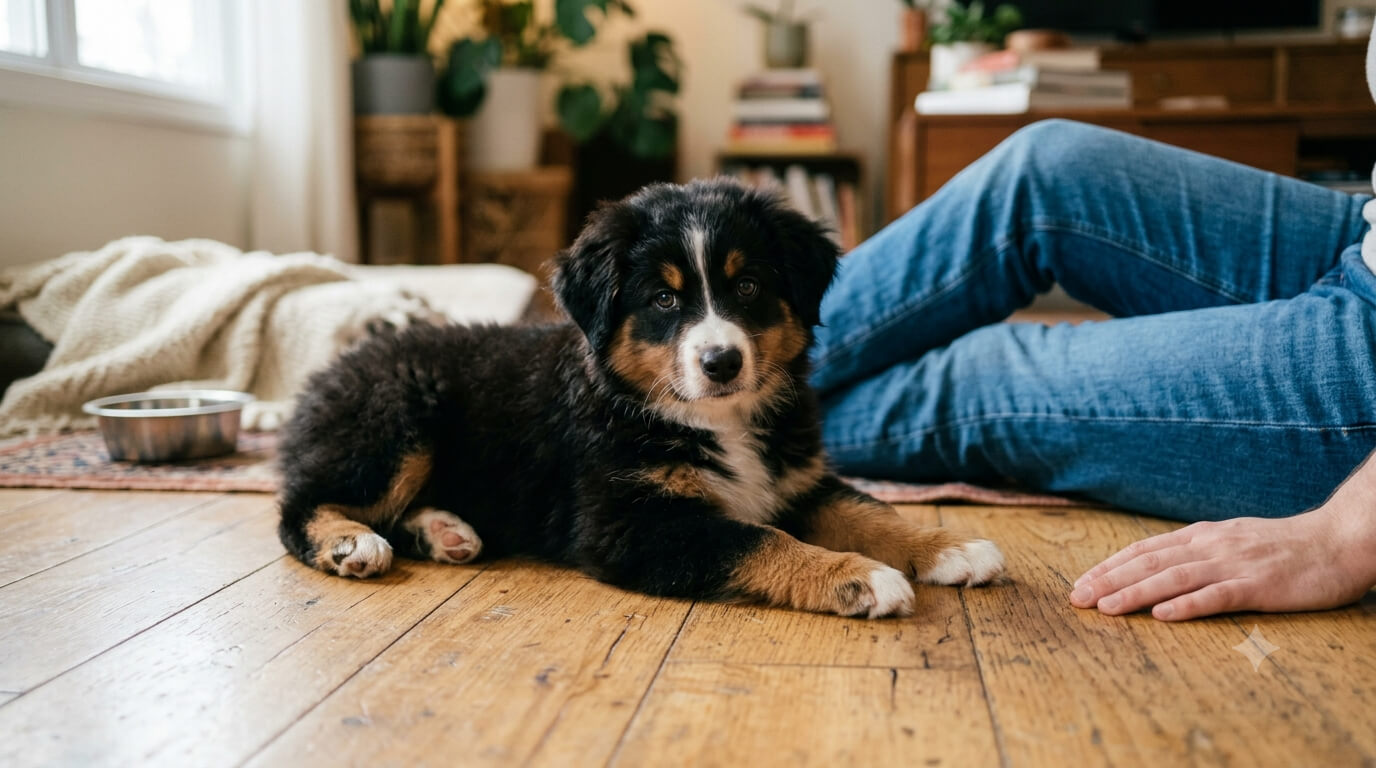
First Week With a Puppy: What to Expect
The first week with a puppy is about safety, basic needs, gentle routine, and helping them adjust. Learn what to expect, what to prioritize, and how to navigate the first seven days realistically.
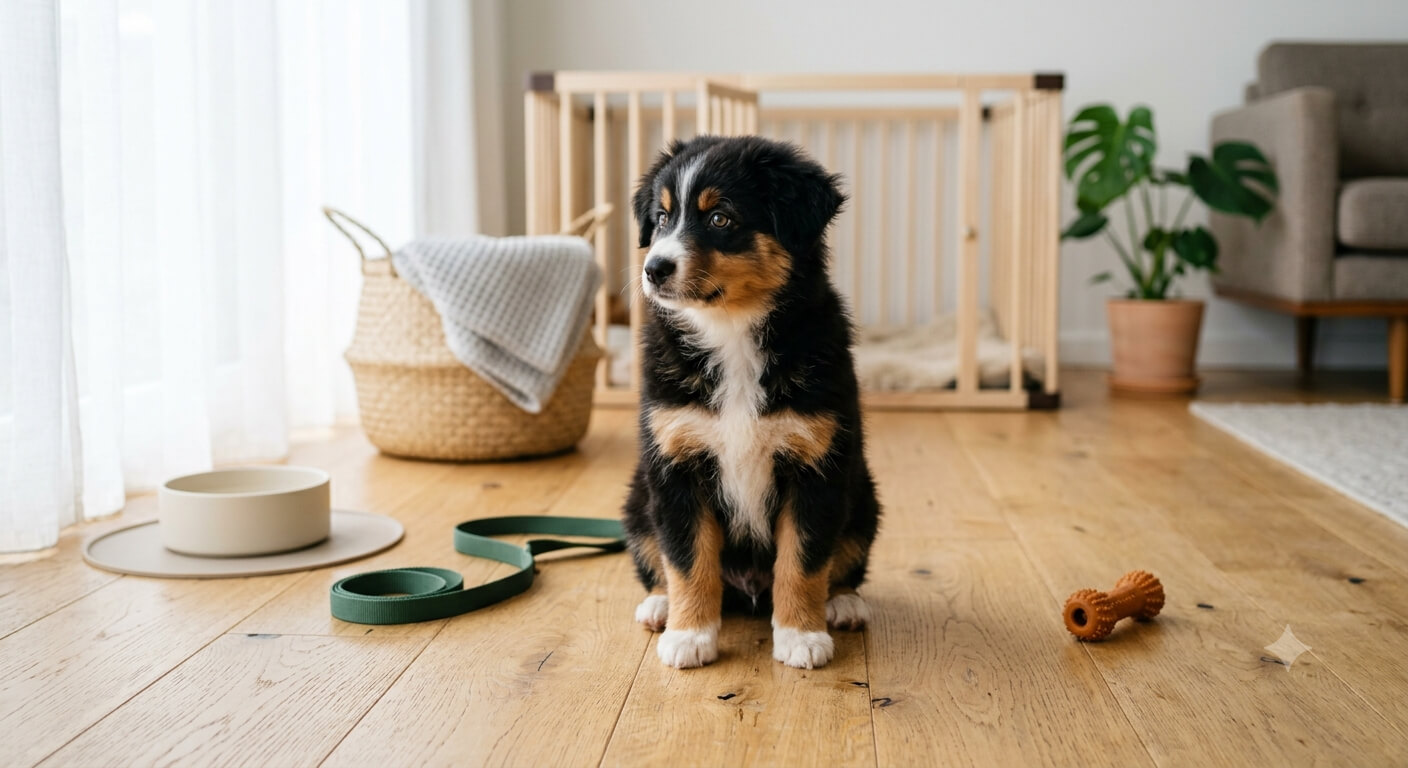
New Puppy Checklist: What You Actually Need
Bringing home a puppy does not require an endless shopping cart. Here is a practical, realistic checklist of what you actually need before day one, what can wait, and the non-product preparation that matters most.
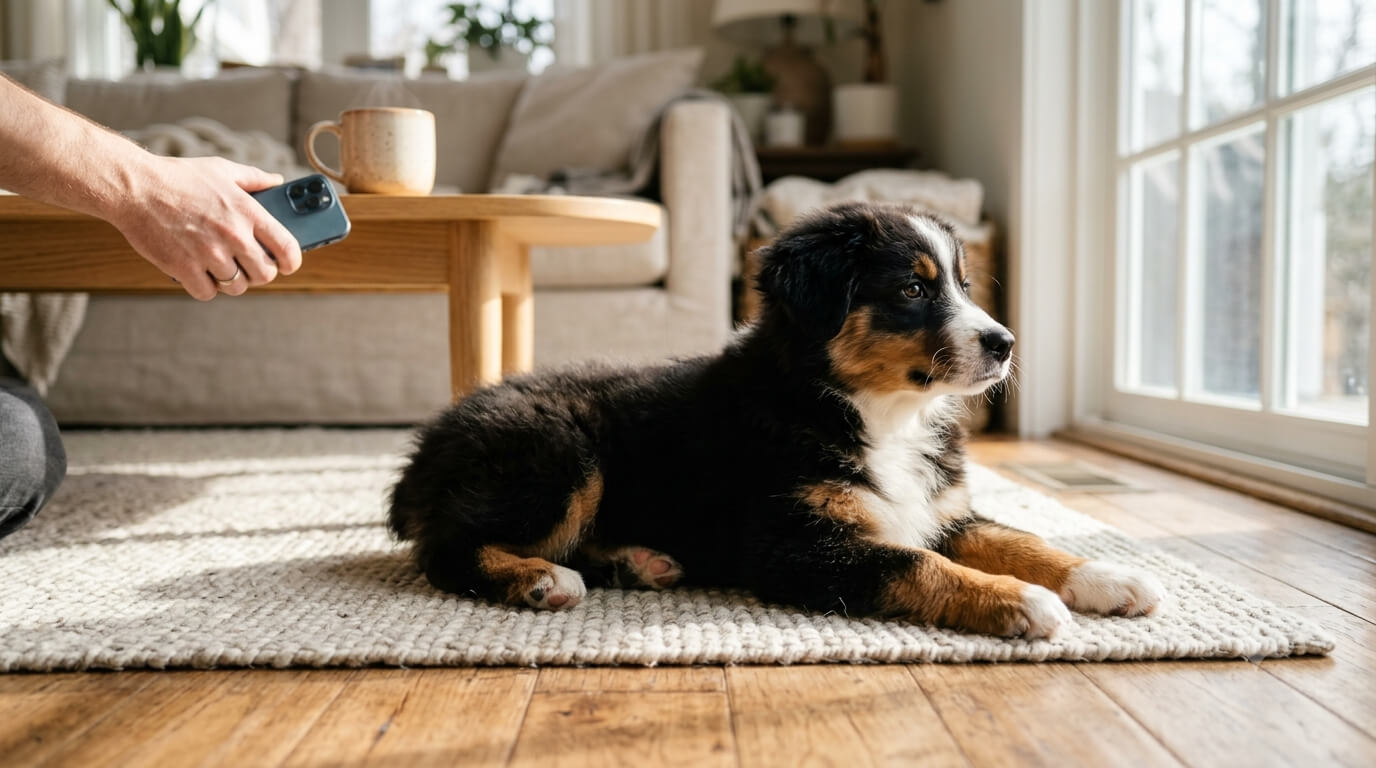
Puppy Daily Routine: What to Track in the First Year
A useful puppy routine is not about making every day identical. Learn which daily events are actually worth tracking, how to identify meaningful patterns, and how to avoid tracking overload.