
Socializing Your Puppy: A Step-by-Step Guide
A practical guide to puppy socialization. Learn how to introduce new environments, people, sounds, and handling safely while keeping your puppy calm and confident.
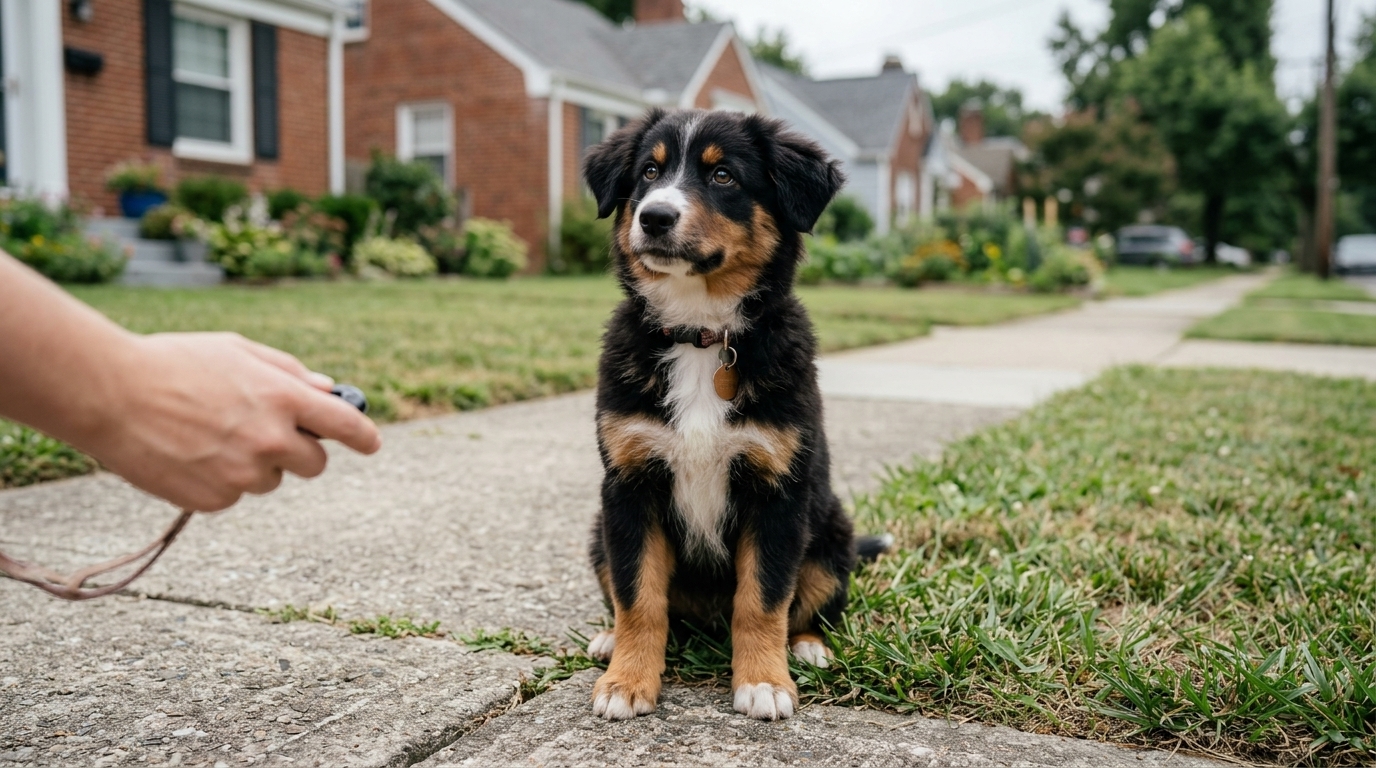
Socializing Your Puppy: A Step-by-Step Guide
Bringing a puppy home is exciting, but owners are frequently told to expose their puppy to one hundred things before sixteen weeks. This creates pressure and often leads to an overwhelmed puppy.
Good socialization is not about exposing a puppy to as many things as possible. It is about creating safe, positive or neutral experiences while keeping the puppy below the point where they become overwhelmed. The common misconception that socialization means forcing puppies to greet strangers or play with every dog they encounter can do real harm. Focusing on emotional comfort and gradual exposure helps your puppy develop genuine resilience.
1. What Puppy Socialization Actually Means
Socialization is the process of helping puppies learn that the people, animals, environments, sounds, surfaces, handling, and everyday situations they encounter are safe and manageable.
Crucially, socialization does not require direct interaction. A puppy calmly watching:
- another dog
- children playing
- bicycles
- traffic
- a person using an umbrella
from a comfortable distance can be a successful socialization experience.
Neutrality is a perfectly good outcome. The goal is not to make a puppy excited to interact with everything they see. Good socialization corrects the common misconception that puppies must greet strangers or play with every dog they encounter.
2. When Is the Puppy Socialization Period?
Do not believe claims that the critical socialization period ends at exactly sixteen weeks. There is no universally agreed exact cutoff. Veterinary behavior sources describe somewhat different boundaries for developmental periods because maturity rates vary across breeds and individuals.
The American Veterinary Society of Animal Behavior (AVSAB) identifies the first three months of life as the primary and most important period for puppy socialization, when puppies are naturally more inquisitive and less prone to fear.
Developmental periods transition gradually rather than switching off on a specific birthday. The practical takeaway: early puppyhood is especially important, but social learning should continue throughout puppyhood, adolescence, and adulthood. Never assume a puppy older than twelve or sixteen weeks has missed their chance.
3. Quality Matters More Than Quantity
Counting exposures is not useful. Five calm experiences can be more valuable than dozens of overwhelming ones. When outings cause intense stress, puppies do not learn safety; they sensitize, becoming more anxious with repeated exposure.
Owners should watch the puppy during exposure.
Signs that the puppy is coping comfortably can include:
- loose body posture
- willingly taking treats
- curiosity
- voluntarily approaching and retreating
- exploring
- recovering quickly after a surprise
- choosing to re-engage
Possible signs that the puppy needs more distance or a break can include:
- freezing
- trying to escape
- hiding
- persistent avoidance
- tucked posture
- refusing food when they would normally take it
- repeated lip licking or yawning in context
- frantic behavior
Do not diagnose emotion from one isolated signal. Consider the whole puppy and the context.
4. Let Your Puppy Choose
Introduce the concept of choice. Do not force a puppy toward unfamiliar people, unfamiliar dogs, objects, loud noises, surfaces, or children.
Allow the puppy to observe first. If the puppy wants to approach, allow appropriate exploration where safe. If they retreat, let them retreat.
Increasing distance is often more useful than trying to convince a frightened puppy to remain near the trigger. Space allows the nervous system to settle so the puppy can process safely. Do not use flooding or "they need to get used to it" logic, which risks learned helplessness.
5. Socializing Your Puppy With People
Socializing your puppy with people does not mean turning every encounter into forced petting. Useful exposure can include people with different:
- ages
- heights
- appearances
- voices
- clothing
- hats
- umbrellas
- mobility aids
- bags
- uniforms
Be careful with children. Children should not chase the puppy, hug them, corner them, pick them up without appropriate supervision, or disturb them while eating or sleeping.
Let the puppy choose whether to approach. People can toss treats rather than immediately reaching over the puppy's head, relieving social pressure.
6. Socializing With Other Dogs
Socialization does not mean meeting every dog. Good experiences with a smaller number of suitable dogs are preferable to uncontrolled greetings. Appropriate dogs should ideally be healthy, appropriately vaccinated according to veterinary guidance, behaviorally suitable around puppies, and supervised.
Adult dogs can sometimes appropriately communicate boundaries to puppies through subtle cues like a lip curl or turning away. These natural corrections teach manners, but interactions still require supervision to prevent bullying.
Avoid recommending dog parks as a primary puppy-socialization strategy. Uncontrolled dog parks can expose puppies to unknown dogs, overwhelming interactions, and infectious-disease risk. Simply observing dogs calmly from a distance is also useful.
7. Everyday Environments
Every household has a distinct lifestyle. Do not tell owners that every puppy needs every experience. The puppy should primarily experience environments they are reasonably likely to encounter later in life.
Examples of environments to introduce gradually: quiet residential streets and busier streets, parks, cafés or outdoor seating where dogs are permitted, veterinary clinic and groomer, pet-friendly shops, car travel and public transport where relevant, elevators, stairs, parking areas, and friends' homes.
Keep visits brief so your puppy finishes while still relaxed.
8. Surfaces and Objects
Walking across different surfaces helps puppies build body awareness, balance, and physical confidence.
Practical surface examples include carpet, wood, tile, grass, gravel, sand, wet ground, metal surfaces, ramps, and stable low platforms.
Novel objects might include umbrellas, bicycles, wheelchairs, strollers, bins, traffic cones, and bags moving in the wind.
Do not encourage unnecessary unstable equipment such as wobble boards purely for socialization unless used appropriately under qualified guidance. Never force a puppy across a surface they are frightened of. Let them investigate at their own pace and reward voluntary exploration.
9. Sounds
Gradual sound exposure helps puppies learn that everyday noises are unthreatening.
Everyday sounds to introduce include vacuum cleaners, doorbells, traffic, household appliances, construction sounds, and thunder/fireworks recordings.
Start at an intensity where the puppy notices the sound but remains comfortable. Pair sounds with food, play, or another positive experience where appropriate.
If the puppy becomes frightened, reduce intensity or increase distance immediately. Do not repeatedly expose a frightened puppy in the hope they will simply habituate. For recorded thunder/fireworks, start very quietly at near-whisper volume.
10. Handling and Vet/Grooming Preparation
Practical, cooperative handling prepares puppies for veterinary exams and grooming without fear.
Introduce paws, toes/nails, ears, mouth, collar/harness, brushing, towel drying, and being gently examined. Do not tell owners to restrain the puppy and make them tolerate it. Forced restraint damages trust and can prompt defensive mouthing.
Use short sessions: touch paw briefly, reward, and release. Build gradually toward longer handling as your puppy remains relaxed. If the puppy pulls away, bites defensively, freezes, or becomes distressed, reduce the difficulty immediately.
These exercises make future handling easier, but they do not guarantee a dog will never be stressed during veterinary care.
11. Socialization Before Vaccinations Are Complete
Do not tell owners to isolate their puppy completely until the full vaccination series is finished. The American Veterinary Society of Animal Behavior (AVSAB) states that appropriate socialization should begin before puppies are fully vaccinated, emphasizing that behavioral issues represent a severe threat to long-term welfare.
At the same time, infectious-disease risk is real and varies geographically. Tell owners to ask their veterinarian about local parvovirus and other disease risks in their neighborhood.
Lower-risk options can include carrying the puppy in higher-risk public areas, observing from a clean blanket or carrier, visiting clean private homes, meeting healthy, appropriately vaccinated dogs, and attending well-managed puppy classes with hygiene requirements.
Avoid areas heavily trafficked by unknown dogs, contact with animal feces, unsanitary communal dog areas, and interactions with visibly ill animals.
Do not give one universal vaccination requirement for puppy classes because requirements and local disease risks vary.
12. Puppy Classes
A well-structured puppy class provides a valuable environment for early learning, but classes must be chosen with care. Look for:
- reward-based training
- controlled puppy interactions rather than chaotic free-for-all play
- opportunities to settle and observe
- clean environment
- appropriate vaccination/health policies
- small enough groups for puppies to remain comfortable
- instructors who intervene when puppies become overwhelmed
- no intimidation, physical punishment, dominance techniques, or forced interaction
Attending a class can help, but attending a class alone does not complete socialization.
13. What If My Puppy Is Afraid?
Even with careful management, your puppy will occasionally feel startled or uncertain.
Tell owners not to force interaction, drag the puppy closer, hold them in place, allow strangers to surround them, or repeatedly expose them at full intensity.
Instead:
- Increase distance immediately until your puppy relaxes.
- Let the puppy observe from a safe vantage point without pressure.
- Pair the experience with something positive where appropriate.
- Keep the session short and conclude on a calm note.
- Leave if the puppy cannot settle.
If fear is intense, persistent, worsening, or affecting normal daily life, recommend discussing it with a veterinarian or appropriately qualified reward-based behavior professional. Do not tell owners the puppy will simply grow out of it.
14. A Practical Puppy Socialization Checklist
The checklist is not a race. The goal isn’t to tick every box. Use the list to notice gaps in your puppy’s everyday experience.
- People: Diverse ages, appearances, and heights; hats, hoods, coats, or sunglasses; mobility aids or uniforms; children playing (observed calmly from a distance); calm visitors.
- Dogs/Animals: Calm, healthy, vaccinated adult dogs; supervised puppies in class; unfamiliar dogs observed across the street; birds or squirrels viewed quietly from safety.
- Environments: Residential and commercial streets; parks (carried or on a clean blanket); outdoor café seating; veterinary and groomer lobbies; pet-friendly shops and private yards.
- Surfaces: Carpet, wood, tile, grass, gravel, sand, wet pavement, metal drain covers, and stable low platforms.
- Sounds: Vacuum cleaners, doorbells, kitchen appliances, road traffic, and recorded thunder/fireworks played at near-whisper volume.
- Objects: Open umbrellas, bicycles, strollers, wheelchairs, curbside bins, and bags moving in the wind.
- Transportation: Short car rides in a crate or harness, watching movement from a parked car, and elevators.
- Handling/Grooming: Touching paws and nails, inspecting ears and mouth, wearing gear, gentle brushing, and towel drying.
- Being Alone Briefly: Resting in a pen or crate nearby, brief age-appropriate alone time, and independent food puzzles.
- Calm Observation: Sitting on a park bench, watching traffic, or resting quietly on an outdoor patio without greeting passersby.
15. How Often Should You Socialize Your Puppy?
Do not prescribe one long daily socialization session. Small experiences integrated into ordinary life work well.
Examples:
- watching traffic for a few minutes
- meeting one calm visitor
- hearing the vacuum from another room
- walking across a new surface
- taking a short car ride
- practicing paw handling for 20 seconds
Stop before the puppy becomes overwhelmed. Rest is also important for puppies. If your puppy becomes increasingly tired, unfocused, or overstimulated, give them an opportunity to rest rather than adding another socialization experience.
16. Track What Your Puppy Has Experienced
Owners often forget what the puppy has already experienced, whether an experience went well, what caused hesitation, and what needs another easier introduction.
With Dogtales, you can keep notes about new experiences, training sessions, and behavior in your puppy’s diary. Recording what they encountered and how they responded makes it easier to plan future socialization without turning it into a memory game.
Keeping notes helps you spot patterns over time and plan gentler introductions when needed.
17. Socialization Doesn't End at 16 Weeks
Early socialization lays important groundwork, but continued positive experiences matter throughout puppyhood, adolescence, and adulthood. Dogs encounter new situations throughout life.
During adolescence, some dogs may become temporarily more cautious or reactive toward situations they previously handled comfortably. If that happens, reduce pressure and return to easier, positive experiences rather than forcing interaction.
Continue reinforcing calm behavior around new environments, visitors, veterinary care, travel, other dogs, and changing household situations.
Do not imply that early socialization guarantees a fearless adult dog. Genetics, development, learning history, health, and later experiences also influence behavior. Your ongoing role is simply to advocate for your dog with patience.
Frequently Asked Questions
What age should puppy socialization start?
Active socialization begins in early puppyhood. AVSAB highlights the first three months of life as the primary window for puppy socialization. However, developmental periods transition gradually rather than closing on a specific birthday, and social learning continues throughout life.
Can I socialize my puppy before all vaccinations are finished?
Yes, with sensible risk management based on veterinary advice and local disease prevalence. AVSAB recommends appropriate socialization before vaccinations are complete because behavioral problems represent a major welfare risk. Focus on clean environments, carrying your puppy, and meeting healthy, vaccinated dogs.
Does my puppy need to meet lots of dogs?
No. Quality matters far more than quantity. Meeting dozens of unfamiliar dogs can cause overstimulation. Controlled experiences with a small circle of calm, vaccinated adult dogs, paired with calm observation from a distance, are much more valuable.
What if my puppy doesn’t want strangers to pet them?
Do not force it. A puppy does not need to accept petting from strangers to be well socialized. If your puppy hesitates, ask people to give them space. Allow your puppy to observe from a distance, toss treats nearby, and respect their choice.
Is a dog park good for puppy socialization?
Generally not as a primary socialization environment. Uncontrolled dog parks expose puppies to dogs of unknown health and behavior, and interactions are difficult to control. Chaotic group dynamics can cause lasting fear, and infectious-disease risk is high before vaccinations are complete.
What if my puppy is already older than 16 weeks?
Continue creating controlled positive experiences. Do not assume your puppy is permanently damaged or that it is too late. Older puppies continue learning through gradual, low-stress exposure. If fear is persistent, seek guidance from a qualified reward-based professional.
How do I know if I’m going too fast?
Watch for signs your puppy needs more distance or a break, such as persistent avoidance, freezing, attempts to escape, inability to settle, or refusing food in context. When you notice these cues, increase distance immediately and reduce future exposure intensity.
Share this article
Keep your dog healthy and happy with Dogtales
Track meals, medication, potty breaks, weight, vaccinations, and daily reminders in one intuitive app.
Related Articles
Puppy Training Schedule by Age: What to Teach and When
A realistic, stage-by-stage guide to puppy training priorities from 8 weeks through adolescence. Learn what to teach and when, how skills build cumulatively, and why practical life skills matter more than rigid command checklists.

How Long Can a Puppy Hold Their Pee?
Learn how long puppies can realistically hold their pee by age, why bladder capacity is not the same as a potty schedule, and what changes during sleep, play, crate time, and time home alone.

Puppy Potty Training Not Working? 9 Common Mistakes
Still dealing with puppy potty accidents? Learn nine common potty training mistakes, why they happen, and practical ways to get your puppy's routine back on track.