
Puppy Vaccination Schedule: Timelines, Core Shots, and Safe Socialization
A practical guide to puppy vaccinations: how the primary series works, core vs. non-core vaccines, maternal antibodies, and how to balance disease protection with early socialization.
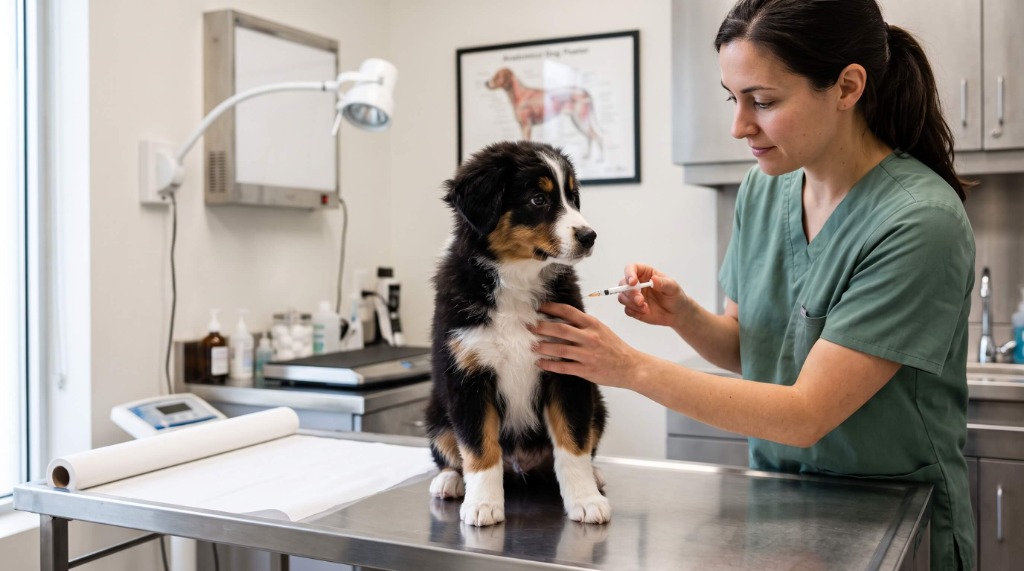
Puppy Vaccination Schedule: Timelines, Core Shots, and Safe Socialization
Bringing home a puppy comes with plenty of decisions, and few topics feel as urgent or confusing as vaccinations. New owners frequently encounter conflicting timelines online, differing advice from friends, and confusing warnings about whether a puppy can step outside before every injection is complete.
Much of this confusion comes from treating puppy vaccinations as a rigid, universal calendar. In veterinary medicine, an immunization schedule is not an arbitrary checklist. It is a biological strategy designed around the transition from a mother's temporary protection to the puppy's own active immune system.
Understanding how that transition works makes the timing logical, clarifies which vaccines are genuinely necessary, and helps you navigate early socialization without taking reckless health risks.
Why Puppies Need a Series of Vaccinations
A common misconception is that puppies receive multiple rounds of shots because the vaccine dose needs to be built up slowly in increments.
The real reason centers on maternally derived antibodies (MDAs).
During the first hours after birth, puppies nurse on colostrum, the antibody-rich milk produced by the mother. These maternal antibodies enter the puppy's bloodstream and provide immediate, temporary protection against infectious diseases the mother has immunity against.
However, maternal antibodies also block vaccines. When a modified-live vaccine is injected while maternal antibody levels remain high, those circulating antibodies neutralize the vaccine antigens before the puppy's own immune system can recognize them and produce long-term memory cells.
Maternal antibodies break down gradually over time, with a half-life of roughly 9 to 10 days. In most puppies, they decline to a level that allows an active immune response between 8 and 12 weeks of age. In some puppies, however, maternal antibodies clear earlier, while in others they persist until 15 or 16 weeks.
This creates what veterinarians call the window of susceptibility: a period during which the puppy has too few maternal antibodies left to fight off a real disease exposure, but still enough to neutralize a vaccine.
Because it is impossible to know the exact day maternal antibodies will fade in an individual puppy without specialized blood testing, international guidelines from the World Small Animal Veterinary Association (WSAVA) and the American Animal Hospital Association (AAHA) recommend administering core vaccines in a series every 2 to 4 weeks, continuing until 16 weeks of age or older.
These sequential puppy injections are not boosters in the adult sense. Instead, each dose provides an opportunity to stimulate active immunity as soon as that puppy's maternal antibodies drop low enough for the vaccine to work.
Core vs. Lifestyle Vaccines
Veterinary guidelines divide canine vaccines into two main groups: core vaccines, recommended for all dogs regardless of lifestyle or location, and non-core (or lifestyle-based) vaccines, which depend on geographic risk and daily exposure.
Core Vaccines
Core vaccines protect against severe, widespread diseases that carry high rates of serious illness or death:
- Canine Parvovirus (CPV): A resilient virus causing severe vomiting, hemorrhagic diarrhea, dehydration, and immune suppression. Parvovirus spreads easily through infected feces and can persist in soil and outdoor environments for many months.
- Canine Distemper Virus (CDV): A contagious viral infection affecting respiratory, gastrointestinal, and central nervous systems, frequently leading to permanent neurological complications or death.
- Canine Adenovirus (CAV-1 and CAV-2): CAV-1 causes infectious canine hepatitis, a severe liver and vascular disease. Modern vaccines use CAV-2 (which causes respiratory disease) to provide cross-protection against both types without ocular side effects historically linked to older CAV-1 vaccines.
- Rabies Virus: A fatal viral disease affecting the central nervous system of mammals. Rabies is zoonotic (transmissible to humans) and is classified as core wherever the disease is endemic or where municipal or regional legislation requires it.
- Leptospirosis (Leptospira spp.): Caused by bacteria shed in the urine of wildlife and rodents, often found in standing water, damp soil, and puddles. Because leptospirosis causes acute kidney and liver damage and can infect humans, authoritative guidelines increasingly classify it as core in regions where the disease is established and multivalent vaccines are available.
Non-Core (Lifestyle-Based) Vaccines
Non-core vaccines are chosen after evaluating your puppy's routine, travel plans, and regional risk:
- Infectious Respiratory Disease (Bordetella bronchiseptica and Canine Parainfluenza): Pathogens contributing to the canine infectious respiratory disease complex, commonly called kennel cough. Highly recommended for puppies that will attend puppy classes, daycare, boarding kennels, or grooming salons.
- Lyme Disease (Borrelia burgdorferi): Transmitted by black-legged ticks. Primarily considered for dogs living in or traveling to regions with high tick density and documented Lyme prevalence, alongside diligent tick prevention.
- Canine Influenza (CIV): Viral respiratory infections with localized or regional outbreaks, often recommended for dogs that interact closely with large numbers of dogs in affected areas.
A Typical Puppy Vaccination Timeline
The timeline below illustrates a standard primary vaccination sequence based on WSAVA and AAHA recommendations. Exact dates, products, and combinations will depend on when your puppy starts, manufacturer datasheets, and your veterinarian's clinical assessment.
| Age Window | Typical Injections | Purpose and Practical Context |
|---|---|---|
| 6 to 8 Weeks | Core viral combination (CDV, CAV-2, CPV) | Often given by the breeder or rescue organization before adoption. Aims to protect puppies whose maternal antibodies fade early. |
| 10 to 12 Weeks | Second core viral combination; First Leptospirosis dose (if indicated); Non-core options (such as Bordetella) | Continues the series as maternal antibodies decline. The first dose of an inactivated bacterial vaccine like Leptospirosis primes the immune response. |
| 14 to 16+ Weeks | Final core viral combination (CDV, CAV-2, CPV); Second Leptospirosis dose; Rabies vaccine (where indicated or mandated) | Critical milestone. Aims to trigger an active immune response in puppies with persistent maternal antibodies. The second Leptospirosis dose completes the initial priming series. |
| 26 Weeks (or 12 Months) | Core viral revaccination or serological antibody test | WSAVA guidelines advise revaccinating core components around 26 weeks (approx. 6 months) to close any residual immunity gap early, rather than waiting until 12 to 16 months. |
Why the Later Puppy Doses Matter
Some vaccine products carry labels allowing an early finish at 10 or 12 weeks. While completing the series early sounds appealing, field data cited in veterinary guidelines shows that a meaningful minority of puppies still carry enough maternal antibodies at 12 weeks to block the vaccine.
Administering a core viral dose at or after 16 weeks significantly increases the likelihood that puppies with longer-lasting maternal antibodies mount an active immune response. Skipping that later appointment leaves a portion of puppies susceptible to parvovirus or distemper despite earlier doses.
The 26-Week Discussion
Historically, dogs received their first core booster at 12 to 16 months of age. In its 2024 guidance, the WSAVA recommends moving that revaccination forward to or shortly after 26 weeks of age (roughly 6 months), or using a serological antibody blood test from 20 weeks onward.
The rationale is straightforward: if a puppy was among the small percentage that failed to respond to their 16-week vaccination due to lingering maternal antibodies, waiting until one year of age leaves them unprotected for months. Checking or revaccinating at 6 months closes that vulnerability without increasing the total number of vaccines given across adulthood.
When Can My Puppy Go Outside?
Few questions cause new puppy owners as much stress as deciding when it is safe to leave the house.
For years, well-meaning advice suggested keeping puppies strictly indoors on total quarantine until several weeks after their 16-week shots. Today, veterinary behaviorists and infectious-disease specialists agree that complete isolation carries serious developmental risks.
The American Veterinary Society of Animal Behavior (AVSAB) emphasizes that behavioral problems, including fear and reactivity, represent a major threat to a dog's long-term welfare and are a leading cause of pet relinquishment. The primary socialization period occurs during the first three to four months of life. If a puppy experiences nothing of the outside world until four or five months of age, their ability to navigate novel environments with confidence can be permanently impaired.
At the same time, infectious-disease risks are genuine. Young puppies do not possess immediate immunity after an injection. When a vaccine successfully stimulates an immune response, the body generally takes around 10 to 14 days to develop measurable antibodies, and protection cannot be assumed based on calendar dates alone.
The goal is not complete quarantine, but thoughtful, low-risk exposure:
- Private outdoor areas: An enclosed private yard that is not accessible to unknown dogs or wildlife is generally suitable for early house training and fresh air. However, evaluate context: if stray dogs, foxes, or rats have access to the area, discuss local risks with your vet.
- Carried outings: Carry your puppy in your arms, in a carrier bag, or let them rest on a clean towel on a park bench. They can experience passing cars, construction sounds, bicycles, and diverse crowds without their paws touching high-risk ground.
- Known, vaccinated dogs: Arrange one-on-one play sessions with healthy, fully vaccinated adult dogs belonging to friends or family in clean, private settings.
- Sanitized puppy classes: Choose structured puppy socialization classes held in indoor facilities that require proof of age-appropriate vaccination and clean their floors with veterinary-grade disinfectants.
- Places to postpone: Avoid public dog parks, communal rest stops, pet-store floors, and sidewalks heavily soiled with unfamiliar dog waste until your veterinarian confirms local risks are manageable.
To learn how to introduce novel sights and sounds without creating stress, read our guide on Socializing Your Puppy: A Step-by-Step Guide. For establishing safe routines during the transition home, see First Week With a Puppy: What to Expect.
What Happens After the Puppy Series?
Once the initial puppy protocol and first revaccination are complete, adult vaccination focuses on maintaining protection without unnecessary injections.
Three-Year Core Revaccinations
Extensive research demonstrates that modern modified-live vaccines for distemper, parvovirus, and adenovirus stimulate long-lasting immunological memory. International guidelines from both the WSAVA and AAHA recommend administering core viral revaccinations no more frequently than once every three years in adult dogs.
Bacterial vaccines operate differently. Inactivated vaccines like Leptospirosis provide shorter-lived immunity, typically requiring annual revaccination to maintain adequate clinical resistance.
Antibody Titer Testing
For core viral diseases (distemper, hepatitis, and parvovirus), in-clinic or laboratory blood tests can measure circulating antibody levels. A positive titer indicates the presence of circulating antibodies, which your veterinarian can use to decide whether revaccination against those specific viruses can be deferred.
Titer testing does not apply to bacterial vaccines like Leptospirosis, where circulating antibodies do not reliably reflect long-term protection.
Keeping Track of Vaccination Records
Accurate vaccination documentation is practical for ordinary pet ownership. You will need proof of immunization when enrolling in training courses, booking boarding kennels or daycare, visiting professional groomers, and traveling across borders.
Whenever your puppy receives an injection, verify that your paperwork includes:
- The date of administration.
- The brand name and manufacturer of the vaccine.
- The manufacturer batch or lot number, usually documented with a peel-off vial sticker.
- The expiration date of the vaccine vial.
- The signature and clinic stamp of the administering veterinarian.
- Your puppy's registered microchip number.
If you are preparing documents before your puppy arrives, our New Puppy Checklist: What You Actually Need covers essential medical paperwork alongside practical supplies.
Managing Records With Dogtales
Between deworming schedules, weight checks, and multi-stage puppy vaccinations, keeping physical documents organized across several months can be tricky.
With Dogtales, you can log vaccination dates, product names, and vet visit summaries directly in your dog's health history. You can set reminders in the Reminder Center so upcoming appointments and annual checkups are not forgotten, and keep photos of vaccination certificates and medical paperwork attached to your dog's profile.
Having your dog's health history organized in one place means you can confirm dates during clinic visits or share records with boarding facilities whenever needed.
For a broader look at tracking symptoms, weight, and veterinary notes, explore our guide on Dog Health Journal: What to Track and Why.
Frequently Asked Questions
What should I do if my puppy's vaccination is delayed by a couple of weeks?
For core viral vaccines like distemper and parvovirus, a delay of one or two weeks usually means simply booking the next appointment as soon as possible rather than restarting the entire sequence. Your veterinarian will ensure the final puppy dose still falls at or after 16 weeks. For inactivated bacterial vaccines like Leptospirosis, the interval between the first two doses requires closer attention. If the second appointment is significantly delayed, your veterinarian will assess whether to continue the protocol or restart that two-dose series, depending on the specific vaccine product and the elapsed time.
What are normal side effects after puppy vaccinations?
Mild tiredness, slightly reduced enthusiasm at mealtime, or mild tenderness and a small, painless lump at the injection site for a day or two are common, normal immune reactions. However, if your puppy develops facial swelling, hives, repeated vomiting, pale gums, breathing difficulties, or severe lethargy, seek immediate emergency veterinary attention. These signs point to an acute allergic reaction.
Why did our puppy's breeder start vaccines at 6 weeks if 8 weeks is standard?
Starting at 6 weeks is common in animal shelters or large breeding environments where disease exposure is elevated, aiming to protect any puppies whose maternal antibodies fade particularly early. In typical pet homes, starting at 8 weeks is standard because maternal antibodies at 6 weeks often neutralize the vaccine. Both approaches are clinically valid, provided the series continues at appropriate intervals through at least 16 weeks.
Do adult dogs need an annual vet check if vaccines are only given every three years?
Yes. An annual veterinary visit is a comprehensive physical checkup, not merely an injection appointment. Your veterinarian examines teeth, heart, lungs, eyes, joints, skin, and body weight, and discusses parasite control. Furthermore, lifestyle vaccines like Leptospirosis or Bordetella require annual boosters even when core viral components are on a three-year rotation.
Share this article
Keep your dog healthy and happy with Dogtales
Track meals, medication, potty breaks, weight, vaccinations, and daily reminders in one intuitive app.
Related Articles
Puppy Won’t Nap? How to Build a Better Rest Routine
Puppy won’t nap or settle during the day? Learn why puppies struggle to rest and how to build a calmer, more practical nap routine without relying on rigid sleep schedules.
Puppy Schedule by Age: 8 Weeks to 12 Months
What should your puppy's day actually look like? From the first week home at 8 weeks to a near-adult routine at 12 months, this guide covers sleep, meals, potty, play, training, and socialization at every stage.
First Week With a Puppy: What to Expect
The first week with a puppy is about safety, basic needs, gentle routine, and helping them adjust. Learn what to expect, what to prioritize, and how to navigate the first seven days realistically.