
New Puppy Checklist: What You Actually Need
Bringing home a puppy does not require an endless shopping cart. Here is a practical, realistic checklist of what you actually need before day one, what can wait, and the non-product preparation that matters most.
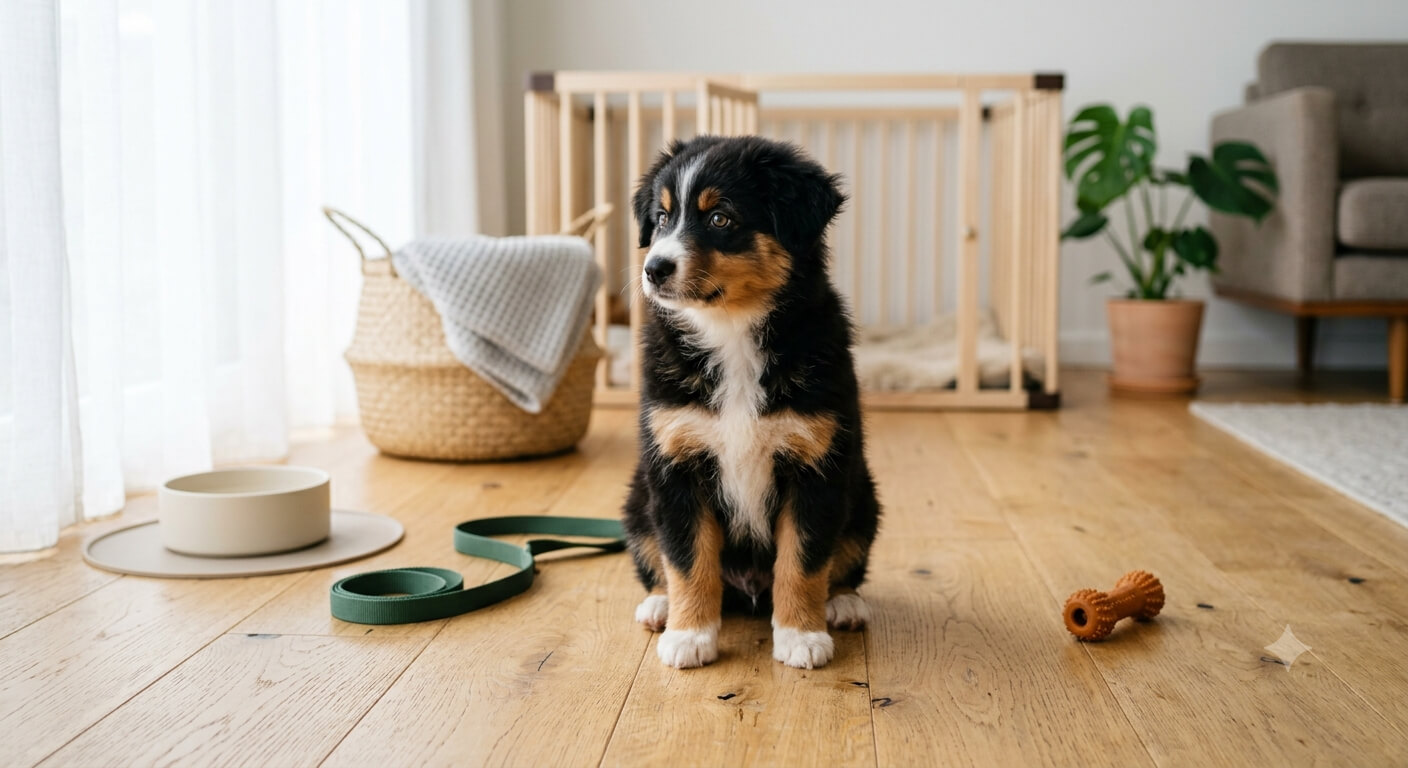
New Puppy Checklist: What You Actually Need
Preparing for a new puppy can quickly feel overwhelming. A quick online search produces endless lists of gadgets, specialty accessories, and commercial gear labeled as indispensable. Before you have even picked up your puppy, your shopping cart can easily total hundreds of dollars in items you may never actually use.
Here is the reassuring reality: you do not need to buy everything marketed for puppies before bringing one home.
A young puppy does not care about designer accessories, heated beds, or novelty gadgets. What a puppy truly needs during their first days is a safe environment, reliable nutrition, a comfortable place to rest, a clear plan for bathroom breaks, secure transport, and a household that agrees on basic daily routines.
By focusing on a small foundation of genuine essentials, you protect your budget and reduce arrival stress. Once your puppy is settled in your home, you can observe their unique adult size trajectory, chewing style, coat texture, and individual personality before deciding what else is worth purchasing.
The Master Checklist: Essentials vs. What Can Wait
To help you prepare quickly without reading through a lengthy guide first, here is a practical overview of what you actually need before arrival day, what is helpful but optional, and what you can safely postpone.
| Item | Need Before Arrival? | Category | Practical Notes |
|---|---|---|---|
| Familiar puppy food | Yes | Essential | Starting with the food the puppy is already eating avoids an unnecessary sudden diet change during the transition. |
| Food and water bowls | Yes | Essential | Appropriately sized, sturdy, and easy to clean. Elevated stands are not universally required. |
| Well-fitted flat collar | Yes | Essential | Sized for your puppy's current neck. Check the fit frequently as your puppy grows. |
| Identification tag | Yes | Essential | Engraved with your current phone number. Check local pet identification requirements. |
| Standard 4 to 6 foot leash | Yes | Essential | A lightweight, comfortable leash for basic handling and outdoor potty breaks. |
| Appropriately fitted harness | Optional | Useful Addition | Useful for leash training and distributing neck pressure. Check the fit frequently as your puppy grows. |
| Safe sleeping and rest area | Yes | Essential | A designated quiet area such as a crate, puppy playpen, or gated safe zone. |
| Washable bedding | Yes | Essential | Practical, machine-washable blankets or simple mats that survive accidental soiling or chewing. |
| Poop bags and dispenser | Yes | Essential | A generous supply of reliable bags for prompt cleanup outdoors. |
| Pet-safe cleaner for organic messes | Yes | Essential | Formulated specifically to remove organic pet odors and help prevent repeat soiling. |
| Small selection of safe toys | Yes | Essential | A small starter selection with different functions or textures (chew, interactive, puzzle, soft). |
| Teething chew options | Yes | Essential | Pliable rubber or textured puppy chews. Avoid very hard items that can damage puppy teeth. |
| Coat-appropriate brush | Yes | Essential | A basic comb or brush matched to your puppy's coat type to begin gentle handling routines early. |
| Puppy-safe shampoo | Yes | Essential | A gentle, dog-formulated wash on hand for unexpected mud or bathroom accidents. |
| Nail trimmers or grinder | Yes | Useful Addition | Useful to introduce early, though your veterinary team can also assist during early checkups. |
| Dog toothbrush and dog paste | Optional | Useful Addition | Use toothpaste formulated for dogs. Never use human toothpaste. |
| Secure car travel setup | Yes | Essential | An appropriately secured carrier or vehicle restraint designed for dogs. Never transport a puppy loose or on a lap. |
| Veterinary appointment plan | Yes | Essential | Choose your veterinary clinic and book an initial wellness exam soon after arrival. |
| Transfer of health records | Yes | Essential | Collect vaccination history, deworming dates, microchip documentation, and breeder or shelter notes. |
| High-value training treats | Optional | Can Wait | A portion of your puppy's measured daily food allowance works well for early training rewards. |
| Treat pouch | Optional | Useful Addition | Convenient for keeping food rewards accessible during house training and socialization outings. |
| Training clicker | Optional | Useful Addition | Helpful if you plan to use marker training, but a consistent verbal marker works equally well. |
| Indoor puppy pee pads | Optional | Situation-Dependent | Practical for high-rise living or medical situations, but evaluate your long-term outdoor toilet goals. |
| Exercise pen or puppy gate | Optional | Useful Addition | Excellent for creating a flexible, puppy-proofed zone without strict crate confinement. |
| Extensive toy collection | No | Can Wait | Wait to discover your puppy's play preferences before spending money on dozens of toys. |
| Expensive luxury dog bed | No | Can Wait | Young puppies may chew or soil bedding. Save premium beds until chewing and house training stabilize. |
| Puppy clothing and costumes | No | Can Wait | Clothing is optional for many puppies. Weather protection depends on coat, size, and conditions. |
| Automatic feeders and gadgets | No | Can Wait | Simple bowls work well. Feeding gadgets are not necessary for most new puppies. |
| Bulk boxes of treats | No | Can Wait | Buying large quantities of unfamiliar treats before knowing whether they suit the puppy is unnecessary. |
| Advanced training gear | No | Can Wait | Focus on gentle, reward-based foundation manners before exploring specialized training equipment. |
1. Puppy Food and Nutrition
The most critical nutritional priority for a new puppy is continuity. Moving away from their mother, littermates, and familiar environment is a major life transition. Sudden changes in diet on top of moving stress can cause gastrointestinal upset, loose stools, and reduced appetite.
Starting with the food the puppy is already eating avoids an unnecessary sudden diet change during the transition.
Keeping the Current Food
Ask your breeder, shelter, or rescue organization for the specific brand, formula name, and daily feeding amount the puppy has been eating. Continuing this familiar food initially avoids an abrupt change at arrival.
If you decide to change diets for nutritional, budgetary, or availability reasons, introduce the new food gradually. Rather than following an arbitrary universal schedule, monitor your individual puppy's stool consistency and appetite. Mix small amounts of the new food into the familiar food over a period that allows the digestive system to adapt comfortably. If loose stools develop, slow down the transition and consult your veterinarian.
Selecting an Appropriate Growth Diet
When choosing a puppy food, confirm that the formula is complete, balanced, and specifically intended for growth:
- Life stage formulation: Growing puppies require distinct protein, fat, amino acid, and mineral ratios compared to adult dogs. Look for diets formulated to meet established nutritional profiles for growth or all life stages.
- Large-breed considerations: The Association of American Feed Control Officials (AAFCO) defines large-size growth as applying to dogs expected to reach 70 pounds (approximately 32 kilograms) or more as mature lean adults. Puppies expected to become large dogs need a growth diet appropriate for large-size dogs, with controlled mineral content, particularly calcium. Owners should check the nutritional adequacy statement on the package and discuss appropriate food with their veterinarian when uncertain.
- No unprescribed supplements: Do not add calcium, vitamins, minerals, or other supplements to a complete and balanced puppy diet unless a veterinarian recommends them for that puppy.
To learn how daily feeding frequencies and portion timing shift across your puppy's first year, explore our comprehensive guide on puppy feeding schedule by age and see our breakdown on how often should you feed a puppy.
2. Food and Water Bowls
You do not need decorative or costly bowls to feed your puppy well. What matters most is stability, size, and sanitation.
Functional Essentials
- Stability: Puppies are clumsy and often step into their dishes or tip them over during enthusiastic eating. Look for bowls with a wide, weighted base or a non-slip silicone bottom.
- Appropriate sizing: A shallow, smaller bowl prevents a toy or small-breed puppy from having to strain their neck over high rims, while larger breeds need enough volume to hold their measured portions comfortably.
- Cleanability: Bowls should be washed daily with hot water and pet-safe dish soap to prevent bacterial buildup. Stainless steel, food-grade ceramic, and durable glass are all practical options that hold up well to frequent washing. No single bowl material is universally medically superior for every household, so choose an option that is easy for you to clean thoroughly every day.
Fresh water should normally be available. Do not routinely restrict normal access to water simply to prevent nighttime or indoor potty accidents. If a puppy's drinking seems unusual, discuss it with a veterinarian.
3. Collar, Harness, Leash, and Identification
Equipment for walking and handling should prioritize safety, comfort, and rapid adaptability. Puppies grow at remarkable rates, so equipment that fits comfortably today may become snug soon after.
Collar vs. Harness: Choosing the Right Setup
Neither a collar nor a harness is universally best for every situation. Each tool serves different practical functions:
- Flat collar: A simple nylon or biothane flat collar is lightweight, easy to leave on during supervised daytime hours, and provides a dependable anchor for an identification tag. Check the fit frequently as your puppy grows by ensuring you can easily slide two fingers between the collar and your puppy's neck.
- Fitted harness: An appropriately fitted harness allows comfortable movement and does not rub, restrict, or place inappropriate pressure on the puppy. A harness can help distribute pressure away from the neck during early leash walks when puppies frequently make sudden darts or pull against the line.
Use reward-based training and avoid equipment intended to cause pain, discomfort, or intimidation, such as prong collars, choke chains, or electronic shock collars. Foundational walking skills are best taught using patient, reward-based methods as detailed in our guide on essential training tips.
Leash Selection
Stick with a standard flat leash between 4 and 6 feet (1.2 to 1.8 meters) in length made of nylon, leather, or biothane.
Avoid retractable leashes for young puppies. Practical safety and management concerns include reduced control, tangling, and potential injuries from thin cords. In addition, their variable length and persistent tension can make consistent loose-leash training more difficult.
Identification and Microchipping
Before your puppy arrives, prepare clear identification:
- ID tag: Attach a lightweight tag to your puppy's collar showing your family name, primary phone number, and city. You do not necessarily need the puppy's name on the tag, but reachable contact numbers are essential.
- Microchipping: Confirm whether your breeder or rescue organization has already microchipped the puppy. If so, request the microchip number and registry details, then update the contact information to your name immediately. If the puppy is not yet chipped, ask your veterinary clinic to administer a microchip during your first wellness visit.
- Local registration: Note that licensing, microchip mandates, and municipal dog registrations vary significantly by country, state, and city. Check your local council or animal control regulations to ensure compliance.
4. Safe Sleep and Rest Areas
Young puppies spend a substantial portion of the day sleeping and resting, but individual sleep needs vary. A quiet, comfortable place to rest is useful from the first day home.
Understanding Crate Use
Crates can be useful for management, safe confinement, and housetraining when introduced appropriately and used for suitable periods. While a crate can become a comfortable resting space when introduced positively, it is not inherently perceived as secure by every puppy, nor is it mandatory for raising a puppy. It is one practical management option among several:
- Crate alternatives: If you prefer not to use a crate, a sturdy puppy playpen, a gated bathroom or laundry room, or a dedicated puppy-proofed corner works well.
- Never use confinement as punishment: A crate or pen should always be associated with calm rest and positive experiences. Sending a puppy to their resting area in anger creates reluctance to settle.
- Avoid prolonged confinement: Crates should never be used to lock a puppy away for extended hours while owners are absent. Puppies have small bladders and require social connection, movement, and stimulation.
- Realistic expectations: A crate does not automatically create security, sleep, or housetraining success. It is a management framework that requires gradual introduction and positive associations.
If your puppy struggles to settle during daytime nap hours, our practical guide on puppy won't nap offers step-by-step calming strategies, while our breakdown of a puppy sleep schedule by age explains realistic overnight and daytime sleep expectations.
5. Practical Bedding
Young puppies may chew or soil bedding, so inexpensive, washable bedding can be practical initially.
What to Look For in Early Bedding
- Machine washable: Every piece of bedding in your puppy's sleep zone should fit easily into your home washing machine and dry quickly.
- Simple, durable materials: Inexpensive fleece blankets, old bath towels (with loose strings trimmed), or washable flat mats are sensible starter choices. They provide soft warmth without presenting a huge financial loss if damaged.
- Avoid loose ingestion hazards: If your puppy shows a strong tendency to tear fabric, dig into corners, or chew off foam chunks, immediately remove fiberfill-stuffed beds. Swallowed fabric pieces and synthetic foam can cause life-threatening gastrointestinal obstructions. For heavy chewers, a durable flat crate mat with reinforced seams or simple flat fleece blankets are safer choices.
6. Potty-Training Essentials
Housetraining is one of the highest priorities during your puppy's first month. Having the right tools on hand from day one prevents frustration and establishes clear communication.
The Essential Housetraining Kit
- Reliable poop bags: Keep several rolls near every exterior door, in your jacket pockets, and attached to your walking leash.
- Pet-safe cleaner for organic messes: Use a pet-safe cleaner designed for urine and other organic pet messes. Thorough cleaning helps remove residual odor that could otherwise make a previously soiled area attractive as a toilet location.
The Nuance of Indoor Puppy Pads
Puppy pee pads are widely debated. Some owners find them indispensable, while others worry they hinder outdoor habits.
Presented neutrally, puppy pads have specific use cases:
- When pads can be useful: In high-rise apartment buildings with long elevator rides, for owners with limited mobility, or during severe weather when rapid outdoor access is difficult, pee pads provide an accessible indoor relief option. They can also be helpful when a veterinarian advises avoiding public ground areas before basic vaccinations are complete in high-risk disease areas.
- Potential considerations: Puppies may develop preferences for the surfaces they eliminate on, and some puppies may generalize soft, absorbent indoor pads to bath mats, rugs, or blankets.
If outdoor toileting is the long-term goal and safe outdoor access is practical, consistently providing opportunities in the intended outdoor toilet area can reduce ambiguity about where elimination is encouraged. Where local infectious disease risks exist or a veterinarian recommends avoiding public ground before vaccinations are complete, follow your veterinarian's specific advice. For detailed guidance on timing and daily rhythms, see our puppy potty training schedule and read our explanation of how often should a puppy pee.
7. Toys and Chewing Outlets
Chewing and mouthing are common puppy behaviors, and appropriate chew items give puppies safer outlets. However, you do not need an overflowing basket of toys on day one.
A small selection of safe toys with different functions or textures is enough to start. Examples can include:
- A durable chew toy (such as a natural rubber chew)
- An interactive toy for shared play (such as a soft rope or fleece tug)
- A food enrichment toy or puzzle (such as a lick mat or treat-dispensing toy)
- A soft toy, if appropriate for that individual puppy
Prioritizing Chew Safety Over Quantity
- Appropriate sizing: Toys must be large enough that your puppy cannot swallow them whole or wedge them into the back of their throat. As your puppy grows, retire smaller toys that become choking hazards.
- Tooth safety: Very hard chews, dense bones, hooves, antlers, and similar hard items can damage teeth. No chew is completely risk-free, so choose items suited to young teeth and monitor your puppy.
- Supervision is essential: No chew toy or edible chew is completely indestructible or free of risk. Inspect toys regularly and replace them when they become damaged or small enough to create an ingestion or choking risk.
8. Treats and Training Supplies
Training begins the moment your puppy steps across your threshold. Every interaction teaches the puppy how to live in a human household. Fortunately, foundational training does not require complicated equipment.
Simple Food Rewards
You do not need to purchase multiple bags of specialty treats before pickup day. Introducing many new foods and treats at once can complicate digestion and makes it harder to identify what agrees with the puppy:
- Use regular meals: Measure out your puppy's daily kibble allowance each morning. Reserve a portion of that regular food in a small container to use as training rewards throughout the day for simple wins like eye contact, sitting politely, or following you outdoors.
- Keep rewards small: Rewards can be kept appropriately small relative to the puppy and food being used. Training rewards are meant to communicate approval, not fill the puppy's stomach.
Useful Training Accessories
- Treat pouch: A simple waist clip or cross-body pouch keeps rewards within reach so you can reinforce good choices in the exact moment they occur.
- Training clicker: If you choose to practice marker training, an inexpensive clicker provides a precise auditory signal. However, a crisp verbal marker like "yes!" works just as well without needing an extra device in your hand.
- Long training line: An appropriately sized lightweight long line can be useful for controlled recall practice in suitable environments.
9. Basic Grooming Supplies
Grooming is an essential health habit, not merely an aesthetic consideration. Gradual, positive handling can help puppies become more comfortable with grooming and routine care.
Coat care varies substantially across breeds and coat types. For example, a double-coated breed like an Australian Shepherd typically requires regular brushing to manage shedding and prevent mats, whereas a smooth short-coated breed needs only simple brushing. Coat condition and grooming needs vary from dog to dog, so select tools suited to your puppy's coat.
Universal Starter Basics
- Coat-appropriate brush or comb: Choose one gentle tool matched to your puppy's expected coat length and type.
- Gentle puppy shampoo: Keep one bottle of mild, dog-specific shampoo ready for the inevitable day your puppy steps into mud or has a messy stool accident. Avoid human shampoo or baby shampoo, which have a pH balance formulated for human skin and can dry out canine skin.
- Nail care tool: A pair of pet nail clippers or a gentle rotary nail grinder. Getting your puppy accustomed to having individual paws handled and nails touched is far more important during the first two weeks than achieving a perfect trim.
- Dental care setup: Use toothpaste formulated for dogs. Human dental products may contain ingredients that should not be swallowed by dogs, and some products can contain xylitol, which is dangerous to dogs.
Bathing frequency depends on coat, skin, lifestyle, product used, and individual needs. Use a dog-appropriate product and ask your veterinarian or groomer if you are unsure.
10. Car and Transport Safety
Planning how your puppy will travel home from the breeder, shelter, or airport is a critical step that generic puppy checklists often overlook.
Do not allow a puppy to move freely around a moving vehicle, and never transport a puppy loose or sitting unrestrained in someone's lap. In sudden stops or maneuvers, an unrestrained puppy can be thrown, distract the driver, or be injured by airbag deployment.
Safe Travel Options
- Secured travel carrier or crate: Use an appropriately secured carrier or vehicle restraint designed for dogs, following the manufacturer's installation instructions. Place an absorbent washable pad inside to handle motion sickness or bathroom accidents.
- Canine vehicle harness: If using a vehicle harness, ensure it is designed for automotive use and connects to appropriate vehicle anchor points. Avoid attaching travel tethers directly to a neck collar.
- Passenger assistance: If possible, have a passenger ride in the rear seat near the secured setup to monitor the puppy's comfort while the driver focuses on the road.
- Check local transport laws: Note that motor vehicle regulations regarding pet restraint vary across different jurisdictions. Ensure your transport setup complies with regional driving laws.
11. Practical Home Puppy-Proofing
Before your puppy arrives, get down on your hands and knees to inspect your home from a puppy's eye level. Young puppies explore everything with their mouths and possess an uncanny ability to find small hazards hidden behind furniture.
Room-by-Room Puppy-Proofing Inspection
- Electrical cords: Secure power strips, computer chargers, and television cables behind furniture or enclose them in durable split-tubing cord protectors.
- Medications and toiletries: Store all prescription medications, pain relievers, vitamins, and bathroom cosmetics inside closed cupboards or high drawers. Over-the-counter human pain medications (such as acetaminophen and ibuprofen) are highly toxic to dogs.
- Household chemicals: Keep dishwashing detergents, laundry pods, toilet cleaners, and disinfectant sprays locked away.
- Small ingestible items: Pick up hair ties, dental floss, rubber bands, coins, children's toys, buttons, paperclips, and remote control batteries. Swallowed batteries are dangerous ingestion hazards that require prompt emergency veterinary guidance.
- Clothing and laundry: Socks, underwear, and soft washcloths are among the most common foreign bodies surgically removed from puppy stomachs. Keep laundry hampers tightly covered and make bedroom floors a strict no-clothing zone.
- Trash cans: Install locking trash cans in kitchens and bathrooms, or place bins inside secure cabinets. Discarded chicken bones, grease wrappers, coffee grounds, and dental floss pose serious obstruction and poisoning risks.
- Toxic foods: Ensure chocolate, grapes, raisins, onions, garlic, macadamia nuts, yeast dough, alcohol, and any foods containing xylitol (always check ingredient lists specifically for xylitol) are stored well out of reach on high countertops or in pantries.
- Houseplants: Check every houseplant and garden plant against a reliable veterinary poison resource because toxicity varies by species. Do not assume that plants sharing a common name have the same risk. Some plants can cause anything from oral or gastrointestinal irritation to serious systemic toxicity, depending on the plant.
- Physical boundaries: Install sturdy baby gates across open stairwells to prevent tumbling injuries. Check low balcony railings to ensure a small puppy cannot slip between vertical slats.
- Outdoor yard and garden: Inspect boundary fences for loose boards, bottom gaps, or gaps under gates where an energetic puppy could squeeze through. Remove garden fertilizers, snail baits, rat poisons, mulch containing cocoa bean shells, and sharp garden tools.
12. Veterinary Preparation and Medical Records
Setting up your puppy's veterinary relationship before pickup day ensures you are not scrambling to find an appointment during your first week at home.
Before Pickup Day
- Select a veterinary clinic: Research local veterinary practices and call ahead to confirm they are accepting new patients. Ask about their appointment availability and typical preventative wellness protocols.
- Locate the nearest emergency clinic: Medical emergencies rarely happen during convenient office hours. Find the nearest 24-hour emergency veterinary hospital, note their physical address, and program their direct emergency telephone number into your phone contacts.
Collecting Documentation from Breeder or Rescue
When you pick up your puppy, make sure you receive all relevant physical or digital medical paperwork:
- Detailed record of administered vaccinations, including dates, manufacturer labels, and batch numbers
- Deworming history, including specific parasite medications and treatment dates
- Microchip identification number and registry contact details
- Current diet brand, formula name, and daily feeding volume
- Health screening records or genetic clearances from the puppy's parents (if working with a responsible breeder)
- Any existing medical observations, treatments, or parasite testing results
Scheduling the Initial Wellness Exam
Arrange an initial veterinary examination soon after bringing your puppy home, taking into account the puppy's existing records, health status, breeder or rescue requirements, and your veterinarian's advice. If the puppy appears unwell or there are health concerns, veterinary assessment may be needed sooner.
The visit gives your veterinarian an opportunity to examine the puppy, review existing health and vaccination records, discuss nutrition and parasite prevention, and plan appropriate follow-up care.
13. What You Do NOT Need Immediately
Commercial pet marketing often encourages new owners to buy everything all at once. Skipping non-essential items not only saves money, it also prevents your home from becoming cluttered with gear your puppy rejects.
Here is what you can safely skip on day one:
- Dozens of different toys: Your puppy will likely form preferences for specific textures. Buy a modest starter set and add toys gradually once you understand how your puppy plays.
- Multiple expensive luxury beds: Young puppies may chew or soil bedding, so practical, inexpensive, washable bedding is often the most sensible initial choice until chewing and house training stabilize.
- An elaborate wardrobe: Clothing is optional for many puppies. While some dogs may benefit from weather protection depending on their individual needs, coat, size, and conditions, costumes and extensive wardrobes are unnecessary to start.
- Automated feeding gadgets: Expensive microchip feeders, automatic kibble dispensers, or feeding gadgets are not necessary for most new puppies. Simple bowls work perfectly well.
- Bulk boxes of novel treats: Buying large quantities of unfamiliar treats before knowing whether they suit the puppy is unnecessary and often leads to wasted food.
- Every grooming tool in the store: You do not need a complete professional grooming kit on day one. A single brush appropriate for your puppy's coat and a pair of nail trimmers are all you need to start.
- Nutritional supplements: Unless your veterinarian identifies a specific deficiency or medical requirement, healthy puppies eating a complete and balanced growth diet do not need multivitamins, calcium supplements, or herbal drops.
- Advanced training equipment: You do not need agility tunnels, tracking harnesses, or complicated training apparatus before your puppy understands their name and knows where to go to the bathroom.
- Equipment the puppy will outgrow immediately: Avoid purchasing expensive, permanent crates or harnesses sized for your puppy's adult weight on day one unless the product features dividers and extensive adjustment ranges.
14. The Non-Product Checklist: Preparation Money Cannot Buy
Some of the most critical preparations for a new puppy cannot be ordered from a store. Household alignment, consistent routines, and shared expectations determine how smooth your first weeks will be.
Take time with your household members to agree on these practical decisions before your puppy arrives:
Key Household Decisions to Make in Advance
- Nighttime potty coverage: Young puppies may need nighttime potty opportunities. Decide in advance who will respond when needed. Sharing duties between household members prevents caretaker exhaustion.
- Designated sleeping location: Agree on where the puppy will sleep from the first night. Keeping a new puppy's sleeping area reasonably close can make it easier to hear when they wake or need attention, and some puppies may settle more comfortably with the owner nearby.
- Consistent cue vocabulary: Puppies do not speak human languages; they learn to connect sounds with behaviors. Agree as a household on your foundational cue words. Decide whether you will say "come" or "here", "down" (lie down) or "off" (get off the couch), and "potty" or "hurry up". Using consistent cues within the household can make early learning clearer.
- Designated elimination spot: Choose the intended toilet area outdoors. Using a consistent toilet area can make the housetraining routine clearer and easier for the household to follow.
- Meal timing in daily rhythm: Decide how the puppy's recommended meals fit into the household's daily routine. Linking meals to regular daily events creates practical predictability.
- Supervision plan: When a young puppy has access to areas that are not fully puppy-proofed, close supervision helps prevent accidents and unsafe chewing. When direct supervision is not practical, use an appropriate safe area like a playpen or gated space.
- Gradual alone-time practice: Plan how you will introduce short, positive moments of independence during the first week so your puppy learns to rest calmly without human presence.
- Child and guest guidelines: Sleeping or resting puppies should be allowed to rest without children repeatedly disturbing them.
For a broader perspective on structuring your puppy's days and expanding their world safely, read our guides on puppy schedule by age and puppy socialization.
15. The First-Day Setup: Keeping Arrival Calm
When bringing your puppy home, resist the urge to turn arrival day into a celebration with visiting relatives, neighboring dogs, or trips to the local pet supply store. Your puppy has just experienced a major disruption to their entire known world.
Keep the first day calm, quiet, and predictable:
- Direct bathroom break first: When you arrive home from the drive, carry the puppy directly to their designated outdoor bathroom spot before stepping through your front door. Give them a few quiet minutes to sniff and eliminate. Praise gently if they go.
- Offer water and familiar food: Bring the puppy inside to their designated resting area and offer a fresh bowl of water. If it coincides with their normal feeding time, offer a small portion of their familiar food.
- Limit the initial territory: Limiting initial access can make supervision easier and gives the puppy time to explore gradually rather than being overwhelmed by the whole house.
- Prioritize quiet rest: After gentle interaction and exploration, offer opportunities for quiet rest in their resting space.
- No training marathons: Keep day one focused entirely on comfort, security, and establishing your basic event sequence: wake up, potty break, meal, quiet play, and restorative sleep.
A calm first day can make the transition more manageable for both the puppy and the household.
16. Tracking the First Few Weeks
The first days and weeks with a puppy generate a staggering amount of daily information. Between noting when the puppy last urinated, tracking whether they finished breakfast, watching for loose stools, and remembering vaccination schedules, trying to hold every detail in your head creates mental exhaustion.
Keeping lightweight records during early puppyhood can help you:
- Identify potty patterns that may help you adjust outdoor opportunities
- Notice meaningful appetite, drinking, stool, or behavior changes
- Understand general rest patterns
- Keep a useful timeline of health observations for veterinary visits
Useful events worth jotting down include:
- Meal times and general appetite
- Elimination patterns and any accidents
- General rest and quiet periods
- Outdoor activities or socialization outings
- Medications or preventive parasite treatments
For a deeper look at establishing helpful daily rhythms and avoiding record-keeping burnout, see our dedicated guide on puppy daily routine: what to track in the first year.
17. Tracking With Dogtales: Keeping Observations in One Place
Once your puppy is home, your practical challenge quickly shifts from "what should I buy?" to "what happened today?"
Instead of juggling scribbled notes on kitchen chalkboards, scattered paper pads, or messy smartphone note files, Dogtales gives you one place to record routine and health-related events so you can look back at what happened instead of relying entirely on memory.
With Dogtales, you can log:
- Meals and feeding notes
- Potty breaks, bowel movements, and accident notes
- Rest and sleep periods
- Walks and daily activities
- Medications, weight entries, vaccinations, and health observations
Dogtales does not diagnose medical conditions, predict bathroom breaks to the minute, replace professional veterinary care, or claim to make puppy care effortless. It simply keeps your puppy's everyday records organized in one accessible place.
A Welcome Offer for New Puppy Owners
Got a new puppy, or getting ready to bring one home? Reach out to us through our contact page. If you are starting your first year with a new puppy, the Dogtales team is happy to provide you with a discount code for your first year of Dogtales.
Frequently Asked Questions
What do I need before bringing a puppy home?
At minimum, have their familiar food, food and water bowls, a flat collar with an identification tag, a 4 to 6 foot leash, safe resting bedding, a crate or playpen if using one, poop bags, pet-safe cleaner for organic messes, a small selection of safe toys, basic grooming tools, and a secured car carrier or vehicle restraint. We also strongly recommend knowing which veterinary clinic and emergency veterinary service you will use, and having the puppy's existing medical records ready.
Do I need a crate for a new puppy?
No. While a crate is a valuable management tool for preventing destructive chewing, assisting house training, and providing a quiet retreat, it is not mandatory. Sturdy puppy playpens, puppy-proofed gated rooms, or dedicated quiet beds can work equally well when managed with consistent supervision and predictable routines.
How many toys does a puppy need?
A small starter selection of safe toys with different functions or textures is enough to start. Examples include an appropriate chew toy, an interactive toy for shared play, a food enrichment toy, and a soft toy if suitable for that puppy. You can add more once you observe your puppy's play preferences and chewing habits.
Should I buy a puppy bed before bringing my puppy home?
You need comfortable, washable bedding, but you do not need an expensive dog bed. Young puppies may chew or soil bedding, so inexpensive fleece blankets, old clean towels, or machine-washable flat mats are practical choices until your puppy is reliably house trained and past their peak chewing stage.
What food should I have ready for a new puppy?
Have a supply of the exact food the breeder, rescue, or shelter is currently feeding. Continuing their accustomed diet avoids adding an unnecessary sudden diet change during the transition. If you plan to switch to a different complete and balanced growth diet, make the transition gradually after your puppy has settled into your home.
What should I bring when picking up my puppy?
Bring an appropriately secured travel carrier or vehicle restraint lined with an absorbent pad or blanket, an appropriately sized collar and leash, paper towels and pet wipes for accidental motion sickness, a small bowl and fresh water for long journeys, a familiar scented towel or blanket from the litter if provided, and all documentation related to the puppy's medical records and microchip.
What should I do on my puppy's first day home?
Keep the first day calm and low-key. Take the puppy to their designated outdoor toilet area immediately upon arrival, offer fresh water and familiar food, allow them to gently explore one or two safe rooms on a loose leash, and provide plenty of quiet rest. Avoid throwing welcome parties, introducing neighborhood dogs, or starting intense training sessions on day one.
What should I puppy-proof before bringing a puppy home?
Before pickup day, secure electrical cables, lock away all human medications, toiletries, and cleaning chemicals, install secure locking trash cans, pick up small swallowable items like socks, hair ties, and children's toys, remove accessible human foods and toxic houseplants, install baby gates across stairs, and inspect outdoor fencing for gaps where a puppy could escape.
Share this article
Keep your dog healthy and happy with Dogtales
Track meals, medication, potty breaks, weight, vaccinations, and daily reminders in one intuitive app.
Related Articles
First Week With a Puppy: What to Expect
The first week with a puppy is about safety, basic needs, gentle routine, and helping them adjust. Learn what to expect, what to prioritize, and how to navigate the first seven days realistically.
Puppy Daily Routine: What to Track in the First Year
A useful puppy routine is not about making every day identical. Learn which daily events are actually worth tracking, how to identify meaningful patterns, and how to avoid tracking overload.
How Much Should a Puppy Sleep? A Guide by Age
How much should a puppy sleep? Learn how puppy sleep changes with age, why young puppies rest so much, what’s normal, and when changes in sleep may need veterinary attention.