
Dog Health Journal: What to Track and Why
A practical guide to keeping a dog health journal: what categories are actually worth recording, how a clear history helps at vet visits, and why the goal is useful context rather than constant monitoring.
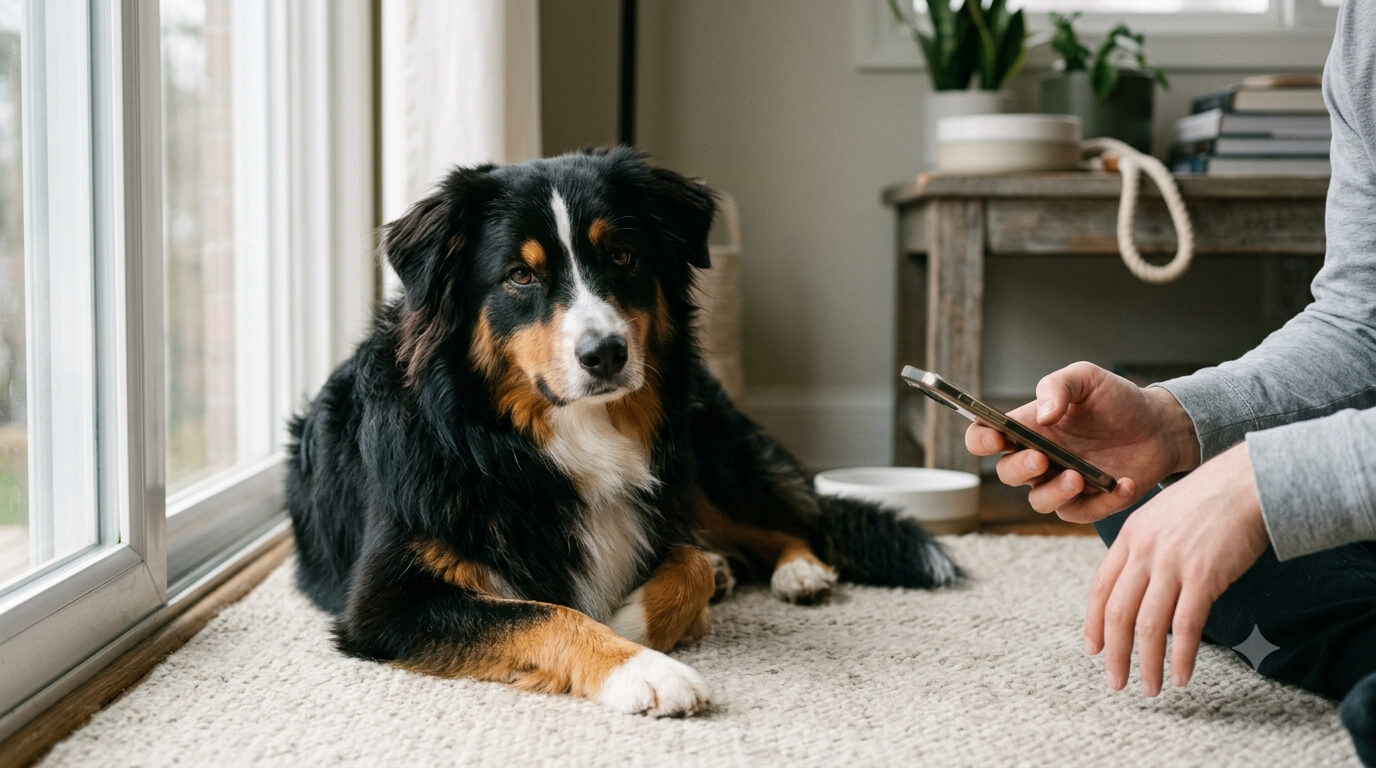
Dog Health Journal: What to Track and Why
A health journal for your dog does not need to be complicated, and it should not become a burden. Most healthy dogs do not require daily logging of every normal moment. The goal is simpler: keep enough information in one place that, when something changes or a veterinary question comes up, you can answer it accurately without relying on memory.
This article explains what is worth recording, when to record it, and why that information actually matters.
What Is Worth Recording?
The short answer is: things you might struggle to remember accurately later, or things your veterinarian might ask about.
| Category | What to capture |
|---|---|
| Symptoms and observations | What you saw, when, how often, and what else was happening |
| Appetite | Normal diet, meaningful changes, meals refused or partially eaten |
| Drinking and urination | Noticeable increases, decreases, frequency changes, or accidents |
| Stool and vomiting | Diarrhea, blood, constipation, repeated vomiting |
| Weight | Periodic checks, particularly for puppies, seniors, or dogs on a weight plan |
| Medications | Name, dose, schedule, when given, missed doses, effects noticed |
| Vaccinations and preventives | Dates, products, and due dates |
| Parasite prevention | Product, date administered |
| Allergies and reactions | Known sensitivities, reactions observed |
| Veterinary visits | Date, reason, diagnosis given, treatment, follow-up instructions |
| Test results | Lab work, imaging, or screening results provided to you |
| Procedures and surgeries | Date and description |
| Diet changes | When, what changed, any reaction noticed |
| Behavior and activity | Unusual reluctance to move, reduced interest in normal activities, sudden changes |
| Injuries | What happened, when, what was done |
| Chronic condition observations | Specific to your veterinarian's guidance for your dog |
Not every category applies to every dog, and nothing here needs to be logged every day. The table describes what can be useful to have when it becomes relevant.
Why Memory Is Unreliable
When something changes with your dog, a veterinarian will often ask questions like:
- When did it start?
- Has this happened before?
- How often has it happened?
- Is appetite normal?
- Has drinking changed?
- What medications is the dog on, and when was the last dose?
- Has the diet changed recently?
- Was there vomiting or diarrhea?
- Has body weight changed?
- Did anything else change around the same time?
These are reasonable questions. Answering them accurately in a stressful moment is much harder than it sounds.
Under stress, three days can feel like a week. A Tuesday can blur into a Thursday. Whether your dog ate normally yesterday or just ate less the day before requires a specific kind of memory that most people do not have for everyday events.
A health journal does not guarantee better diagnostic outcomes. What it does is give you accurate information to share, so the veterinary conversation can be as specific and useful as possible.
Establishing a Baseline
Understanding what is normal for your individual dog is the foundation of useful observation.
Owners who spend regular time with their dog naturally develop a sense of what is typical:
- Appetite (how enthusiastically they eat, how much they typically finish)
- Drinking behavior (how often they visit the water bowl)
- Bathroom habits (frequency, typical appearance)
- Activity level and energy
- Mobility and gait
- Sleep and rest patterns
- Behavior and usual interaction style
- Body weight, where periodically checked
A change from that individual baseline is meaningful information. It does not necessarily indicate illness. Plenty of variations are normal, temporary, or explained by obvious context. But knowing what is typical for your dog makes it easier to recognize when something genuinely differs.
A baseline is context, not a diagnostic threshold.
Symptoms and Observations
When something seems off, the most useful thing you can record is what you actually observed rather than what you think it might mean.
More useful: "Vomited twice after breakfast and then refused the next meal."
Less useful: "Has a stomach infection."
More useful: "Started limping on the right front leg after the walk, favoring it when turning."
Less useful: "Has arthritis."
Diagnostic labels belong to veterinarians with access to the full clinical picture. Your job as an observer is to describe what happened and when.
Useful things to note:
- What you observed
- Approximate time and date
- How often it occurred
- Relevant context (after eating, after exercise, following a particular event)
- Other symptoms happening at the same time
- Whether it continued, changed, or resolved
Describing observations accurately is genuinely helpful. Drawing diagnostic conclusions from a log is not.
Appetite and Food
The most useful information to have on record:
- Your dog's normal diet (food, brand, format)
- Meaningful diet changes, including when and what changed
- Appetite changes: refusing meals, reduced interest, or notably increased hunger
- Meals that were refused or only partially eaten
- Relevant treats, chews, or supplements in regular use
- Any veterinary diet or prescription food
- Possible dietary indiscretion (raided the bin, ate something outside)
You do not need to measure every gram of food for a healthy adult dog. If your veterinarian recommends specific portion tracking for a weight-management plan or a medical situation, they will tell you. Otherwise, useful observations tend to be at the level of "ate normally," "ate about half," or "refused entirely."
If your dog went through a phase of refusing food entirely, the puppy not eating article covers appetite concerns in more detail, including when refusal warrants veterinary contact.
Water and Urination
Most healthy dog owners do not need to measure every drink or count every urination. What is useful is noticing meaningful changes from what is typical for your dog:
- Drinking substantially more or less than usual
- Asking to go outside much more frequently
- Unusually large or very small urine output
- Straining or appearing uncomfortable
- Accidents in a dog who is reliably house-trained
- Blood in urine or unusual appearance
Increased drinking and urination together can sometimes signal conditions that are worth investigating, but the observation itself does not identify a cause. If you notice this pattern, it is worth discussing with your veterinarian.
Stool and Digestive Changes
Useful observations to record if something seems off:
- Diarrhea (consistency, frequency, how many episodes)
- Constipation or difficulty defecating
- Unusual stool appearance
- Blood or mucus in stool
- Frequency changes compared to normal
- Vomiting (how many times, what was in it, timing relative to meals)
- Repeated unproductive straining
- Any known dietary change or possible ingestion event that preceded it
For a healthy dog with normal, consistent stools, there is no need to keep a detailed daily stool log. Record what is relevant when there is an actual change.
Stool appearance can point toward many different causes. It does not diagnose diseases on its own.
Weight and Body Condition
Weight and body condition are related but not identical. A dog can be within a typical weight range for their breed and still carry too much fat, or show signs of muscle loss. Veterinary teams routinely assess body condition score and muscle condition alongside body weight, so periodic check-ins with your vet are the most reliable way to evaluate this.
Periodic weight tracking is particularly useful for:
- Puppies growing through rapid development phases
- Dogs on a weight-management plan
- Senior dogs, where unintentional changes can occur gradually
- Dogs with chronic health conditions
- Situations where medication dosing may be weight-dependent, under veterinary guidance
- Any unexplained weight change
Daily weighing is not recommended for healthy adult dogs. For most dogs, periodic checks (at veterinary appointments or on a known schedule if your vet recommends it) are sufficient.
If you notice unexplained weight change, weight loss without obvious cause, or a dog that seems to be losing muscle tone, it is worth raising with your veterinarian.
Medications
This is one of the most practically important sections to keep accurate records for.
Useful information to have:
- Medication name (generic and brand if both are known)
- Prescribed dose
- Schedule (how often, with or without food)
- When each dose was actually administered
- Missed doses, and whether your vet was informed
- Any relevant instructions (refrigeration, specific timing)
- Observations about effects or possible side effects
A medication log is useful for several reasons. If your dog needs emergency care, the treating veterinarian needs to know exactly what they are on and when the last dose was given. If you suspect a reaction, a clear record of timing helps considerably. And for long-term medications, it is easy to lose track of whether today's dose has been given.
Medication records deserve a dedicated approach, and this article will be followed by a more detailed guide to tracking medications specifically.
Vaccinations and Preventive Care
A simple record of preventive care is worth keeping separately from general health notes:
- Vaccination history, dates, and products
- Parasite prevention (flea, tick, heartworm, worming): product, date administered, next due date
- Microchip number and registration details
- Screening and wellness test records
- Dental care history
- Any other preventive care recommended by your veterinarian
Vaccination and parasite prevention schedules vary based on your dog's age, health status, lifestyle, geographic region, and your veterinarian's recommendations. This record is a reference for you and your vet, not a replacement for professional guidance on what your individual dog needs.
Veterinary Visits and Medical History
Keeping a simple record of veterinary visits is one of the most useful habits you can build.
For each visit, it helps to note:
- Date and clinic
- Reason for the visit
- Diagnosis given by the veterinarian (if one was provided)
- Treatments administered at the visit
- Medications prescribed
- Follow-up instructions
- Test results provided to you
- Any procedures or surgeries
An important distinction worth making in your records:
Your observation: "Dog was scratching frequently around the ears."
Veterinary diagnosis: "Veterinarian diagnosed otitis externa and prescribed [medication]."
These are different things. Your log of observations is valuable. But it should not be converted into self-assigned diagnoses. If a veterinarian has given a specific diagnosis, record it as such. If you are recording something you noticed yourself, describe it as an observation.
Photos as Context
Photographs can sometimes be useful when trying to document visible changes:
- Skin lesions, redness, or irritation
- Swelling or lumps
- Wounds, and how they are healing over time
- Eye changes (discharge, cloudiness, swelling)
- Progression of a visible issue over several days
A photo taken at the start of a visible change can be much more informative at a veterinary appointment than trying to describe it from memory days later.
Photos do not replace a veterinary examination. If you are taking photographs of something that concerns you, that concern should lead to a veterinary consultation, not more observation.
Behavior and Activity Changes
Changes in behavior can sometimes provide useful context alongside other health information.
Potentially worth noting:
- Unusual reluctance to move, get up, or use stairs
- Reduced interest in walks, play, or activities they usually enjoy
- Sudden restlessness or inability to settle
- Unusual hiding or social withdrawal
- Altered interaction with family members
- Changes in gait or mobility
- Sleeping significantly more or less than usual
These observations do not diagnose pain, anxiety, cognitive dysfunction, or any specific condition. They are observations about what you have seen and when.
If a behavioral change is substantial, sudden, persistent, or accompanied by other physical symptoms, it is appropriate to contact your veterinarian. Understanding more about how dogs communicate physical and emotional states can also help; Understanding Your Dog's Body Language covers how to read and interpret those signals more accurately.
Tracking Chronic Conditions
Dogs with an established veterinary diagnosis may benefit from more structured, consistent monitoring. The structure and what to track should be guided by your veterinarian, who knows what information is clinically useful for that specific condition.
Examples of what a vet might ask you to monitor at home:
- Symptom occurrence and frequency
- Medication administration and timing
- Appetite and food intake
- Body weight at regular intervals
- Mobility assessments on a simple scale they provide
- Seizure episodes (timing, duration, recovery)
- Gastrointestinal episodes
- Other condition-specific signs
If your dog has a chronic condition, ask your veterinarian explicitly what they would like you to monitor and at what frequency. A well-kept log for a known condition is genuinely useful at follow-up appointments.
Preparing for a Vet Visit
A concise, accurate health history changes the quality of a veterinary conversation.
Compare:
Vague: "She has been sick for a while."
Specific: "She first vomited Tuesday evening, vomited again Wednesday morning, ate less Wednesday, and then developed diarrhea Thursday. She has been drinking normally and is still going outside regularly."
The second version is not a diagnostic conclusion. It is useful clinical history that helps the veterinarian ask better follow-up questions and consider the timeline more accurately.
Useful information to have available when you call or arrive:
- Symptom timeline (when it started, how it has progressed)
- Current medications and supplements, with last dose times
- Current diet and any recent changes
- Appetite and drinking observations
- Urination and stool notes
- Vomiting episodes
- Activity and behavior changes
- Any possible exposure to toxins, foreign objects, or unusual foods
- Recent travel or significant environmental changes
- Relevant previous veterinary history
You do not need to arrive with a perfect, comprehensive record. Even partial, accurate information is more useful than a confident but inaccurate reconstruction from memory.
This is where having records in one place makes a real difference. Dogtales keeps health notes, medications, meals, water intake, walks, activities, and other daily observations together in a single timeline for your dog. If your vet asks when a symptom started, or what medications your dog is taking, or whether appetite has been normal this week, you can look back at what was actually recorded rather than trying to reconstruct it from memory.
Dogtales also allows you to export health-related information as a PDF, which can be a useful way to bring a concise summary to a veterinary appointment or share context during a phone consultation. The PDF is a personal summary of your observations, not a formal veterinary medical record.
Dogtales captures observations and helps you see what actually happened. It does not diagnose conditions, interpret symptoms medically, or determine whether veterinary care is needed. That assessment belongs to your veterinarian.
What Not to Track Obsessively
This is worth stating clearly: most healthy dogs do not require constant logging.
You do not need to track:
- Every drink of water
- Every urination and bowel movement
- Every nap
- Every gram of food consumed
- Every minor behavior fluctuation
- Every occasion your dog yawned, stretched, or looked tired
Tracking should have a clear purpose. Good reasons to track include:
- Establishing a baseline for a new dog or a new life stage
- Investigating a recent change you want to understand better
- Following specific instructions from your veterinarian
- Managing medication administration
- Monitoring a known health condition
- Documenting something you want to be able to describe accurately later
A health journal should reduce uncertainty, not become a source of it. If monitoring your dog's daily routine is making you anxious rather than informed, it has gone past its useful purpose.
Patterns Are Not Diagnoses
A health log can reveal that two things happened around the same time. It cannot, by itself, establish that one caused the other.
If itching became more frequent shortly after a diet change, that timing is useful information worth discussing with your veterinarian. It does not prove the food caused the itching.
If vomiting tends to occur repeatedly after a particular event or activity, that pattern is worth raising with your vet. It does not automatically identify the cause or the disease.
More data is useful. More data is not the same as a diagnosis. The job of the log is to create an accurate record. Interpretation belongs to the clinical consultation.
When Tracking Should Stop and Veterinary Care Should Start
Record keeping should never delay appropriate veterinary care.
If your dog shows any of the following, contact your veterinarian or an emergency veterinary service promptly:
- Difficulty breathing
- Collapse or sudden inability to stand
- Seizures
- Inability to urinate, or repeatedly straining to urinate without producing any
- Severe weakness or marked, sudden lethargy
- Significant abdominal swelling or signs of abdominal pain
- Repeated vomiting or inability to keep water down
- Severe or bloody diarrhea
- Major trauma
- Suspected poisoning or toxic ingestion
- Suspected ingestion of a foreign object (toys, fabric, bones, stones)
- Rapidly worsening symptoms of any kind
If you are uncertain whether a symptom can safely wait, contacting your veterinarian directly is appropriate. They can help you assess the urgency from a clinical perspective. Noting when a symptom started is still useful, but noting it should take seconds, not minutes, and it should not delay a call.
Seasonal changes can also create new health considerations. Seasonal Health Concerns: Keeping Your Dog Safe Year-Round covers some of the specific hazards that arise at different times of year and what to look out for.
Keeping Records Without Overcomplicating It
The practical question is where and how to keep these records in a way you will actually maintain.
Some owners use a simple notebook. Others keep notes in a phone app or a shared document. The format matters less than consistency and accessibility.
What helps most:
- Keep everything in one place rather than scattered across memory, calendar apps, text messages, and multiple notebooks
- Record things when they happen, not several days later when you are trying to reconstruct events
- Note specifics (date, what you saw, context) rather than vague impressions
- Keep medication records separate and detailed, since these are the most time-sensitive
Whatever format works for you and your household is the right format.
FAQ
What should I track in my dog's health journal?
Focus on things you might struggle to remember accurately later, or things a veterinarian might ask about. The most useful categories for most dog owners are symptoms and observations, appetite changes, drinking and urination changes, stool changes, medications, vaccinations and preventive care, and veterinary visit summaries. You do not need to actively monitor every category every day.
Should I track my dog's health every day?
No, not for a healthy adult dog with no active health concerns. Daily logging makes sense when you are monitoring a recent change, managing a chronic condition at your veterinarian's request, or tracking medication administration. For a healthy dog in a stable routine, simply recording things when something changes or when a veterinary visit occurs is sufficient.
Is a dog health journal useful for vet visits?
Yes, particularly when something has changed or you are trying to describe a pattern. A clear, accurate timeline is more useful than a confident but approximate account. Knowing exactly when symptoms started, what else was happening, and what medications the dog is on helps the veterinary conversation be more specific.
Should I track my dog's medications?
Yes. Medication records are among the most practically important health information to keep. A log of what your dog is taking, the dose, the schedule, and when each dose was given is useful in routine appointments and essential in any urgent or emergency situation.
How often should I weigh my dog?
For healthy adult dogs, periodic weighing at regular veterinary appointments is typically sufficient. More frequent checks are appropriate for puppies during growth, dogs on weight-management plans, senior dogs, and dogs with chronic conditions where weight monitoring has been recommended by the veterinarian.
Should I track my dog's poop?
Only when something changes. Healthy, consistent stools do not require a daily log. If diarrhea, constipation, blood, mucus, or frequency changes occur, noting the timeline, approximate frequency, and any relevant context is useful information to have at a veterinary consultation.
Can a health tracker tell me what is wrong with my dog?
No. A health journal records observations and helps you present an accurate history. It cannot interpret symptoms medically, identify diseases, or establish causes. Those assessments require clinical examination and professional expertise.
What information should I bring to a vet appointment?
The most useful things to have available: a symptom timeline (when it started, how it has changed), current medications and when the last dose was given, your dog's diet and any recent changes, appetite, drinking, urination, and stool observations, and any possible exposure to toxins, foreign objects, or significant environmental changes. Partial accurate information is more helpful than a confident but approximate reconstruction.
Share this article
Keep your dog healthy and happy with Dogtales
Track meals, medication, potty breaks, weight, vaccinations, and daily reminders in one intuitive app.
Related Articles
Puppy Not Eating? Common Reasons and When to Call a Vet
When a puppy refuses food, knowing what to observe matters more than guessing. Learn the difference between reduced appetite and inability to eat, common causes, home checks, and clear veterinary escalation signs.
Seasonal Health Concerns: Keeping Your Dog Safe Year-Round
A practical guide to seasonal dog health. Learn how to navigate weather shifts, manage parasite and plant hazards, prevent heat and cold illness, and recognize symptoms requiring veterinary care.

First Week With a Puppy: What to Expect
The first week with a puppy is about safety, basic needs, gentle routine, and helping them adjust. Learn what to expect, what to prioritize, and how to navigate the first seven days realistically.