
How to Track Your Puppy's Potty Schedule
A puppy potty log turns random-seeming accidents into a readable timeline. Learn what to track, how to spot patterns, and how to use those patterns to build a routine that actually works.
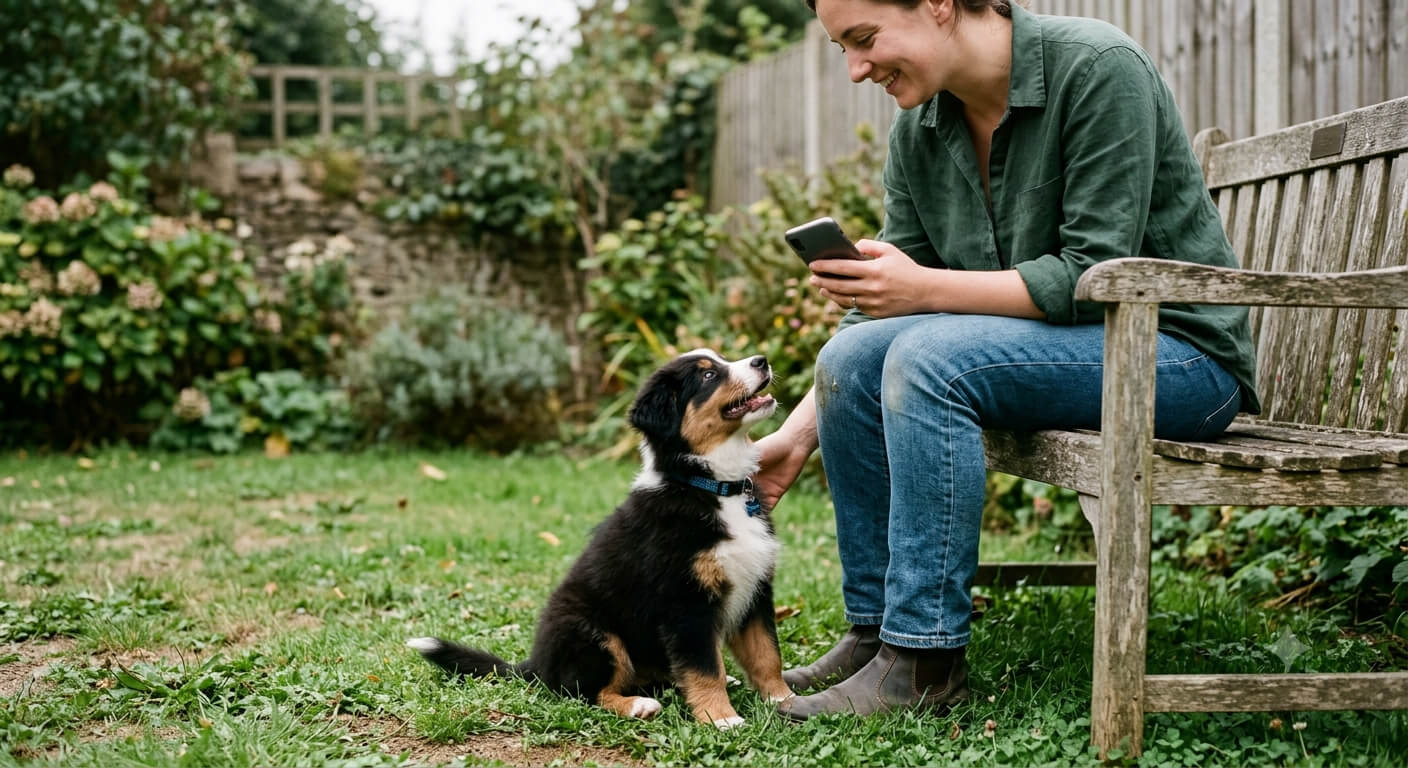
How to Track Your Puppy's Potty Schedule
Puppy accidents often feel completely unpredictable. But when you try to work out why one happened, you usually find yourself trying to reconstruct the day from memory:
- When did the puppy last pee?
- Did they drink recently?
- How long did they nap?
- Did they poop after breakfast?
- How long were they playing before the accident?
The problem is not that the answers are unknowable. The problem is that they are hard to recall accurately three or four hours after the fact.
A simple potty log solves this. Instead of reconstructing events from memory, you have a chronological record you can actually read. Patterns that were invisible suddenly become obvious: accidents that cluster after certain events, intervals that are shorter than expected after drinking and playing, or a consistent poop window after the morning meal.
The goal is not to track every drop forever. The goal is to collect enough information to understand your individual puppy's routine and make better predictions going forward.
What Is a Puppy Potty Log?
A potty log is a chronological record of the daily events that are most relevant to potty training:
- pee
- poop
- meals
- drinking
- sleep and waking
- play or significant activity
- accidents
Recording only successful outdoor trips misses the context that makes the log useful. Knowing that the puppy peed at 10:20 is less helpful than knowing that the puppy woke at 10:15, peed at 10:20, drank at 10:45, played from 11:05, and had an accident at 11:30. The surrounding events are often what explain why the puppy needed to go when they did.
What Should You Track?
You do not need to measure exact water volumes or weigh urine. Keep tracking realistic enough that someone will actually do it consistently.
| Event | What to record | Why it helps |
|---|---|---|
| Pee | Time; indoors or outdoors | Shows urination intervals and where accidents happen |
| Poop | Time; location | Helps identify bowel movement patterns |
| Food | Meal time | Reveals post-meal patterns |
| Water | Meaningful drinking events | Helps explain shorter pee intervals that follow |
| Sleep | Nap start and end, or waking time | Waking from sleep is a major potty trigger |
| Activity | Significant play or exercise | Active periods can shorten potty intervals noticeably |
| Accident | Time, type (pee or poop), location, recent context | Helps identify gaps in the current routine |
A useful accident entry includes what happened shortly beforehand. That recent context can help reveal patterns around when accidents occur.
Example Puppy Potty Log
Here is a realistic partial day:
Looking at this as a flat list of pee times misses the point. The useful observations are:
- The puppy peed within five minutes of waking, both in the morning and after the nap. Waking consistently precedes an immediate need to pee.
- The poop came about 20 minutes after breakfast. The post-meal window is a recurring pattern worth planning around.
- The accident at 11:30 followed drinking and play. If similar sequences repeatedly precede accidents, that may suggest the puppy needs another potty opportunity sooner after those events.
The useful insight is not "the puppy pees every X minutes." It is that specific events consistently increase the probability that the puppy will need to go, often quite soon.
Look for Triggers, Not Just Time Intervals
The most common mistake owners make when reviewing potty records is focusing only on time since the last pee. That is one useful variable, but it is not the whole picture.
Prediction improves when you also consider:
- Waking from sleep, even a short nap
- Meals and the time since eating
- Significant drinking
- Active play or high-energy activity
- Excitement (visitors arriving, another dog, a family member coming home)
- Transitions from one activity or location to another
Here is a simple example of why this matters. If the puppy normally manages 90 minutes between potty trips while quietly resting, but repeatedly needs to pee 25 to 40 minutes after drinking and active play, the shorter post-trigger interval is the more relevant pattern in those moments. Watching the clock without accounting for what just happened will result in missed opportunities.
Potty frequency also changes as puppies develop. For a breakdown of expected intervals by age, see How Often Should a Puppy Pee? Puppy Potty Schedule by Age.
Finding Your Puppy's Individual Patterns
After a few days of records, sit down and look across the entries. You are not trying to calculate a perfect mathematical schedule. You are trying to recognise repeatable tendencies.
Useful questions to ask:
- Does the puppy almost always pee immediately after waking?
- How soon after breakfast do they usually poop?
- Do accidents cluster at a particular time of day?
- Does active play frequently appear just before an accident?
- After an unsuccessful outdoor trip, does an indoor accident follow soon after?
- Did accidents increase after the puppy gained more freedom indoors?
- Are nighttime intervals substantially longer than daytime intervals?
Individual variation matters here. Two puppies of the same breed and age can have meaningfully different rhythms. The patterns in your log reflect your puppy, not an average.
Turning the Log Into a Better Potty Schedule
Observations become actionable when you use them to adjust the routine. Here are some examples of how that works in practice:
Pattern: The puppy regularly pees within minutes of waking from any nap. Adjustment: Go outside immediately after every nap ends, before anything else happens.
Pattern: Accidents repeatedly happen during or shortly after long play sessions. Adjustment: Add a proactive potty opportunity partway through active play, rather than waiting for the session to end.
Pattern: The puppy consistently poops roughly 15 to 25 minutes after breakfast. Adjustment: Plan an outdoor trip to coincide with that recurring window every morning.
Pattern: After an unsuccessful outdoor trip, the puppy has an indoor accident within minutes. Adjustment: Do not give unsupervised indoor freedom after an unsuccessful trip. Keep the puppy close or briefly in a safe confined area, and try again shortly.
Pattern: Accidents appeared after access to a larger part of the house was introduced. Adjustment: Temporarily reduce freedom to the area where the puppy was previously reliable, and expand access again more gradually.
For a broader guide to building a routine around these principles, see Puppy Potty Training Schedule: A Complete Guide.
Tracking Potty Accidents Without Overcomplicating It
Accidents are worth recording not to catalogue failures, but because they contain the most useful diagnostic information in the log.
For each accident, note:
- approximate time
- type (pee or poop)
- location
- what happened shortly beforehand
- whether the puppy had been outside recently
- whether the puppy was being actively supervised
You do not need an elaborate scoring system. A simple entry like this is already enough to work with:
That four-line entry shows that the puppy woke, drank, and played before the accident. If the same pattern appears repeatedly, adding a potty opportunity after those events would be a reasonable adjustment to try.
For a broader look at why accidents keep happening despite a routine, see Puppy Potty Training Not Working? 9 Common Mistakes.
How Long Should You Keep a Puppy Potty Log?
There is no fixed number of days or weeks that applies to every puppy or situation.
Intensive tracking is most useful:
- when the puppy first comes home
- during early housetraining, before patterns have become clear
- when accidents keep happening and the cause is not obvious
- after a major change in routine, environment, or household schedule
- when investigating a regression in a puppy who was previously reliable
Once the routine becomes predictable and accidents are rare, most owners find that they can stop recording every event. The log has done its job.
If accidents return after a period of reliability, a short tracking period can quickly reveal what changed. The puppy may have gained more freedom too quickly, the schedule may have shifted, or something in the environment may have changed.
Paper, Notes App, Spreadsheet, or Puppy Tracking App?
All of these can work. The most useful method is whichever one you will actually use consistently.
Paper
- Immediately available, no setup, no battery required
- Harder to search across multiple days
- Can be awkward to share between caregivers in different locations
Notes app
- Always with you on a phone
- Easy to start with no structure required
- Entries can become unstructured over time, and reviewing several days can become cumbersome
Spreadsheet
- Structured and sortable
- Useful for comparing patterns across multiple days
- Logging an event in real time while managing a puppy is less convenient
Dedicated puppy tracker
- Structured event types make repeated logging faster
- Timeline stays organised automatically
- Can be easier when tracking multiple event types throughout the day
- May support multiple caregivers logging to a shared record
The format matters less than the habit. A paper log kept consistently will reveal more than an app used sporadically.
Tracking With Dogtales
If you want a structured way to log potty events alongside other daily activities, Dogtales lets you record pee, poop, feeding, drinking, sleep, and other daily events in one timeline.
Instead of reconstructing the day from memory when an accident happens, you have a chronological record of what actually occurred. Having feeding, drinking, sleep, and potty events in one place makes it easier to spot the patterns that shape your puppy's individual routine.
The article is written to be useful regardless of which method you choose. A paper log done consistently will still reveal meaningful patterns.
What a Potty Log Cannot Tell You
A log can reveal patterns in your puppy's behaviour, but it cannot diagnose health problems.
Certain changes in urination or bowel habits may warrant a veterinary conversation rather than a routine adjustment:
- a sudden, significant increase in urination frequency
- frequent small urinations
- straining or apparent difficulty passing urine
- signs of pain or distress while urinating
- blood in the urine
- unusual increase in thirst alongside increased urination
- persistent diarrhea
- sudden accidents in a puppy who was previously reliable, with no obvious change in routine
A tracking history can be useful information to bring to a veterinary appointment, since a clear timeline of changes can help the vet understand what has been happening. But the log itself does not diagnose anything, and an unusual pattern in the data is a reason to seek veterinary advice, not a reason to adjust the potty schedule.
A Simple Puppy Potty Tracking Template
Copy this into your phone's notes app or write it on a piece of paper near the door:
Example entries:
That is the entire template. No scoring, no categories, no columns. It is enough to build a useful record.
Frequently Asked Questions
What should I track when potty training a puppy?
Track the events that are most likely to drive potty needs: pee, poop, meals, meaningful drinking, sleep and waking, active play, and accidents. Recording only successful outdoor trips misses the surrounding context that explains why the puppy needed to go when they did.
Do I need to track every time my puppy drinks?
No. Meaningful drinking events are enough for practical housetraining purposes. If the puppy takes a few laps from the bowl and walks away, that may not be worth noting. If the puppy drinks a substantial amount, that is the kind of event worth recording because it can shorten the interval before the next pee.
How long should I track my puppy's potty schedule?
Track while the records are revealing useful patterns or helping to troubleshoot accidents. Once the routine becomes predictable and accidents are rare, most owners can stop detailed tracking. If accidents return, a short tracking period can quickly help identify what changed.
Should I track pee and poop separately?
Yes. Their patterns can differ considerably. The puppy may pee immediately after waking but not poop until 20 minutes after breakfast. Separating them in the log makes each pattern easier to see.
Why does my puppy's potty schedule change every day?
Some variation is expected. Sleep duration, water intake, meal timing, activity level, excitement, and the environment all shift from day to day. Tracking helps you see which variations are random and which reflect a consistent underlying pattern.
Can tracking help with puppy potty training?
Tracking does not train the puppy by itself. It helps you recognise patterns, provide better-timed potty opportunities, and identify where the current routine may need adjustment. The record gives you information; what you do with that information is what shapes the training.
What is the easiest way to track puppy potty breaks?
The easiest method is whichever one you will use consistently. A note in your phone, a notepad by the door, or a dedicated app can all work. Structured trackers tend to make repeated logging and reviewing the timeline more convenient, but a consistently kept paper log will give you the same information.
Share this article
Keep your dog healthy and happy with Dogtales
Track meals, medication, potty breaks, weight, vaccinations, and daily reminders in one intuitive app.
Related Articles
Puppy Training Schedule by Age: What to Teach and When
A realistic, stage-by-stage guide to puppy training priorities from 8 weeks through adolescence. Learn what to teach and when, how skills build cumulatively, and why practical life skills matter more than rigid command checklists.
How Long Can a Puppy Hold Their Pee?
Learn how long puppies can realistically hold their pee by age, why bladder capacity is not the same as a potty schedule, and what changes during sleep, play, crate time, and time home alone.
Puppy Potty Training Not Working? 9 Common Mistakes
Still dealing with puppy potty accidents? Learn nine common potty training mistakes, why they happen, and practical ways to get your puppy's routine back on track.