
Puppy Not Eating? Common Reasons and When to Call a Vet
When a puppy refuses food, knowing what to observe matters more than guessing. Learn the difference between reduced appetite and inability to eat, common causes, home checks, and clear veterinary escalation signs.
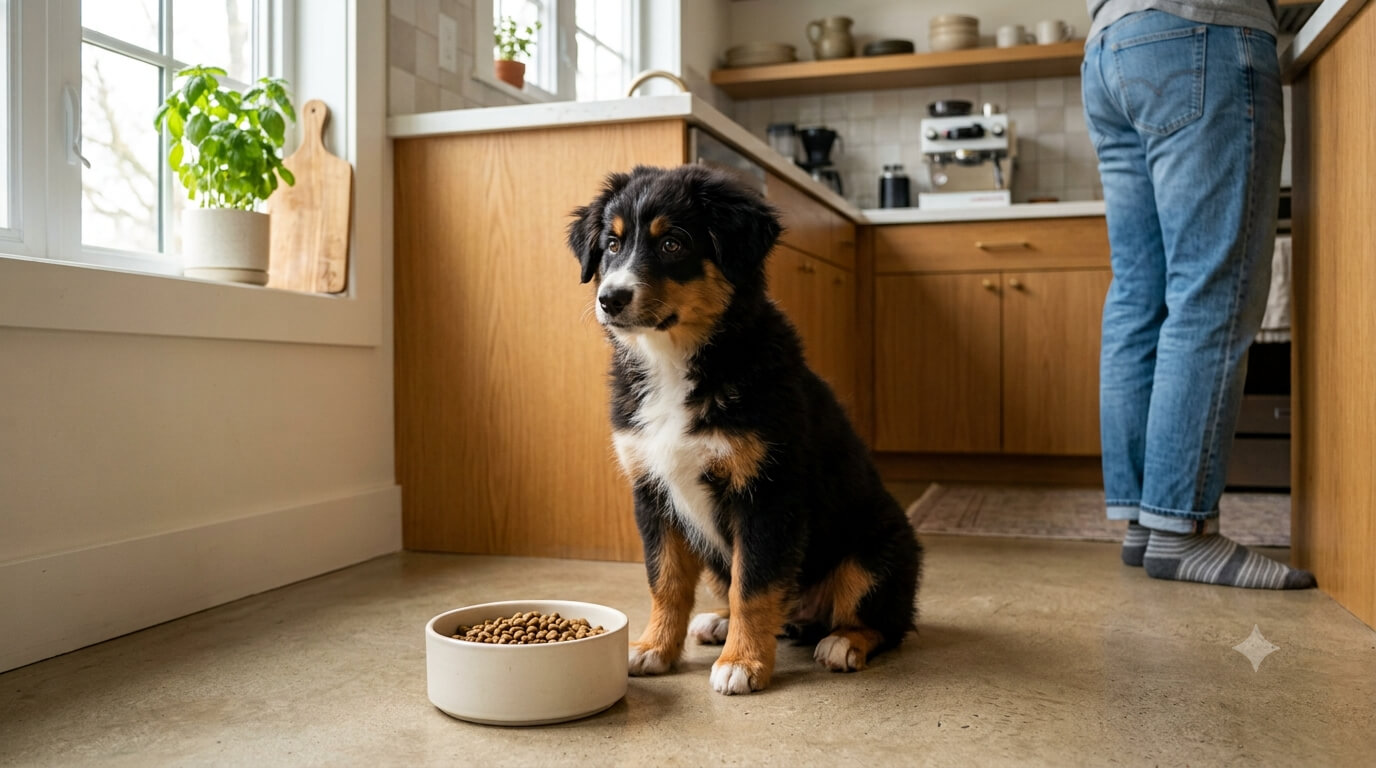
Puppy Not Eating? Common Reasons and When to Call a Vet
Few things make a dog owner anxious faster than a puppy who turns away from their food bowl. Whether you brought your puppy home yesterday or have shared weeks of steady meals together, sudden appetite changes feel disquieting. You may wonder if your puppy is simply distracted, adjusting to a new environment, being selective, or experiencing the initial signs of a serious illness.
Reduced appetite deserves particular attention in puppies because age, small body size, growth, and underlying illness can affect how significant reduced food intake becomes. Very young and toy-breed puppies may warrant especially prompt veterinary guidance.
This guide provides a structured, calm way to evaluate what you are seeing, check for important red flags, and determine when professional veterinary care is needed.
Urgent Triage: When to Seek Immediate Veterinary Attention
Before investigating potential non-emergency explanations, rule out acute medical danger. A puppy eating less than usual requires prompt professional intervention when accompanied by systemic warning signs.
There is no universal number of hours that every puppy can safely go without eating. A larger, older puppy who leaves a portion of their food while remaining bright and alert represents a very different scenario than a very young or toy-breed puppy who stops eating and feels limp. Context, age, size, and accompanying physical signs always determine urgency.
If your puppy displays any of the critical symptoms above, do not wait to see if their appetite returns at the next meal. Contact your veterinarian or local veterinary emergency clinic right away.
An Observation, Not a Diagnosis
When a puppy leaves food in their bowl, owners frequently search for a single, immediate diagnosis. It helps to keep a core principle in mind:
A puppy eating less than expected is an observation, not a diagnosis.
A refusal to eat simply tells you that your puppy's normal feeding behavior has shifted. The clinical significance of that shift depends on several interconnected factors:
- Age and physical size: Very young and very small puppies may have less reserve when food intake drops.
- Deviation from baseline: How different the behavior is from their usual eating pace and enthusiasm.
- Duration and progression: How long the appetite change has lasted and whether it is worsening.
- Physical ability: Whether the puppy is truly disinterested or trying to eat but struggling physically.
- Systemic signs: Energy levels, hydration, stool quality, urination, and comfort.
Because appetite loss can accompany everything from temporary relocation stress to severe gastrointestinal obstruction, you should neither panic over a single isolated change nor dismiss the observation simply because your puppy took a sip of water or chased a ball. Structured observation can help you recognize changes and give your veterinarian useful context.
Reduced Appetite vs. Inability to Eat
The phrase "my puppy is not eating" can describe several distinct physical behaviors. Watching how your puppy approaches food can provide useful clues about whether they are simply eating less or appear physically unable to chew, swallow, or retain food.
Carefully watch how your puppy behaves when food is presented:
- Less interested than usual: The puppy sniffs the bowl, eats a few mouthfuls slowly, and walks away before finishing.
- Eating only partial meals: The puppy eats half the portion with normal mechanics, then abandons the rest.
- Selective eating: The puppy refuses their regular kibble or balanced diet but eagerly accepts treats, cooked chicken, or table scraps.
- Approaching but struggling to chew: The puppy walks to the bowl with clear interest, takes a kibble, drops it, tilts their head awkwardly, or whines.
- Dropping food repeatedly: The puppy picks up food but drops it from their mouth without swallowing.
- Appearing interested but unable to swallow: The puppy mouths food, salivates heavily, or shows signs of gagging when attempting to swallow.
- Complete refusal: The puppy shows zero interest in any food, turning their head away or retreating from the bowl.
- Regurgitation or vomiting after eating: The puppy consumes food, only to bring it back up undigested or partially digested shortly afterward.
- Inability to retain liquids: The puppy drinks water but cannot keep it down.
A puppy who approaches their bowl eagerly but cannot chew, swallow, or keep food down is experiencing physical difficulty, not behavioral stubbornness. These distinctions provide vital clues for your veterinarian.
Common Possible Reasons for Appetite Changes
While you should never attempt to diagnose your puppy at home, understanding common categories of appetite changes helps you gather useful information.
1. Adjustment to a New Home
Bringing a puppy home is an enormous life transition. A newly arrived puppy may temporarily eat less while adapting to:
- Unfamiliar surroundings, sights, and household sounds
- Separation from their mother, littermates, and familiar caregivers
- An unfamiliar feeding location or feeding setup, household foot traffic, or novel sounds
- Changes in daily schedule, handling, and activity levels
While temporary hesitation is common during the initial transition, you should never assume stress is definitely the sole explanation. Similarly, avoid relying on the common phrase "they will eat when they get hungry" as blanket reassurance for a puppy. If you recently brought your puppy home, review our practical guide on navigating the first week with a puppy to create a calm, predictable environment.
2. Sudden Food Changes
Sudden dietary changes can coincide with gastrointestinal upset in some dogs, and maintaining familiar food initially can simplify the transition to a new home. If a diet transition is necessary, making gradual adjustments when appropriate can help the puppy adapt. Follow veterinary or manufacturer guidance tailored to your puppy rather than switching foods abruptly.
3. Too Many Treats or Training Rewards
Treats, chews, training rewards, and table food contribute to total daily intake. A puppy may eat less of a regular meal if substantial food has been consumed earlier in the day. While this is a common non-medical consideration, do not automatically assume treats explain a missed meal if your puppy appears dull, uncomfortable, or refuses food repeatedly.
4. Teething and Mouth Discomfort
During puppyhood, the transition from deciduous teeth to adult teeth can make chewing uncomfortable for some puppies.
However, oral discomfort is not limited to normal teething. Reluctance to chew can also stem from:
- Traumatic oral injuries, cuts, or punctures from chewing sticks
- Damaged, fractured, or retained deciduous teeth
- Foreign material lodged between teeth, under the tongue, or wedged across the roof of the mouth
- Ulcers or chemical burns from chewing cords or plants
If your puppy seems hungry but hesitates to chew, gently look for obvious external swelling or drooling. Do not forcefully pry open or probe the mouth of a puppy who is fearful, painful, or snapping. If you suspect oral injury or an object caught in the mouth, have a veterinarian examine them safely.
5. Gastrointestinal Upset
Gastrointestinal issues can affect appetite in puppies. Possible contributors include intestinal parasites, dietary indiscretion, sudden food changes, or viral and bacterial infections. Signs such as vomiting, diarrhea, drooling, repeated swallowing, or reduced appetite can occur with gastrointestinal illness, but they do not identify the underlying cause. Diagnostic testing and veterinary evaluation are needed to determine the source of the problem.
6. Infection and Systemic Illness
Reduced appetite can accompany infections and many other systemic illnesses. Reduced appetite accompanied by significant lethargy, respiratory signs, fever confirmed by an appropriate measurement, or other signs of systemic illness warrants veterinary advice, with urgency depending on severity.
7. Pain and Musculoskeletal Discomfort
Pain or discomfort can contribute to reduced appetite. A puppy experiencing discomfort from an injury, musculoskeletal strain, or internal pain may hesitate to move, stand, or eat.
Watch for subtle pain indicators:
- Reluctance to stand up or walk
- Unusual vocalization when picked up or touched
- A tense, hunched abdominal posture
- Limping, stiffness, or favoring a limb
- Restlessness, difficulty settling, or heavy panting while resting
Sudden appetite changes accompanied by significant pain or physical distress warrant prompt veterinary assessment, with emergency care appropriate for severe or rapidly worsening signs.
8. Foreign-Object Ingestion
Puppies investigate the world mouth-first. Puppies may swallow objects such as socks, fabric fragments, stones, plastic pieces, or wood.
Foreign-object ingestion can lead to gastrointestinal obstruction or internal irritation. Signs vary with the nature and location of the obstruction. Possible signs can include:
- Sudden refusal to eat in a previously eager puppy
- Inability to keep food or water down
- Repeated, unproductive retching or vomiting
- A tucked, painful, or hard abdomen
- Marked weakness and withdrawal
Never administer home remedies, oils, or foods to push a foreign object through. Do not induce vomiting unless instructed by a veterinary professional or animal poison-control service, as certain objects can cause severe damage or aspiration on the way back up.
9. Toxic Ingestion
Ingestion of toxic plants, household cleaning chemicals, fertilizers, human medications, or unsafe human foods can cause acute appetite loss.
Very Young and Toy-Breed Puppies: Distinct Vulnerabilities
Very young puppies and very small or toy-breed puppies may have less reserve and can be more vulnerable to hypoglycemia when food intake is inadequate.
Hypoglycemia is a serious medical emergency. Possible signs of hypoglycemia can include:
- Unusual, profound weakness or limpness
- Marked lethargy and reluctance to interact
- Trembling, shivering, or twitching
- Disorientation, wobbly gait, or bumping into furniture
- Glassy, unfocused eyes
- Inability to lift the head or collapse
- Seizures or loss of consciousness
Not every toy puppy with a reduced appetite will become hypoglycemic, but the physiological risk is real. These signs warrant emergency veterinary assessment because hypoglycemia and other serious conditions can produce similar symptoms.
Do not attempt complex home remedies, unprescribed syringe feedings, or experimental interventions when these symptoms appear.
Common Real-World Scenarios
Owners frequently search for answers based on specific patterns they observe at home. Here is how to interpret these common situations calmly and accurately.
Puppy Not Eating but Drinking Water
Seeing your puppy drink water provides useful information. Being able to drink and retain water is useful information, but it does not rule out illness. A puppy suffering from gastrointestinal inflammation, foreign-object irritation, organ dysfunction, or systemic illness may continue drinking water while entirely refusing solid food. If the puppy cannot keep water down, seek veterinary guidance promptly because repeated vomiting can contribute to dehydration and may indicate significant illness.
When your puppy is drinking but not eating, evaluate the full picture:
- Can they retain the water without vomiting or regurgitation?
- What is their energy level and overall responsiveness?
- Have they passed normal stools, or is diarrhea present?
- How long has the food refusal lasted relative to their age and size?
Use fluid intake as one helpful observational clue, not as an excuse to ignore prolonged food refusal.
Puppy Not Eating but Acting Normal
A puppy who remains bright, active, comfortable, and able to drink is less concerning than a puppy with systemic signs, but continued food refusal still deserves attention. Consider the puppy's age, size, baseline, and health history, and contact your veterinary clinic when you are unsure whether monitoring is appropriate.
Puppy Not Eating and Sleeping a Lot
Puppies normally spend substantial portions of the day sleeping and resting, and individual sleep needs vary. For a broader look at healthy sleep patterns, explore our guide on how much should a puppy sleep.
Because normal puppies sleep so much, it is easy for new owners to confuse healthy developmental rest with clinical lethargy.
The key distinction lies in responsiveness and baseline behavior, not just total sleep hours:
- Normal puppy rest: When awake, the puppy generally shows their usual level of responsiveness, movement, interest in their surroundings, and interaction.
- Abnormal lethargy: The puppy is difficult to rouse, shows minimal interest in family interactions, walks with a sluggish or limp posture, stares blankly, and lacks the spark of normal play when awake.
If your puppy is refusing food and showing true lethargy, marked weakness, or difficulty waking, treat this as a clinical concern that warrants immediate veterinary attention.
Puppy Suddenly Refuses Kibble
If your puppy has eaten their dry kibble eagerly and suddenly stops, investigate environmental and contextual factors before labeling them picky:
- Food freshness and storage: Check the expiration date, storage conditions, smell, exposure to moisture, and whether the kibble appears abnormal.
- Treat intake: Consider whether training rewards, chews, or table food have contributed significantly to daily intake.
- Oral discomfort: Teething or another mouth problem may make chewing uncomfortable in some puppies.
- Feeding environment: A noisy, unstable, or unfamiliar feeding setup can affect some puppies. Look for factors like a sliding bowl, high foot traffic, or startling noises near mealtimes.
- Subtle nausea or illness: A puppy experiencing mild digestive upset may hesitate around food.
Avoid the urge to continually top the bowl with rich additions every time your puppy hesitates. Repeatedly changing or enriching food can complicate assessment of the puppy's normal appetite and may contribute to gastrointestinal upset. It can also mask emerging medical problems. Never attempt to starve a puppy to force them to accept dry food. Instead, evaluate the feeding environment, verify food quality, consider softening kibble with warm water if teething discomfort is suspected, and seek veterinary advice if reduced intake continues.
What Owners Can Safely Check at Home
When your puppy hesitates to eat, pause and run through this practical observational checklist before making assumptions:
- [ ] Deviation from normal: Is this an abrupt, dramatic departure from your puppy's typical appetite, or have they been gradually slowing down?
- [ ] Treat and chew intake: Did the puppy consume training treats, bully sticks, chews, or human food recently?
- [ ] Recent diet changes: Was a new food brand, batch, or flavor introduced recently?
- [ ] Food condition: Is the kibble or canned food fresh, within date, stored properly, and smelling normal?
- [ ] Water and hydration: Is the puppy drinking water normally, and are they able to keep it down?
- [ ] Elimination habits: Has your puppy had normal bowel movements and urination today? Any signs of loose stool, straining, or diarrhea?
- [ ] Vomiting or retching: Has the puppy vomited food, bile, foam, or foreign material? Are they retching unproductively?
- [ ] Activity and alertness: Does the puppy greet you, follow movement, and interact with normal energy when awake?
- [ ] Physical comfort: Does the puppy move freely, or do they seem stiff, arched, reluctant to move, or uncomfortable when handled?
- [ ] Mouth comfort: Is there visible drooling, face pawing, or obvious foul odor without forcing their jaw open?
- [ ] Foreign object access: Could the puppy have chewed or swallowed toys, socks, string, stones, or sticks?
- [ ] Toxin access: Could the puppy have reached cleaning chemicals, medications, rodent bait, toxic plants, or trash?
This checklist is designed to help you organize clear, factual observations for your veterinary team, not to serve as a diagnostic algorithm.
What NOT to Do When Your Puppy Won't Eat
Well-intentioned owners often try rapid home interventions that inadvertently complicate the situation or delay necessary care. Avoid these common mistakes:
- Do not force-feed your puppy: Do not force-feed an unwilling puppy unless specifically instructed by a veterinarian. Improper syringe or force feeding can create distress and carries an aspiration risk.
- Do not rapidly rotate foods: Rapidly switching among multiple foods, rich toppers, cooked meats, and table scraps can contribute to gastrointestinal upset and make it harder to understand the puppy's normal appetite. It can also make it harder to identify which foods the puppy has tolerated well.
- Do not give human medications: Do not give human pain medications or other human medicines unless your veterinarian specifically instructs you to do so. Common medications can be dangerous to dogs, and toxicity depends on the drug and dose.
- Do not administer unprescribed appetite stimulants: Never give medications or supplements meant for human or adult dog appetite stimulation without explicit veterinary authorization.
- Do not induce vomiting at home: Do not induce vomiting unless instructed by a veterinary professional or animal poison-control service. Improper attempts to induce vomiting can cause serious harm.
- Do not assume stubbornness when other signs exist: If your puppy refuses food and has diarrhea, vomiting, or lethargy, they are not being stubborn. They are unwell.
- Do not deliberately starve a puppy to force compliance: Do not deliberately withhold food from a puppy to force them to eat a preferred diet. If a puppy repeatedly refuses its normal food, seek veterinary guidance rather than turning feeding into a standoff.
- Do not delay veterinary care to keep collecting data: If your puppy displays red flag symptoms, stop logging and head to a veterinary clinic immediately.
The Importance of Daily Feeding Routines
A reasonably consistent feeding routine can make changes from the puppy's usual appetite easier to notice. When meals are offered in a steady rhythm, you become familiar with how long your puppy typically takes to finish, how eagerly they approach food, and how much they normally consume in one sitting.
Key elements of a clear feeding baseline include:
- Meal frequency: Knowing how many meals your puppy receives each day based on their age and development. To explore typical daily meal counts across development, read our guide on how often should you feed a puppy.
- Portion consistency: Measuring food consistently rather than estimating by eye can make intake easier to track and reduce unintentional portion drift.
- Feeding schedule: Coordinating mealtimes with daily bathroom breaks, training, and sleep rhythms. For a detailed breakdown of age-appropriate daily schedules, see our guide on puppy feeding schedule by age and our comprehensive puppy schedule by age.
- Appetite demeanor: Noting whether your puppy is naturally an eager eater or takes their time at the bowl.
Understanding your puppy's everyday routine provides helpful context when their eating behavior changes.
When to Call the Vet: Practical Decision Guidelines
Because every puppy is unique, there is no single formula such as calling the vet after a fixed number of hours that applies universally. Urgency depends on your puppy's age, physical size, health history, baseline behavior, and accompanying clinical signs.
Immediate Emergency Veterinary Care
Seek emergency veterinary care day or night if you observe:
- Profound weakness, unresponsiveness, or collapse
- Inability to retain water or persistent vomiting
- Trembling, seizures, or disorientation
- Significant blood in vomit or stool, or unexplained bleeding accompanied by other concerning signs
- Severe abdominal swelling, stiffness, or acute pain
- Known or strongly suspected ingestion of a dangerous foreign object or toxic substance: contact a veterinarian, emergency service, or animal poison service promptly for immediate guidance
Contact Your Veterinarian Promptly When
- A very young or very small puppy is refusing food
- Food refusal persists or is becoming more pronounced
- The puppy is eating substantially less than their normal baseline
- The puppy wants to eat but appears unable to chew or swallow comfortably
- Reduced appetite occurs with vomiting, diarrhea, abnormal stool, pain, weakness, unusual behavior, or changes in drinking or urination
- There is possible foreign-object or toxin exposure
- The puppy has a medical condition or takes medication that makes reduced intake more significant
- You are uncertain whether continued monitoring is safe
When you are uncertain, contacting your veterinary clinic for individualized triage is appropriate.
Tracking Appetite Changes with Dogtales
When discussing an appetite concern with your veterinarian, clear timelines are invaluable. Under stress, it is difficult to remember exactly when your puppy first showed hesitation or when their last normal stool occurred.
A simple timeline can make it easier to remember what happened and share relevant context with your veterinary team. Recording daily observations can help you keep track of:
- Meal records: What food was offered, approximate portion eaten, and interest level
- Water intake: Observations on drinking frequency and retention
- Elimination notes: Timing, consistency, and changes in urine and stool
- Medications and treats: Any chews, preventive medications, or training rewards consumed
- Behavior and energy: Changes in alertness, playtime interest, and resting patterns
- Contextual events: Recent food changes, vaccinations, or potential ingestion incidents
Instead of trying to reconstruct several days from memory, Dogtales gives you a simple record to reference if you need to call or visit your veterinarian.
Dogtales does not diagnose medical conditions, medically interpret symptoms, determine clinical urgency, identify causes, calculate safe fasting periods, or replace veterinary records or veterinary care. It is an observational tracking tool to help you stay organized.
To learn more about tracking your puppy's daily rhythm effectively without getting overwhelmed, see our practical overview of puppy daily routine tracking.
Frequently Asked Questions
Why is my puppy not eating?
A puppy may refuse food for many reasons, ranging from minor environmental adjustments and teething tenderness to gastrointestinal upset, foreign-body ingestion, toxic exposure, or systemic infection. A reduced appetite is an observation rather than a specific medical condition, and its significance depends on your puppy's age, health status, and accompanying symptoms.
Is it normal for a new puppy not to eat right away?
Some newly arrived puppies may temporarily eat less while adjusting to an unfamiliar environment, new sounds, and separation from littermates. However, stress should not automatically be assumed to be the cause. Verify that the puppy is drinking water, acting alert, and being offered familiar food. Seek veterinary advice if food refusal continues or if concerning symptoms appear.
What should I do if my 8-week-old puppy won’t eat?
An eight-week-old puppy is very young, so complete food refusal deserves greater caution and prompt veterinary guidance, particularly in a small puppy or when other symptoms are present. Check that the food is familiar, fresh, and slightly softened with warm water, and observe the puppy's alertness and hydration. If food refusal is accompanied by weakness, vomiting, diarrhea, an inability to drink, or other concerning signs, contact your veterinary clinic promptly.
Is it okay if my puppy skips one meal?
The significance of a skipped meal depends on the puppy's age, size, normal baseline, health history, and accompanying signs. While an otherwise healthy, energetic puppy who leaves one meal may simply need close observation, a very young or toy-breed puppy has less reserve. If you notice any lethargy, vomiting, diarrhea, pain, inability to keep water down, or if food refusal continues, contact your veterinarian.
What if my puppy is not eating but drinking water?
Drinking water is helpful because it supports hydration, but it does not mean your puppy is free from illness. Puppies with digestive inflammation, foreign bodies, or systemic infections can continue drinking while refusing food. Watch closely to verify that they are keeping the water down without vomiting, assess their energy levels, and contact your veterinarian if food refusal persists.
What if my puppy is not eating but acting normal?
Normal activity and playful behavior provide reassuring context, but they do not rule out illness. Continue observing your puppy closely, confirm that treats or extras have not spoiled their appetite, and contact your veterinary clinic if the reduced appetite persists or if you are unsure whether monitoring remains safe.
Why is my puppy not eating and sleeping a lot?
Puppies naturally spend substantial portions of the day resting, but normal rest looks very different from clinical lethargy. Healthy puppies wake easily for interaction and play energetically between naps. If your puppy is refusing food and difficult to rouse, weak, or unresponsive when awake, seek prompt veterinary evaluation.
What should I do if my puppy suddenly stops eating kibble?
Check that the food is fresh and properly stored, look for potential feeding environment disruptions, and consider whether recent treats or teething discomfort may be factors. Try moistening kibble with warm water to make chewing easier. Avoid continually rotating foods or adding rich toppers, and seek contextual veterinary guidance if the refusal continues.
When should I call the vet if my puppy won’t eat?
Seek veterinary guidance promptly if a very young or very small puppy refuses food, if food refusal persists, or if reduced appetite occurs alongside vomiting, diarrhea, lethargy, pain, difficulty chewing, or suspected ingestion of toxins or foreign objects. Contact your clinic whenever you feel uncertain about your puppy's safety.
Share this article
Keep your dog healthy and happy with Dogtales
Track meals, medication, potty breaks, weight, vaccinations, and daily reminders in one intuitive app.
Related Articles
Dog Health Journal: What to Track and Why
A practical guide to keeping a dog health journal: what categories are actually worth recording, how a clear history helps at vet visits, and why the goal is useful context rather than constant monitoring.
Seasonal Health Concerns: Keeping Your Dog Safe Year-Round
A practical guide to seasonal dog health. Learn how to navigate weather shifts, manage parasite and plant hazards, prevent heat and cold illness, and recognize symptoms requiring veterinary care.
First Week With a Puppy: What to Expect
The first week with a puppy is about safety, basic needs, gentle routine, and helping them adjust. Learn what to expect, what to prioritize, and how to navigate the first seven days realistically.