
Puppy Potty Training Not Working? 9 Common Mistakes
Still dealing with puppy potty accidents? Learn nine common potty training mistakes, why they happen, and practical ways to get your puppy's routine back on track.
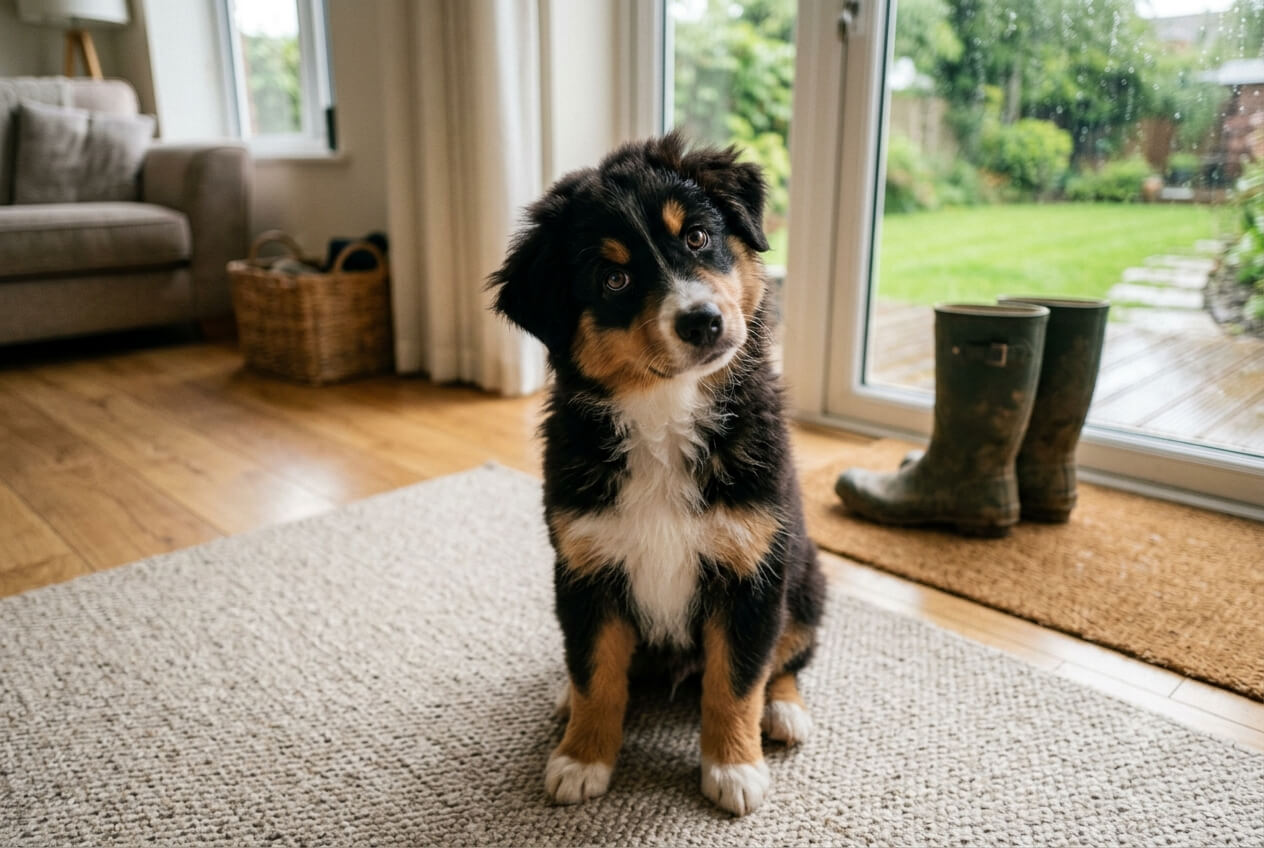
Puppy Potty Training Not Working? 9 Common Mistakes
You are taking your puppy outside. You are doing the trips. And yet the accidents keep happening. At this point, you may be wondering whether your puppy will ever get it, or whether you are doing something wrong.
Almost always, it is the routine, timing, supervision, reinforcement, environment, or expectations that need adjusting, not the puppy. Puppies are not being stubborn, spiteful, lazy, or defiant when they pee indoors. They are simply doing what comes naturally, and they need the right structure to learn where "outside" consistently fits in.
That said, frequent or sudden housetraining problems can sometimes have a medical or behavioral cause, not just a training one. We will cover that too.
Here are nine of the most common reasons potty training stalls, and what to do about each one.
Mistake 1: Waiting for Your Puppy to Tell You They Need to Go
Many owners wait for their puppy to stand at the door, whine, or give some other clear signal before heading outside. The problem is that young puppies often do not reliably signal at all before they eliminate, particularly in the early weeks of housetraining.
When signals do appear, they tend to be subtle: a puppy who suddenly stops playing, starts sniffing the floor, begins circling, moves toward a quieter or more secluded area, or drifts toward a door. These are easy to miss, especially in a busy household.
Rather than waiting for your puppy to ask, the more reliable approach is to offer potty opportunities proactively around predictable triggers. The most consistent ones are:
- Waking up (from sleep or a nap)
- After meals
- After substantial drinking
- After active play or excitement
- After leaving a crate, pen, or other confinement
- Before bedtime
The exact frequency will depend on your puppy's age and development. For a full breakdown of how often puppies typically need to go at different ages, see How Often Should a Puppy Pee? Puppy Potty Schedule by Age.
Mistake 2: Giving Too Much Freedom Too Soon
This is one of the most common reasons housetraining appears to be going backwards. A puppy who has been reliable in the kitchen, or in one room with close supervision, does not automatically understand that the rule applies to every room in the house. More space means more opportunity to find a quiet corner and use it before anyone notices.
More freedom also makes it harder to catch the subtle pre-elimination signals mentioned above. When a puppy is across the house, those brief moments of sniffing or circling go unobserved.
The principle here is gradual expansion based on the individual puppy. As your puppy consistently eliminates in the right place and gives you more opportunity to read their patterns, access to more of the house can increase. Useful management tools in the meantime include:
- Keeping the puppy in the same room as you during supervised time
- Baby gates to limit access to other areas
- A puppy pen or appropriately sized puppy-proofed space
- A crate or confinement area when close supervision is not possible
- Appropriate indoor tethering to you with a lightweight leash when you are actively supervising
Exactly how many accident-free days or weeks should pass before expanding access depends on your puppy. The important thing is that freedom is something earned gradually, based on demonstrated reliability, rather than granted all at once.
Mistake 3: Taking Your Puppy Outside but Letting Them Get Distracted
"I took him outside for 15 minutes and he didn't do anything, then he came inside and peed on the floor immediately."
This scenario is extremely common, and the reason is almost always distraction. Young puppies find the outside world interesting. Smells, other dogs, passing people, rustling leaves, and sounds can all derail a puppy who has forgotten entirely why they came outside.
Puppies left to wander outdoors on their own are especially likely to become distracted and fail to eliminate before being brought back in.
A few simple adjustments usually help:
- Accompany your puppy rather than simply letting them out into a garden or yard alone.
- Use a leash if needed to guide them toward the intended toilet area.
- Keep the initial potty trip calm and low-stimulation. This is not play time yet.
- Give your puppy a reasonable opportunity to sniff around and settle into eliminating.
- Reward successful elimination immediately, while you are still near the potty area.
- After the puppy has finished, a short period of appropriate sniffing, walking, or play is fine before heading back inside.
If your puppy does not eliminate during the trip, return indoors and keep them under close supervision or in a confinement area. Try again after a short while. Do not assume the trip was a success if elimination did not actually happen.
Mistake 4: Rewarding Too Late
Timing matters more than most owners realize. If your puppy eliminates outside and you give a treat once you are back at the door, inside the hallway, or at the kitchen counter, you may be rewarding the puppy for walking back to the door, or for nothing in particular.
To connect the reward with the act of eliminating in the correct location, reward your puppy immediately after they finish, while you are still standing near the spot where it happened.
One additional nuance: if every outdoor trip ends the moment the puppy eliminates, some dogs gradually learn that finishing quickly means the outdoor time is over. This can make some puppies reluctant to complete elimination. Where practical, allowing some appropriate activity after the puppy has gone outside can prevent that association from forming. The RSPCA specifically advises including some activity before returning indoors so the dog does not learn that toileting always signals the end of outdoor time.
Mistake 5: Punishing Accidents
This mistake is worth being clear about: punishment does not teach a puppy where to eliminate. It teaches them that eliminating in front of you has unpredictable consequences.
Yelling, intimidating, hitting, dragging a puppy toward a soiled spot, or rubbing their nose in urine or feces does not communicate "wrong location." It communicates "unsafe to eliminate near this person." The result is often a puppy who learns to hide and eliminate in secluded spots rather than signaling or waiting.
If you catch your puppy in the act: stay calm, interrupt gently if you can do so without frightening them, and move them to the appropriate toilet area. If they finish there, reward them.
If you find an accident after the fact: clean it up and look at what in the routine or supervision may have allowed it to happen. The puppy cannot connect your reaction to something that happened minutes or hours earlier.
Mistake 6: Not Cleaning Accident Spots Thoroughly
Dogs navigate their environment substantially through scent. Residual odor from a previous accident, even in a spot that smells perfectly clean to you, can act as a cue that this location is an appropriate place to eliminate.
Standard household cleaners often mask odors rather than neutralizing them. A pet-specific enzymatic or odor-neutralizing cleaner, used according to the product instructions, is better suited to breaking down the compounds that remain after an accident.
A spot that smells clean to you is not necessarily odor-free to a dog. Cleaning thoroughly and promptly is part of managing the environment, not just tidying up.
Mistake 7: Expecting Too Much Bladder Control
One of the quietest ways housetraining goes wrong is treating a puppy's maximum bladder capacity as the expected standard.
A few examples of how this plays out:
- Your puppy slept through the night for five hours. That does not mean five waking hours is a reasonable potty interval.
- Your puppy managed a long gap yesterday. That does not mean the same interval is reliable today.
- Your puppy is older now. That does not eliminate event-triggered needs after drinking, eating, waking, or a burst of activity.
The distinction between "can hold it" and "should routinely be expected to hold it" matters. Bladder capacity sets an upper limit; it does not set a schedule. For more detail on what puppies can realistically manage at different ages, see How Long Can a Puppy Hold Their Pee?.
Mistake 8: Being Inconsistent With the Routine
Puppies learn through patterns. When the pattern changes from day to day or person to person, learning takes longer.
Common sources of inconsistency include:
- One household member rewards outdoor elimination while another does not respond to it
- Different people use different spots as the toilet area, or use both indoors and outdoors depending on the weather
- Some mornings the puppy goes straight outside after waking; other mornings they wander indoors for a while first
- Meal times shift significantly without adjusting potty opportunities accordingly
- The puppy gets attentive supervision one day and near-total freedom the next
The goal is not rigid military scheduling. It is predictable patterns. The core structure is simple:
Wake → potty. Meal → potty opportunity. Play → potty opportunity. Nap → potty.
Everyone in the household using roughly the same approach makes a meaningful difference. For a full framework on building that structure, see the Puppy Potty Training Schedule: A Complete Guide.
Mistake 9: Assuming Every Accident Is a Training Problem
This one is important. Frequent accidents or a sudden change in a previously reliable puppy are not always training issues.
Physical and behavioral factors can also contribute, including:
- Urinary tract problems or other physical health issues
- Gastrointestinal illness
- Conditions causing increased thirst or urination
- Pain or discomfort affecting posture or the ability to hold urine
- Stress or fear responses
- Excitement-related urination (which is involuntary and not a housetraining failure)
- Difficulty coping when left alone
Contact a veterinarian if you notice:
- A sudden, significant change in urination habits in a puppy who was previously reliable
- Unusually frequent, small urinations or straining
- Blood in the urine
- Signs of pain or apparent discomfort
- A substantially increased intake of water
- Persistent diarrhea
- Ongoing housetraining difficulty despite a consistent, well-managed routine
- Any other signs of illness
Inability to pass urine is a medical emergency and requires immediate veterinary attention.
Also worth noting: urination that occurs specifically during excitement or fear, or elimination that happens consistently when the puppy is left alone, may not be ordinary housetraining failure. These patterns often require a different approach than standard potty training adjustments, and a veterinarian or qualified veterinary behaviorist can help.
A Simple Potty Training Reset Plan
If housetraining has gone off track, a reset does not need to be complicated. The aim is to temporarily reduce the chances of accidents while rebuilding a reliable pattern.
- Reduce unsupervised freedom temporarily. Return to a smaller, manageable area until reliability improves again.
- Go back to proactive potty opportunities around waking, meals, drinking, play, excitement, and any release from confinement.
- Accompany your puppy to the potty area rather than sending them out alone.
- Reward successful elimination immediately, while still near the spot.
- If a potty trip is unsuccessful, return indoors and supervise closely or use appropriate confinement until the next attempt.
- Clean any previous accident areas thoroughly with a pet-specific enzymatic or odor-neutralizing cleaner.
- Track patterns for several days (see below). Write down pee, poop, meals, water, sleep, play, and accidents with rough times.
- Adjust the routine based on what the log reveals.
- Gradually expand freedom again as reliability returns.
There is no fixed timeline for how long a reset takes. It depends on the individual puppy, how long the difficulty has been going on, and whether a consistent routine can be maintained. If things do not improve with a solid routine in place, or if there are any signs of a physical issue, speak with your vet.
Tracking: Why Logging Beats Guessing
Troubleshooting potty training gets much easier when you are not relying on memory.
A simple log might look like this:
07:05: Woke up, pee outside ✓
07:20: Breakfast
07:40: Poop outside ✓
09:00: Nap
10:10: Woke from nap, pee outside ✓
11:00: Play session
11:25: Indoor accident (pee)
That single log raises useful questions immediately: Was the play session too long without a potty break? Had the puppy recently had a big drink? Was there a signal that went unnoticed? Does the same time window show an accident on other days too?
With Dogtales, you can log pee and poop events alongside feeding, drinking, sleep, and other daily activities. When accidents keep happening, having the timeline in front of you can make patterns much easier to spot.
Is My Puppy Regressing?
A temporary increase in accidents after a period of improvement is common and does not necessarily mean your puppy has forgotten everything they learned.
Changes that can disrupt a previously working routine include:
- More freedom being granted before the puppy is ready for it
- A change of environment (visiting family, moving house)
- Travel
- Visitors or heightened excitement in the home
- A change in the household schedule
- Illness or a physical health issue
If the change is gradual and corresponds with something that changed in the environment or routine, revisiting the reset plan above and tightening management for a while usually helps.
If the change is sudden, pronounced, or comes alongside other symptoms, a veterinary check is worth considering before assuming it is a training issue.
FAQ
Why is my puppy still peeing in the house after going outside?
The most common reasons are distraction outside (so the puppy did not actually eliminate on the trip), a missed trigger after returning indoors (such as a drink of water or a play session), or too much unsupervised freedom after coming back in. If the pattern is unusual or persistent, a health check is worth ruling out.
Why does my puppy pee inside immediately after being outside?
Usually this means the outdoor trip was not a successful potty trip, even if the puppy was outside for several minutes. Distraction is the most frequent cause. Accompanying your puppy, keeping the initial trip calm, and supervising closely when returning indoors without a successful elimination will help. If the puppy did not go outside, treat the return indoors the same way you would treat a high-risk moment.
Why is my puppy suddenly having accidents again?
Think about what changed before the accidents started. More freedom, a schedule shift, visitors, travel, or excitement can all temporarily disrupt a working routine. If the change was sudden, significant, or comes with other physical symptoms, see a vet before attributing it to training.
Does punishing a puppy for peeing inside work?
No. Punishment does not teach the puppy the correct toilet location and often makes housetraining harder. Puppies who are punished for accidents may become reluctant to eliminate in front of people at all, which can make outdoor trips less successful. If you catch an accident in progress, calmly interrupt and move to the toilet area. If you find it afterward, clean it up and look at what in the routine may need adjusting.
Why does my puppy keep peeing in the same spot?
Residual odor from a previous accident is a likely contributor. Clean the area thoroughly with a pet-specific enzymatic or odor-neutralizing cleaner following the product instructions. A location that smells clean to you may still carry enough scent cues to attract a puppy. Better supervision and management in that area while the habit is being broken also helps.
How do I know if potty training is actually improving?
Progress rarely looks like a straight line, but useful signs include:
- Fewer accidents overall over a period of days
- Longer periods of reliability that are appropriate for your individual puppy's age and development
- Your puppy eliminating promptly and consistently in the correct area on potty trips
- You becoming better at recognizing your puppy's specific patterns and triggers
- Your puppy beginning to show more consistent pre-elimination behavior or signals
Do not measure progress against a rigid accident-free target. Look for a general trend in the right direction.
When should I call a veterinarian about potty accidents?
Contact your vet if you notice sudden or significant changes in a previously reliable puppy, unusually frequent or small urinations, straining, blood in the urine, signs of pain, substantially increased thirst, persistent diarrhea, other signs of illness, or if housetraining continues to struggle despite a consistent, well-managed routine. Inability to pass urine at all is a medical emergency requiring immediate attention.
Share this article
Keep your dog healthy and happy with Dogtales
Track meals, medication, potty breaks, weight, vaccinations, and daily reminders in one intuitive app.
Related Articles
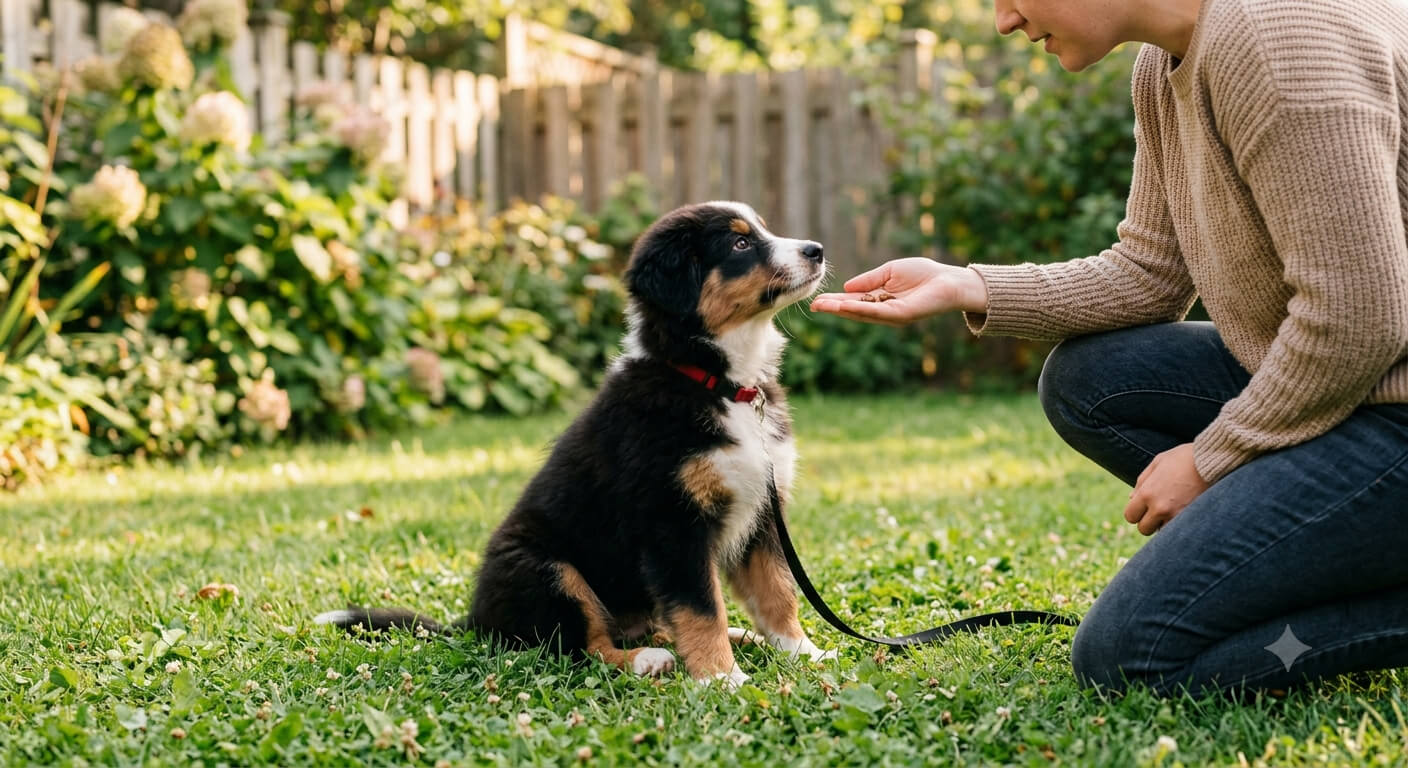
Puppy Training Schedule by Age: What to Teach and When
A realistic, stage-by-stage guide to puppy training priorities from 8 weeks through adolescence. Learn what to teach and when, how skills build cumulatively, and why practical life skills matter more than rigid command checklists.
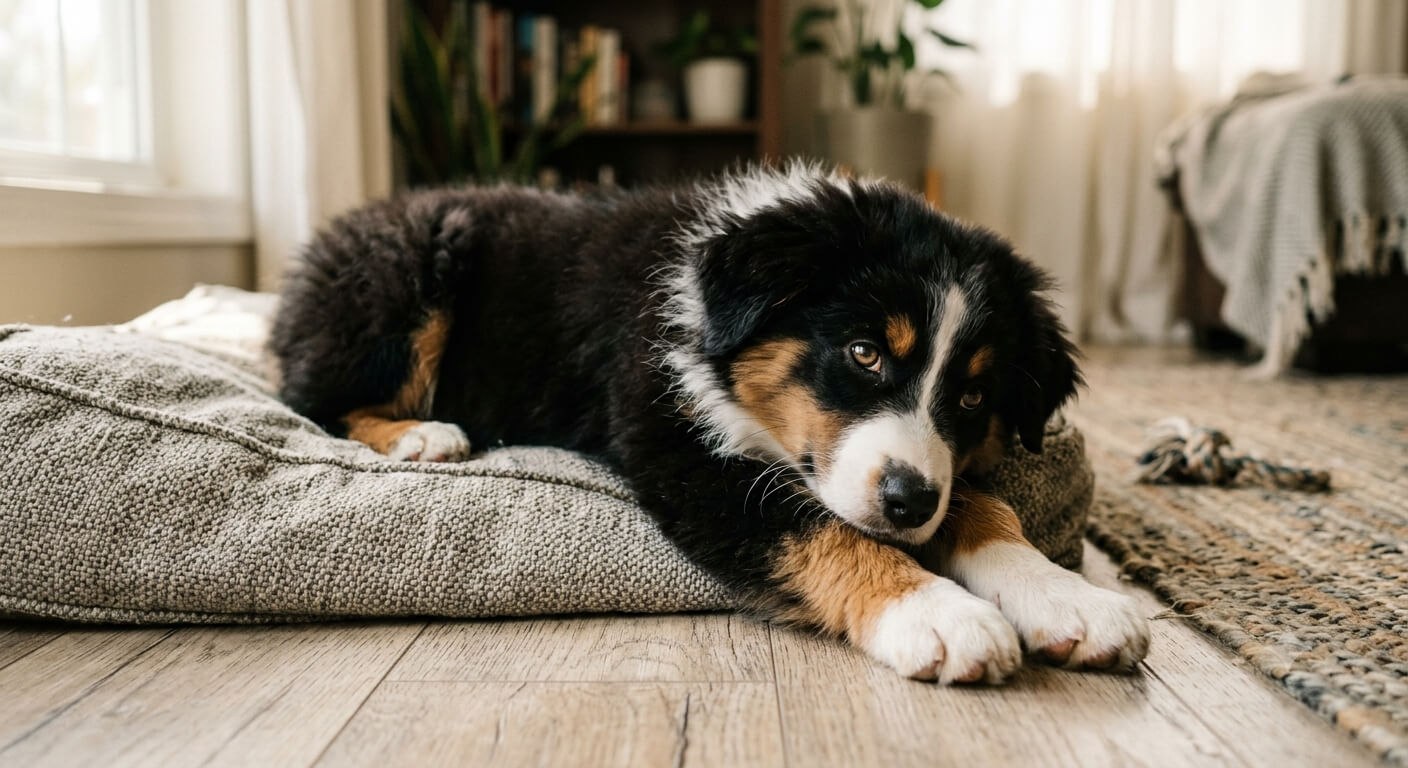
How Long Can a Puppy Hold Their Pee?
Learn how long puppies can realistically hold their pee by age, why bladder capacity is not the same as a potty schedule, and what changes during sleep, play, crate time, and time home alone.
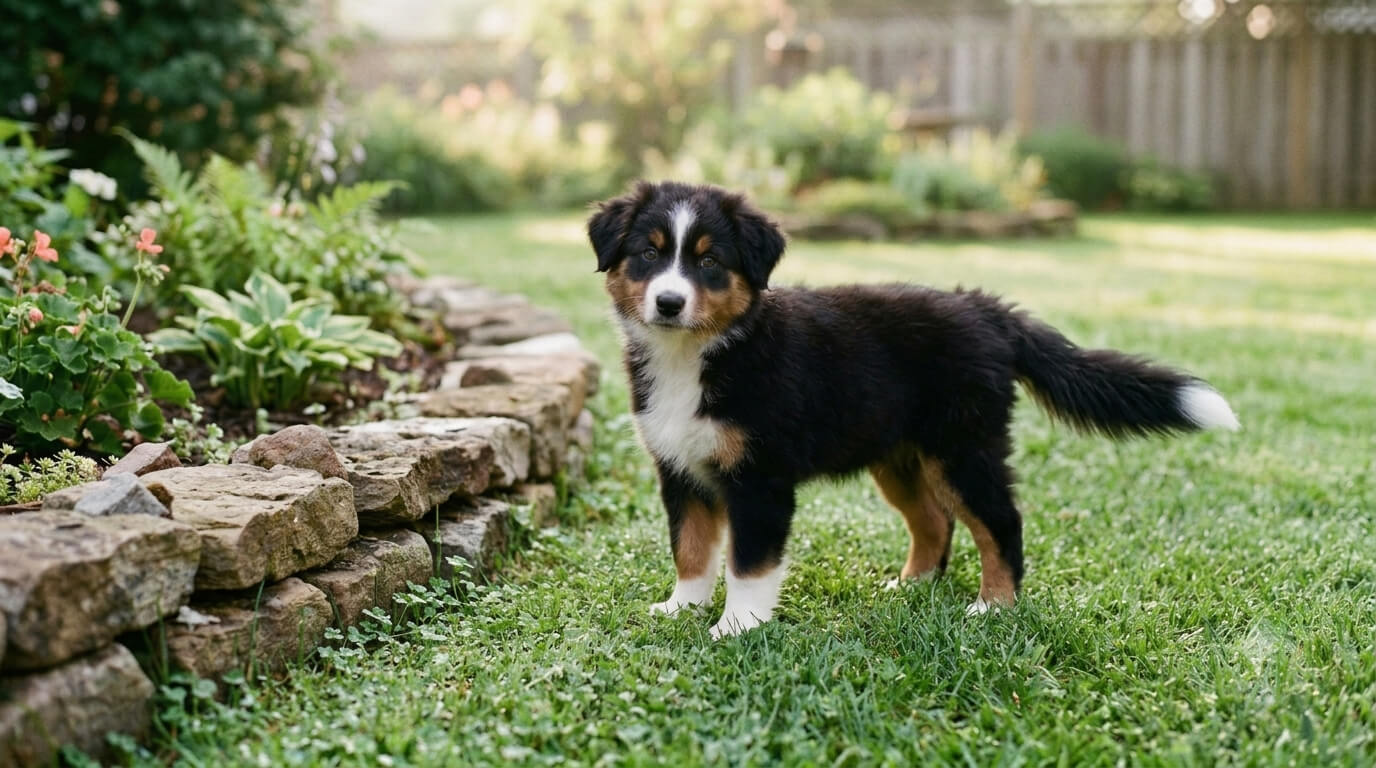
Puppy Potty Training Schedule: A Complete Guide
Build a practical puppy potty training schedule around waking, meals, naps, play, and bedtime. Learn how to prevent accidents, reward success, and adapt the routine as your puppy grows.