
Puppy Crying at Night: Why It Happens and What to Do
Puppy crying or whining at night? Learn why nighttime vocalization happens, what to do right now, whether to ignore it, and how to help your puppy settle peacefully.
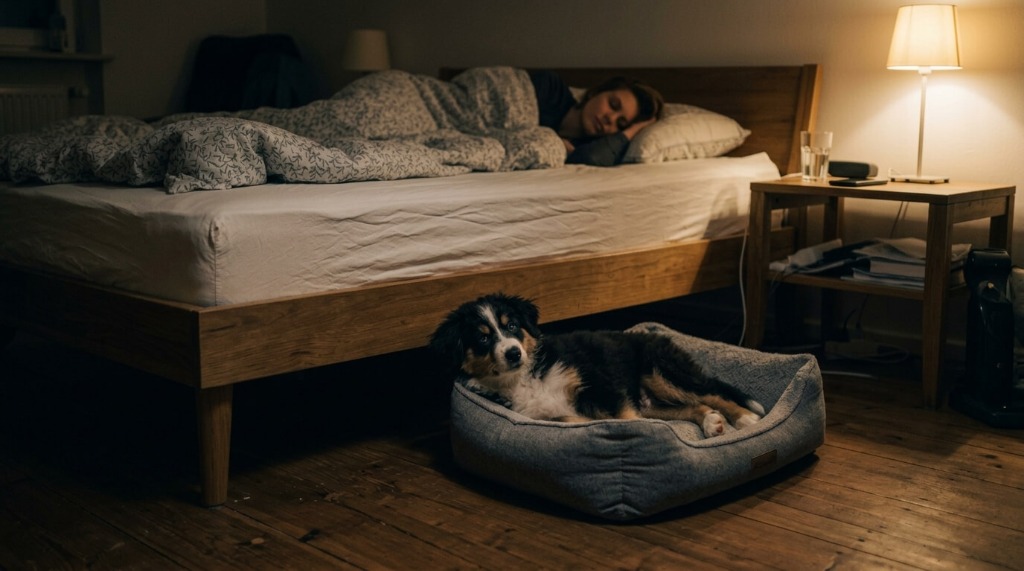
Nighttime crying is one of the most common and exhausting challenges new puppy owners experience. When a young puppy first arrives in your home, they have suddenly left the only environment they have ever known: the physical warmth, familiar scents, and constant company of their mother and littermates. At the same time, their immature bladder and digestive tract cannot reliably wait through an adult human night without an opportunity to eliminate.
The goal at night is not to teach your puppy that vocalizing never produces a response. It is to help them feel secure, meet their physical needs, and gradually show them that nighttime is predictable, calm, and uneventful.
Leaving an anxious puppy to cry alone for hours is neither helpful nor behaviorally sound. By understanding what drives nighttime crying and responding with a steady, low-key approach, you can ease nighttime distress while building confidence and trust.
1. Why Puppies Cry at Night
Puppies do not cry at night to manipulate their owners, assert dominance, or test boundaries. In young puppies, vocalization is an instinctive distress response. In the wild and within the litter, a puppy separated from their family is vulnerable. High-pitched whining, whimpering, and barking are natural signals that help call a caregiver back.
When an owner asks why their puppy is crying at night, the behavior usually stems from one or more everyday causes:
- Separation from the mother and litter: In the first weeks of life, puppies sleep in close contact with their mother and littermates. Being placed alone in a dark, quiet room is an unfamiliar and unsettling experience.
- Unfamiliar environment: New smells, novel sounds (such as heating pipes, appliances, or outdoor traffic), and strange shadows can easily startle a young dog whose senses are taking in a completely new home.
- Genuine toilet needs: A young puppy's bladder capacity is small, and their kidneys are still maturing in their ability to concentrate urine. If a puppy wakes with a full bladder, they naturally stir and whimper to avoid soiling their sleeping area.
- Physical discomfort: The sleeping area might be drafty, too cold, or overheated. The puppy may also be thirsty, hungry, or experiencing sore gums from teething.
- Barrier frustration or confinement distress: If a puppy is placed behind a closed door or inside a crate without gradual daytime acclimation, the restriction itself can provoke frustration or anxiety.
- Learned expectation of nighttime activity: If previous crying led to bright lights, excited talk, cuddles, or play, the puppy may have learned that waking up initiates daytime attention.
- Pain, parasites, or illness: An upset stomach, intestinal parasites, an ear infection, or urinary discomfort can make restful sleep difficult or impossible.
Understanding which factor is most likely at play helps you decide how to respond.
2. What to Do Tonight: A Practical Decision Sequence
When your puppy wakes up crying in the middle of the night, work through these four straightforward checks:
- 1. Check biological needs: If your puppy has been resting quietly for a few hours, or wakes up stirring and restless, assume they need to eliminate. Take them straight outside or to their designated toilet spot on a leash. Keep the trip dark, quiet, and low-key.
- 2. Check their emotional state: If your puppy is shaking, panting, or showing persistent distress, they need reassurance that they are safe. Offer calm physical presence. Sit quietly beside their sleeping area or place a hand nearby so they can smell and hear you, without turning on bright lights or speaking excitedly.
- 3. Check physical comfort: Check whether the room is noticeably hot or cold, whether a draft is blowing across the bed, or whether your puppy might need a fresh drink of water.
- 4. Allow ordinary settling: If their needs have been met and the puppy is simply circling, sighing, or offering a few quiet, intermittent whimpers, give them a few moments to find a comfortable position.
This sequence allows you to address real needs quickly without turning nighttime into social playtime.
3. Should You Ignore a Puppy Crying at Night?
The advice to let a puppy "cry it out" remains common in popular dog training advice. It is often accompanied by the warning that going to a crying puppy will reward the behavior and create a demanding dog.
Many veterinary behaviorists and animal welfare organizations caution against leaving a distressed puppy to cry without support. The behavioral science on this point is clear:
Comforting Fear Does Not Reinforce Fear
Operant conditioning, which explains how voluntary actions are strengthened through rewards, applies to behaviors like sitting, coming when called, or offering a paw. Fear, loneliness, and distress, by contrast, are involuntary emotional states.
When a young puppy is frightened by sudden isolation in the dark, they are experiencing genuine distress. Providing a calm, grounded presence does not reward fear. Instead, it helps soothe an overstimulated nervous system and signals safety. You cannot spoil a puppy simply by helping them feel secure.
However, how you respond still matters. If you respond to crying with bright lights, baby talk, treats, and living room play, you can inadvertently teach the puppy that nighttime waking produces daytime entertainment. Calm, quiet reassurance meets emotional needs without turning night into playtime.
The Problem with Prolonged Distress
When an isolated puppy is left to cry for prolonged periods, they may eventually go quiet from physical exhaustion. That quietness does not mean they felt safe or learned calm independence. Allowing intense distress to escalate can cause a puppy to form negative associations with their sleeping area and with being left alone.
Settling Whimpers vs. Escalating Distress
Learning to observe your puppy's vocalizations helps you know when to wait and when to step in:
- Ordinary settling: A puppy turns around, gives a quiet whimper or two, yawns, and curls up. The sounds are soft, intermittent, and fade as the puppy lies down. Giving your puppy a brief moment to complete this settling process is entirely appropriate.
- Escalating distress: The whining intensifies into continuous barking, high-pitched crying, trembling, panting, or frantic scratching at barriers. This level of distress indicates that the puppy needs assistance, a toilet break, or calm reassurance.
4. Does My Puppy Need to Go Potty?
Young puppies genuinely need middle-of-the-night toilet opportunities. Expecting an eight-week-old puppy to sleep eight or nine uninterrupted hours without eliminating is physiologically unrealistic for most dogs.
For an in-depth explanation of biological bladder development, see our guide on How Long Can a Puppy Hold Their Pee?.
The key to nighttime toilet trips is keeping them strictly functional. Your puppy should learn that waking up at night leads to a calm bathroom break, not an exciting party.
Running a Calm, Low-Key Nighttime Potty Trip
- Keep lights dim: Use a nightlight, flashlight, or low hallway light rather than turning on bright overhead lighting.
- Stay neutral and quiet: Avoid enthusiastic greetings, excited praise, or play. Speak in a quiet, soothing whisper if needed.
- Keep them on a leash: Even in a fenced garden, using a leash keeps your puppy focused on the task rather than wandering off to sniff bushes or chase shadows.
- Go directly to the toilet area: Stand quietly and give your puppy a few minutes to sniff and eliminate.
- Praise softly: If they go, offer gentle, low-key praise. Avoid energetic celebrations or high-value treats that wake them up.
- Return directly to bed: Guide your puppy right back to their sleeping space, help them settle, and resume sleep.
If your puppy does not eliminate after a few minutes, calmly bring them back inside to their bed. Do not allow the trip to become an extended tour of the house.
To see how daytime routines support nighttime progress, explore our Puppy Potty Training Schedule guide.
5. Sleeping Setup: Crates, Pens, and Alternatives
Many puppy guides assume that every puppy must sleep in a closed crate. While a crate can be a useful management tool when introduced gradually and positively, it is not mandatory. Placing an unprepared puppy into a locked crate on their first night can provoke intense fear and barrier frustration.
Whether you choose a crate, a playpen, a gated puppy-safe area, or a dog bed, your setup should prioritize safety and comfort.
Sleeping Near You During Early Adjustment
Many veterinary behaviorists and animal welfare organizations recommend keeping your puppy's sleeping area in your bedroom during their initial transition into your home.
Placing your puppy's bed, pen, or crate near your bedside offers practical advantages:
- Familiar sensory cues: Hearing your regular breathing and shifting helps the puppy understand they are not alone.
- Early awareness of toilet needs: You will hear when your puppy wakes up and begins rustling, allowing you to take them out before an accident occurs or distress escalates.
- Simple reassurance: If your puppy stirs or whimpers quietly, resting a hand near their bed can help them settle without requiring you to get up or turn on lights.
Practical Sleeping Setups
If your puppy shows anxiety in enclosed spaces, or if you prefer not to use a crate:
- Sturdy exercise pen: Provides a safe boundary while allowing the puppy space to adjust their position, choose between a soft bed and a cooler floor, and move comfortably.
- Gated puppy-proofed room: A safe space, such as a utility room or bedroom nook with a baby gate, cleared of cords and chew hazards.
- Bedside dog bed: A comfortable bed placed directly beside your own bed, with doors or gates keeping the puppy safely within the room.
If you choose to use a crate, keep it open during the day so your puppy can explore it voluntarily, and never use it as a place of punishment. For a complete guide to preparing your home before your puppy arrives, read our First Week With a Puppy guide.
6. Building a Predictable Nighttime Routine
Puppies respond well to predictability. A consistent evening sequence helps your puppy anticipate bedtime, making it easier for them to transition from active daytime energy to quiet rest.
Elements of a Calming Evening
- Wind down active play: Avoid high-energy games of fetch, tug-of-war, or roughhousing in the hour before bed. High excitement raises heart rate and alertness, which can make settling harder.
- Encourage calm oral activities: Offering a safe chew or quiet food puzzle gives your puppy a soothing focus that can help them unwind before sleep.
- Time the evening meal thoughtfully: Giving your puppy their final meal with enough time before bedtime allows digestion to progress, giving them a natural opportunity to toilet before settling for the night.
- Provide familiar scents: A blanket or towel that carries the scent of their mother, littermates, or previous home can offer comfort in their sleeping space.
- Keep the environment dark and comfortable: Most puppies sleep best in a room that is quiet, pleasantly cool, and dark. Offering comfortable bedding alongside a cooler floor surface gives your puppy options to regulate their own temperature.
If your puppy also struggles to settle during the day, our guide on Puppy Won’t Nap covers practical ways to manage daytime stimulation and build balanced rest habits.
7. How to Gradually Build Nighttime Independence
Having your puppy sleep near you in the bedroom does not mean they must remain there permanently if your preference is for them to sleep elsewhere. However, independent rest develops best from a foundation of security rather than sudden isolation.
Once your puppy is settling easily and sleeping through the night beside your bed, you can adjust their sleeping location gradually if desired:
- Begin with the bed or pen directly next to your bed.
- Once the puppy is consistently calm and confident, move the bed slightly further away toward the bedroom door over several nights.
- If your goal is for the puppy to sleep outside the bedroom, place the bed just outside the open doorway so they can still hear you.
- Finally, move the bed to their intended permanent sleeping spot once they remain relaxed at each previous stage.
If your puppy begins showing signs of distress at any point in the transition, you may have moved too quickly. Return to the previous setup for several nights before trying again at a gentler pace.
To help plan balanced waking and resting intervals throughout your puppy's day, you can explore our Puppy Sleep Schedule tool.
8. What If Your Puppy Suddenly Starts Crying at Night?
It is common for a puppy who has slept quietly for several weeks to suddenly start waking, whining, or pacing during the night.
When nighttime crying appears unexpectedly, consider these possible reasons:
- Altered digestive or urinary needs: Loose stools, an upset stomach, or urinary discomfort can create an urgent physical sensation that wakes the puppy.
- Teething discomfort: During the months when temporary teeth are replaced by adult teeth (typically between roughly 3 and 6 months of age), sore gums can cause nighttime restlessness.
- Changes in daily routine: An unusually long evening nap, late feeding, reduced daytime exercise, or an exciting visitor can alter your puppy's sleepiness at bedtime.
- Developmental fear periods: Puppies pass through natural developmental phases where novel sounds, shadows, or minor environmental changes can suddenly provoke new caution.
- Environmental disruptions: Subtle sounds outside the window, early morning light, or nocturnal wildlife can wake an alert young dog.
If you are trying to understand whether nighttime wakeups are linked to potty frequency, nap timing, or meals, logging a few days of sleep and potty patterns in a tracking app like Dogtales can make recurring rhythms much easier to spot.
9. When to Contact a Veterinarian
While most nighttime crying reflects normal adjustment, developing bladder control, or routine changes, physical discomfort and illness can also cause sudden nighttime distress.
Contact your veterinarian if you notice any of these signs:
- Sudden, unexplained restlessness: A puppy who previously settled with ease becomes acutely agitated, paces continuously, or seems unable to find a comfortable lying position.
- Urinary symptoms: Straining to urinate, whimpering while peeing, producing only tiny drops, blood in the urine, or frequent licking of the genital area. These are symptoms that warrant prompt veterinary assessment for possible urinary tract issues.
- Digestive distress: Repeated vomiting, significant diarrhea, a tense abdomen, or persistent nausea signs such as lip-smacking and excessive drooling.
- Vocalizations tied to movement: Whimpering, crying, or yelping when lying down, getting up, or being gently lifted.
- Abnormal breathing: Breathing that remains noticeably rapid, shallow, or labored while resting.
- Daytime lethargy or weakness: A puppy that seems dull, unusually weak, or reluctant to engage during normal waking hours.
- Persistent fever, coughing, or intense scratching: Noticeable physical symptoms that suggest infection, discomfort, or parasite issues.
Never administer human pain medications or sedatives to a puppy, as many common household drugs are toxic to dogs.
10. What Realistic Progress Looks Like
Learning to sleep quietly through the night is a developmental milestone that varies naturally among individual puppies. There is no fixed date on the calendar when all puppies stop waking up.
Progress typically shows up through observable behavioral trends rather than rigid timelines:
- Bedtime transitions become calmer and take less time.
- The puppy settles into sleep with fewer brief whimpers.
- Nighttime waking becomes primarily associated with genuine potty needs rather than general distress.
- The intervals between nighttime toilet trips gradually stretch longer as bladder capacity and physical maturity develop.
Development rarely moves in an unbroken line. An occasional restless night or an extra bathroom trip is completely normal. With a consistent routine, attention to physical needs, and steady reassurance, nighttime crying gradually resolves into quiet, restful nights for both you and your puppy.
Share this article
Keep your dog healthy and happy with Dogtales
Track meals, medication, potty breaks, weight, vaccinations, and daily reminders in one intuitive app.
Related Articles

First Week With a Puppy: What to Expect
The first week with a puppy is about safety, basic needs, gentle routine, and helping them adjust. Learn what to expect, what to prioritize, and how to navigate the first seven days realistically.

How Long Can a Puppy Hold Their Pee?
Learn how long puppies can realistically hold their pee by age, why bladder capacity is not the same as a potty schedule, and what changes during sleep, play, crate time, and time home alone.
Puppy Won’t Nap? How to Build a Better Rest Routine
Puppy won’t nap or settle during the day? Learn why puppies struggle to rest and how to build a calmer, more practical nap routine without relying on rigid sleep schedules.