
Dog Sitter Instructions: What to Leave for Your Dog Sitter
A practical guide and printable checklist for dog sitter instructions: emergency contacts, feeding and medication routines, walk habits, and veterinary planning.
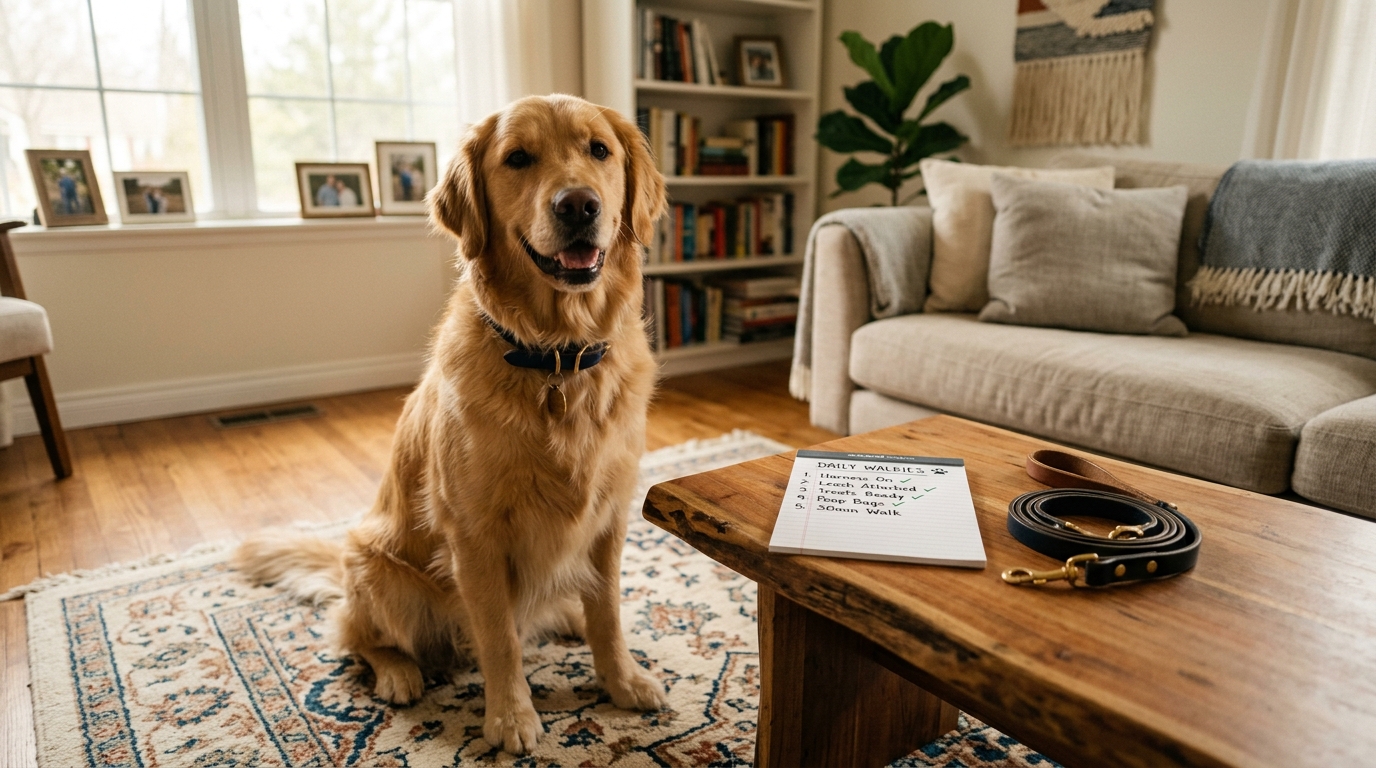
Leaving your dog with a sitter, family member, or neighbor should feel reassuring, not stressful. The challenge is deciding how much information to leave behind. Too little detail leaves a caregiver guessing during unexpected situations. Too much detail creates a long binder that nobody reads when a quick decision is needed.
A useful dog sitter handover provides essential facts clearly: who to call in an emergency, how the daily routine works, how to give medications safely, and what behaviors are normal for your dog.
This guide walks through what information a dog sitter genuinely needs, highlights common safety oversights, and provides a concise one-page printable handover sheet you can fill out and leave on the counter.
The Information Hierarchy: Essentials vs Clutter
Before writing out your instructions, group your notes into three practical categories:
| Priority | Information type | Examples |
|---|---|---|
| Tier 1: Vital | Every sitter must have immediately | Emergency phone numbers, daytime vet, 24/7 emergency clinic, microchip ID, exact food portions, and basic routine |
| Tier 2: Dog-specific | Essential only for dogs with specific needs | Prescription medications, fear triggers, dog reactivity, resource guarding, and house access rules |
| Tier 3: Clutter | Skip or keep brief | Lengthy backstories, complex trick cues, micro-managed schedules, and unproven home remedies |
Keeping your notes structured ensures that critical safety information remains visible at a glance.
1. Emergency Contacts and Veterinary Information
If an urgent situation arises, your sitter should not have to search through text messages or rummage through desk drawers for phone numbers.
Leave these four contact points visible on your kitchen counter or refrigerator:
- Your contact details: Your mobile number, messaging preferences, and notes on your availability (such as flight times or time zone differences).
- A local emergency backup contact: A trusted friend, neighbor, or family member who lives nearby, has transportation, and holds a spare house key if you are unreachable.
- Your primary veterinary clinic: Clinic name, address, daytime phone number, and your veterinarian's name.
- The nearest 24/7 emergency veterinary hospital: Address and phone number. Many emergency clinics operate at different locations from primary day clinics.
2. Feeding, Water, and Treat Guidelines
Sudden dietary changes are a leading cause of stomach upset and diarrhea while owners are away. Clear feeding instructions keep digestion predictable.
What to write down:
- Exact portion size: Specify the measurement clearly (for example: "180 grams twice daily" or "1 level cup morning and evening").
- Feeding times: Note the normal meal windows (such as 7:30 AM and 6:00 PM).
- Food location and prep: Where bags or cans are kept, whether wet food needs refrigerating after opening, or if kibble should be soaked in warm water.
- Treat boundaries: How many treats are reasonable per day and what treats are permitted.
- Toxic food reminders: Make it clear that human food is off-limits. Remind sitters that chocolate, grapes, raisins, onions, garlic, macadamia nuts, and foods containing xylitol (birch sugar) are toxic to dogs.
If your dog misses a single meal due to mild departure stress but acts completely energetic and normal, that is common. However, if refusal persists beyond 24 hours, or if refusal is accompanied by lethargy or vomiting, the sitter should contact you or your veterinarian.
3. Walking, Gear, and Outdoor Safety
Outdoor walks present the highest risk for accidental escapes or unexpected dog conflicts. Sitters should never have to guess how your walking gear works or how your dog behaves on leash.
Key walking instructions to provide:
- Gear setup: Specify which collar or harness to use and demonstrate how it fastens. A loose collar allows a frightened dog to back out and run.
- Leash rules: Instruct your sitter to keep the dog on a secure, standard 1.5 to 2 meter leash. Flexi-leads or retractable leashes create tangle and snap hazards for unfamiliar handlers.
- Off-leash policy: Unless your dog is inside a fully fenced, secure private yard, the rule should be simple: no off-leash running while under temporary care.
- Reactivity and triggers: Note whether your dog reacts to other dogs, cyclists, runners, or skateboards. If your dog dislikes direct greetings from strange dogs, instruct the sitter to cross the street proactively.
- Bathroom habits: Note where your dog prefers to eliminate and their usual schedule.
4. Medication and Medical Instructions
Administering medications requires precise, written instructions. A misunderstanding can result in missed doses or accidental toxicity.
Safe medication rules:
- Original packaging only: Keep all medications in their original prescription containers with the clinic label showing the dog's name, drug name, strength, and dosing schedule.
- Administration method: Explain how your dog takes pills (for example: hidden in a spoonful of wet food, wrapped in a small piece of cheese, or placed in a pill pocket).
- Storage requirements: State whether medications need refrigeration or a cool, dry cabinet away from direct sunlight.
- Missed dose protocol: Instruct the sitter never to double up on a missed dose. If a dose is missed or regurgitated, the sitter should phone the veterinary clinic or contact you before taking action.
- No human over-the-counter medications: Emphasize that human painkillers (such as ibuprofen, acetaminophen, naproxen, or aspirin) must never be given to a dog. They can cause severe organ damage or fatal gastric ulceration.
For more details on maintaining long-term health observations and medication history, read our guide on keeping a dog health journal.
5. Behavior, Fears, and Normal Quirks
Temporary caregivers need to understand what counts as normal behavior for your dog so they can spot genuine distress quickly.
Helpful behavioral notes:
- Fear triggers: Common examples include thunderstorms, fireworks, vacuum cleaners, and loud delivery trucks. Note where your dog likes to retreat when scared.
- Resource guarding: If your dog guards food bowls, high-value chews, or favorite sleeping spots, inform your sitter so they avoid reaching toward the dog while eating or resting.
- Handling sensitivities: Mention if your dog dislikes having their paws, ears, or tail touched.
- Separation habits: State whether your dog can safely be left alone for a few hours, or if they must be supervised continuously.
- Body language awareness: Learn how subtle stress signals differ from relaxed posture in our guide to understanding dog body language.
6. Concise Medical Warning Signs
A dog sitter does not need to diagnose complex illness, but they do need to recognize warning signs that warrant an immediate veterinary call rather than waiting for your return.
Instruct your sitter to contact your vet or emergency clinic immediately if they observe:
- Repeated retching without bringing anything up, coupled with pacing and a tight, swollen belly (classic bloat warning signs)
- Labored breathing, rapid shallow breaths at rest, or pale, blue, or gray gums
- Sudden collapse, inability to stand, or profound weakness
- Seizures lasting more than two minutes or recurring within the same day
- Repeated straining to urinate without producing any urine
- Known ingestion of rat poison, human prescription drugs, dark chocolate, or foreign objects like socks or toys
- Uncontrolled bleeding, severe limping, or traumatic injury
7. House Logistics and Departure Preparation
To make the handover smooth, conduct a five-minute in-person walkthrough with your sitter before you leave.
Quick checklist for the house:
- Show the sitter how door latches, deadbolts, and garden gates work.
- Point out where the leash, harness, poop bags, and towels are stored.
- Show the location of pet-safe enzyme cleaner, paper towels, and trash bins.
- Point out your dog's crate, carrier, or travel harness in case emergency transportation to a vet is required.
- Ensure all windows, low balconies, and fence perimeters are secure.
8. Ongoing Care Tracking with Dogtales
A printed handover sheet is the best tool for emergency phone numbers, feeding amounts, and house rules. It stays visible on the kitchen counter where anyone can find it in seconds without needing a phone or password.
During multi-day care, keeping track of daily events can prevent confusion. Questions like "Did someone already feed the dog?" or "When was the evening pill given?" frequently arise when care is shared.
Using a companion app like Dogtales allows you and your sitter to share one live timeline:
- Log meals, water intake, potty trips, medications, and daily notes in one place.
- Use Family Sharing to sync your dog's profile and diary across household members and caregivers.
- Set reminders in the Reminder Center so medication windows and meal times are not forgotten.
- Keep your dog's microchip number, vaccination history, and vet contact details organized in the health records area.
A digital log complements your printed handover sheet; it does not replace having primary emergency contacts written down on paper.
Printable Dog Sitter Handover Sheet
Copy or print the one-page template below, fill in the blanks, and leave it in a prominent spot in your home.
Frequently Asked Questions
What are the most important things to leave for a dog sitter?
The most critical items are primary and backup phone numbers, daytime veterinary details, the address and phone number of the nearest 24/7 emergency hospital, microchip details, exact food portion measurements, and clear medication instructions.
Should I arrange veterinary payment in advance?
Yes. If you will be traveling or out of cell coverage, call your primary clinic before leaving. Ask if you can leave a payment card on file or establish an emergency authorization agreement directly with the clinic so emergency treatment is not delayed.
What should a sitter do if my dog refuses to eat?
A dog may skip one meal due to mild departure stress. If your dog is alert, drinking water, and behaving normally, offer the next meal at the scheduled time. If food refusal continues for more than 24 hours, or is accompanied by vomiting, diarrhea, or lethargy, your sitter should contact you or your veterinarian.
Can a dog sitter walk my dog off leash?
Unless your dog is inside a secure, fully fenced private area, sitters should not let your dog off leash. Unfamiliar environments and substitute handlers increase the risk of unexpected flight or recall failures.
Share this article
Keep your dog healthy and happy with Dogtales
Track meals, medication, potty breaks, weight, vaccinations, and daily reminders in one intuitive app.
Related Articles
Dog Health Journal: What to Track and Why
A practical guide to keeping a dog health journal: what categories are actually worth recording, how a clear history helps at vet visits, and why the goal is useful context rather than constant monitoring.

Understanding Your Dog's Body Language
Learn how to read your dog's subtle body language cues, why single signals should never be interpreted in isolation, and how to recognize signs of relaxation, stress, fear, and discomfort.

Seasonal Health Concerns: Keeping Your Dog Safe Year-Round
A practical guide to seasonal dog health. Learn how to navigate weather shifts, manage parasite and plant hazards, prevent heat and cold illness, and recognize symptoms requiring veterinary care.